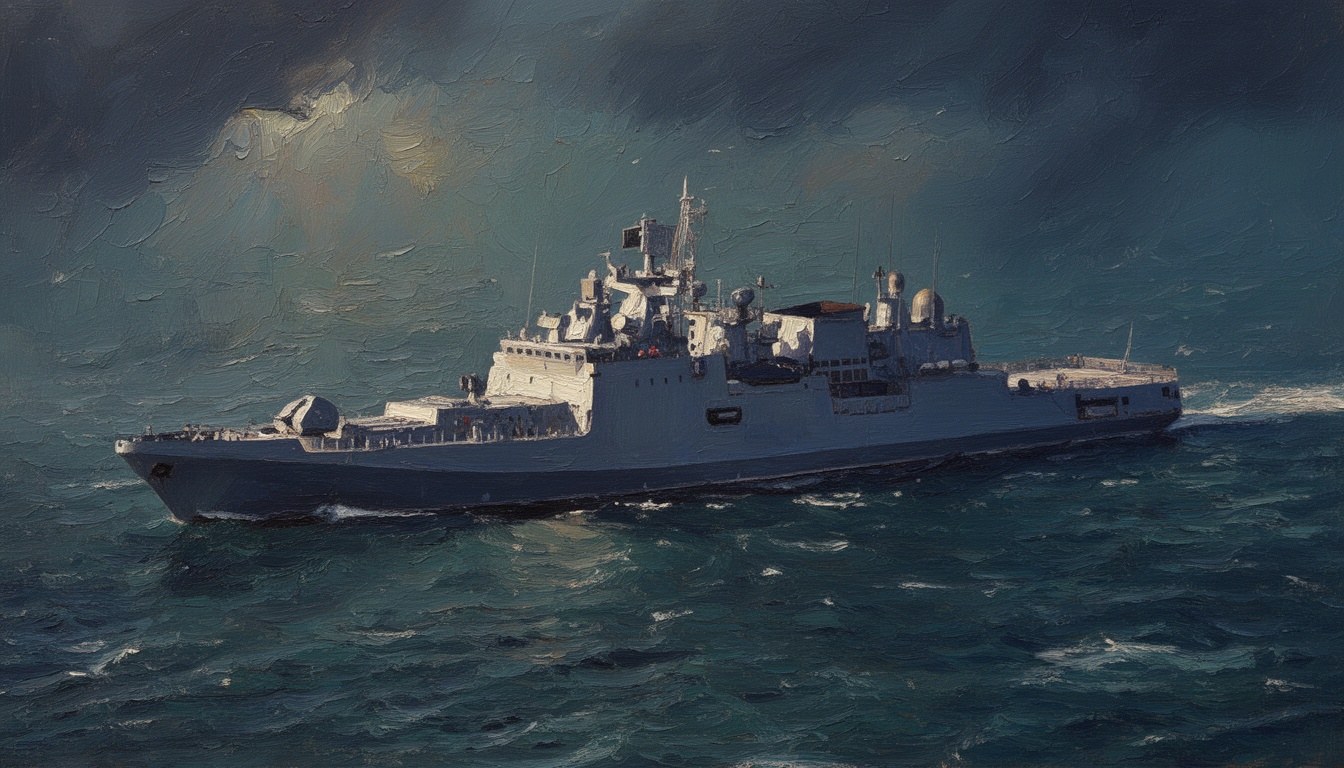
Russian Frigate Fires Warning Shots at UK Yacht in Channel
A Russian frigate's actions may escalate tensions in maritime security. This incident highlights the risks of miscommunication between military and civilian vessels in contested regions.
On Tuesday, a Russian frigate, the Admiral Grigorovich, fired warning shots at a UK-flagged yacht in the English Channel. The crew of the frigate reportedly noticed the yacht sailing on a trajectory that posed a potential collision risk. Despite attempts to communicate with the yacht via radio, no contact was established, prompting the use of warning shots, which included small arms fire aimed ahead of the vessel.
This confrontation underscores the tense maritime security environment in areas close to British territorial waters. The actions of the Russian Ministry of Defence indicate a preparedness to protect its naval assets while also signaling a confrontational stance towards vessels perceived as threats. The incident has drawn attention to the increasing frequency of naval encounters between Russian and UK forces, each on alert amid ongoing geopolitical tensions.
Such encounters raise significant concerns regarding the safety and safety protocols involving both military and civilian maritime operations. The warning shots were reportedly intended to avoid a direct confrontation and highlight the potential for human error amid rising hostilities in contested waters. The risk of such incidents could lead to unintended escalation, elevating the stakes for both nations involved.
The Admiral Grigorovich is equipped with advanced systems, allowing for close monitoring of maritime traffic in its operational area. These capabilities are a part of Russia's ongoing strategy to assert maritime dominance in regions where tensions are heightened. The use of small arms fire, while non-lethal, remains a critical display of military readiness and can serve to intimidate civilian vessels nearby.
In the aftermath of this incident, diplomatic communications may be necessary to de-escalate tensions and ensure safe navigation in the Channel. Future encounters could lead to either reassessment of engagement protocols or underline the need for clearer communication channels between military and commercial operators in the region.