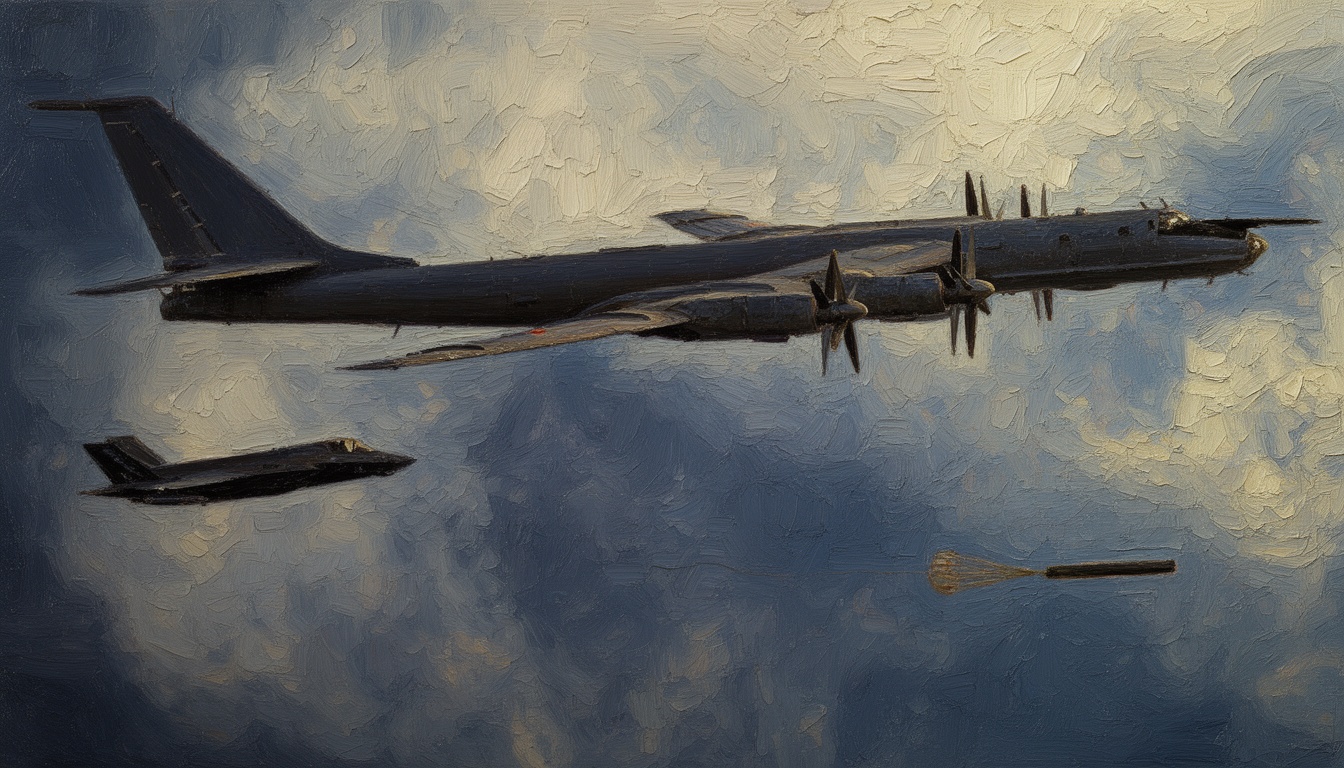
Russian Tu-142 Deploys Sonobuoys Near British Aircraft Carrier
The deployment underscores rising tensions in naval operations. It highlights the strategic cat-and-mouse between maritime patrol aircraft and advanced naval assets.
The Russian Tu-142 maritime patrol aircraft recently conducted a notable operation by deploying sonobuoys while flying in close proximity to the British aircraft carrier HMS Prince of Wales. This encounter took place as F-35 jets were reportedly shadowing the Tu-142, indicating a heightened level of military activity in the region.
Historically, the Tu-142 has served as a critical platform for maritime surveillance and anti-submarine warfare since its introduction in the 1960s. With advancements in sensor technology, these aircraft have become adept at detecting submarines and other underwater threats, elevating their operational importance within the Russian Navy. The presence of the HMS Prince of Wales further underscores the strategic significance of British naval assets in countering Russian maritime operations.
The implications of this operation highlight the ongoing tensions between Russian and British forces in contested maritime areas. Such encounters are indicative of changing dynamics in naval warfare, where close surveillance and detection capabilities are paramount for both sides. The involvement of F-35 aircraft, known for their stealth and advanced sensor arrays, adds another layer of complexity to these interactions.
The Tu-142, which boasts a range of up to 4,500 km and is equipped with various sonobuoys specifically designed for submarine detection, remains a vital asset in Russia's naval capabilities. Conversely, the HMS Prince of Wales is part of the Royal Navy's latest generation of aircraft carriers, representing significant investment in modern warfare capabilities.
As global naval operations intensify, such incidents might further exacerbate tensions in maritime domains vulnerable to both strategic competition and military escalation. Future encounters will likely necessitate stronger protocols to manage incidents and reduce the risk of miscalculations.