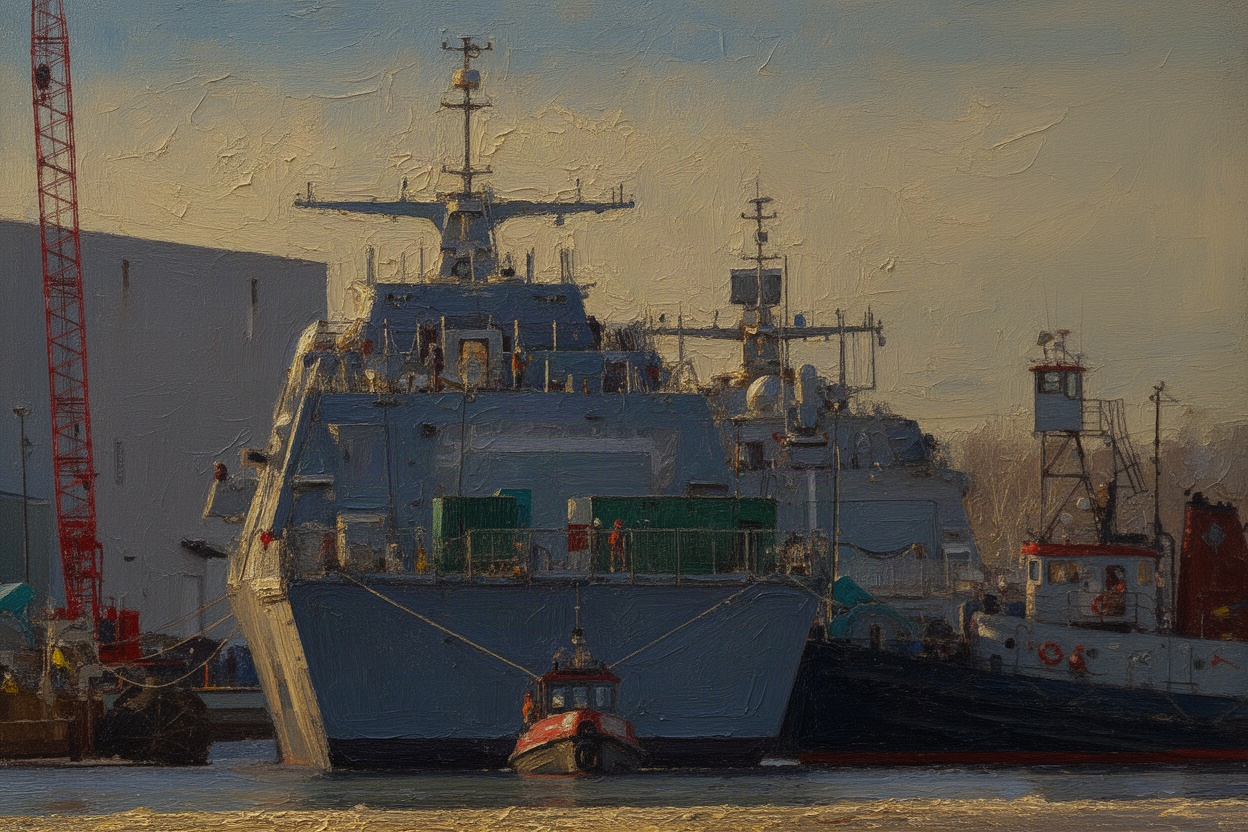
Saudi MMSC Vessels Require Design Fixes and Experience Delays
The Royal Saudi Navy's four Multi-Mission Surface Combatants face design and engineering challenges. Delays stem from deficiencies found during trials, necessitating further modifications.
The Royal Saudi Navy's four Multi-Mission Surface Combatants (MMSCs) are facing substantial design fixes and engineering delays. A new contract published in June has outlined the necessity for additional work due to various deficiencies identified with the trial cards utilized to document issues encountered during trials. Newly discovered discrepancies have also played a critical role in prolonging the timeline for these vessels.
This latest development makes it clear that the construction and operational deployment of the MMSCs will be further delayed. Initially intended to bolster the Royal Saudi Navy's capabilities, these surface combatants are now caught in a cycle of redesign and refinement as engineers address these newly identified issues that emerged during extensive testing and evaluation phases.
Strategically, this situation could impact the Royal Saudi Navy's readiness and operational capabilities in a region characterized by ongoing maritime tensions. The enhancement of naval power is crucial for Saudi Arabia, particularly in the face of threats in the Red Sea and Persian Gulf, thus any delays could have broader implications for national security.
The specific technologies and systems involved in the MMSCs include advanced radar systems and weaponry designed for a multi-role capability. Enhanced engineering will involve re-evaluating the ship design and implementing necessary corrections, which may affect the budget and delivery schedule significantly. The completion date for these vessels remains uncertain due to the unforeseen engineering challenges.
The continued delays and required modifications could strain Saudi Arabia's defense procurement plans. As geopolitical tensions rise, the ability to deploy a fully operational MMSC fleet becomes increasingly critical, affecting both regional stability and the balance of naval power in the Middle East.