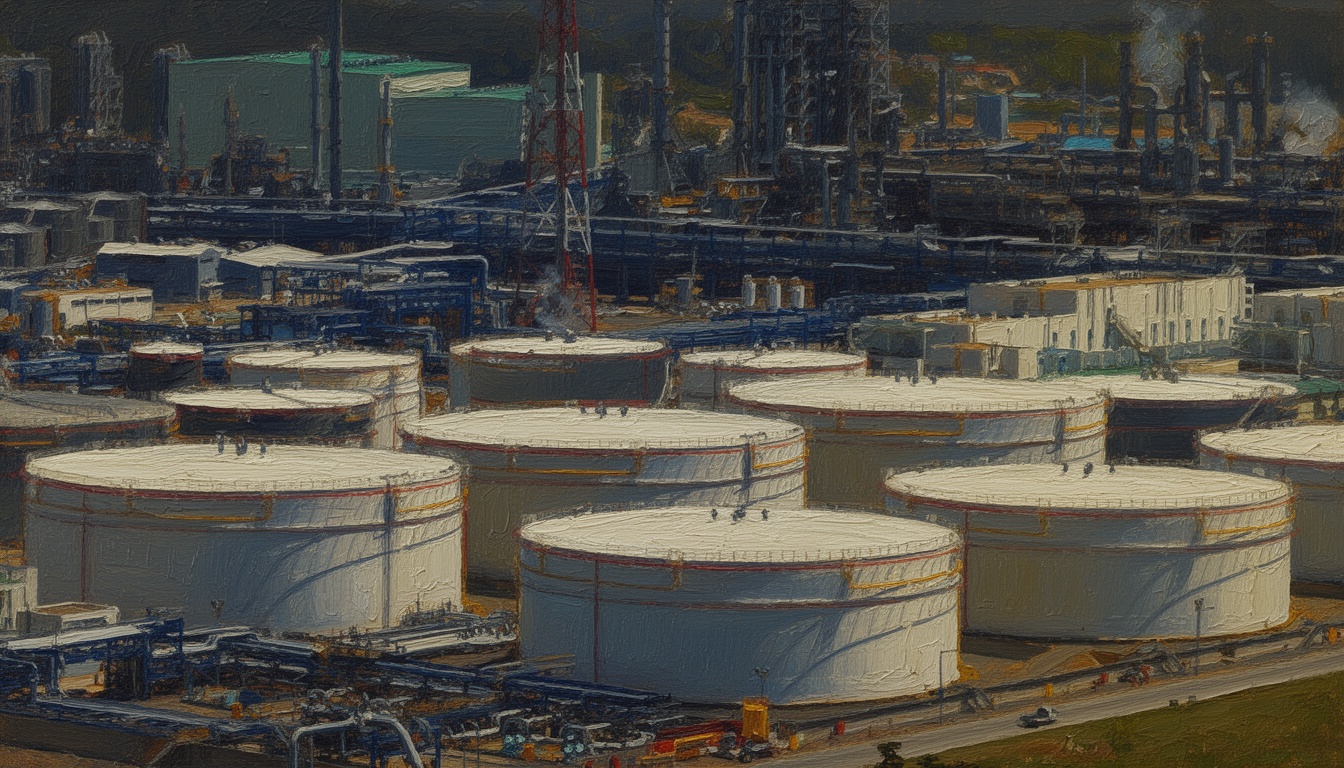
South Korea Attracts Gulf Oil Storage Amid Hormuz Blockade
South Korea's petroleum reserves gain interest from Gulf oil producers despite the Strait of Hormuz's closure. This development highlights challenges faced by oil-importing and producing nations.
South Korea is experiencing increased interest from Middle Eastern oil producers seeking to store crude oil at its extensive petroleum reserve facilities, which rank as the sixth largest globally. This surge in interest is directly linked to the ongoing blockade of the Strait of Hormuz, according to a South Korean official and an industry expert.
The closure of the Strait of Hormuz has significant implications, particularly following the recent conflict involving the US and Israel against Iran. As a critical chokepoint for global oil transportation, its inaccessibility not only impacts nations reliant on oil imports, such as South Korea, but also affects oil-producing countries that are now facing storage capacity constraints due to filled tanks.
Strategically, the situation underscores the vulnerabilities in global oil supply chains and the necessity for alternative storage solutions. Countries dependent on oil imports must consider their energy security in light of such geopolitical tensions, prompting nations like South Korea to enhance their oil storage capabilities to accommodate rising demands.
Operationally, South Korea's petroleum reserve bases offer a unique advantage with available storage capacity. These reserves could play a crucial role in stabilizing oil markets if global supply chains remain disrupted, particularly with the ongoing tensions around the Strait of Hormuz.
The likely continuation of the blockade may force further escalation of this interest from Middle Eastern oil producers. As long as geopolitical risks linger, South Korea's enhanced role in oil storage could lead to new partnerships and negotiations within the region, reshaping dynamics in energy security and trade.