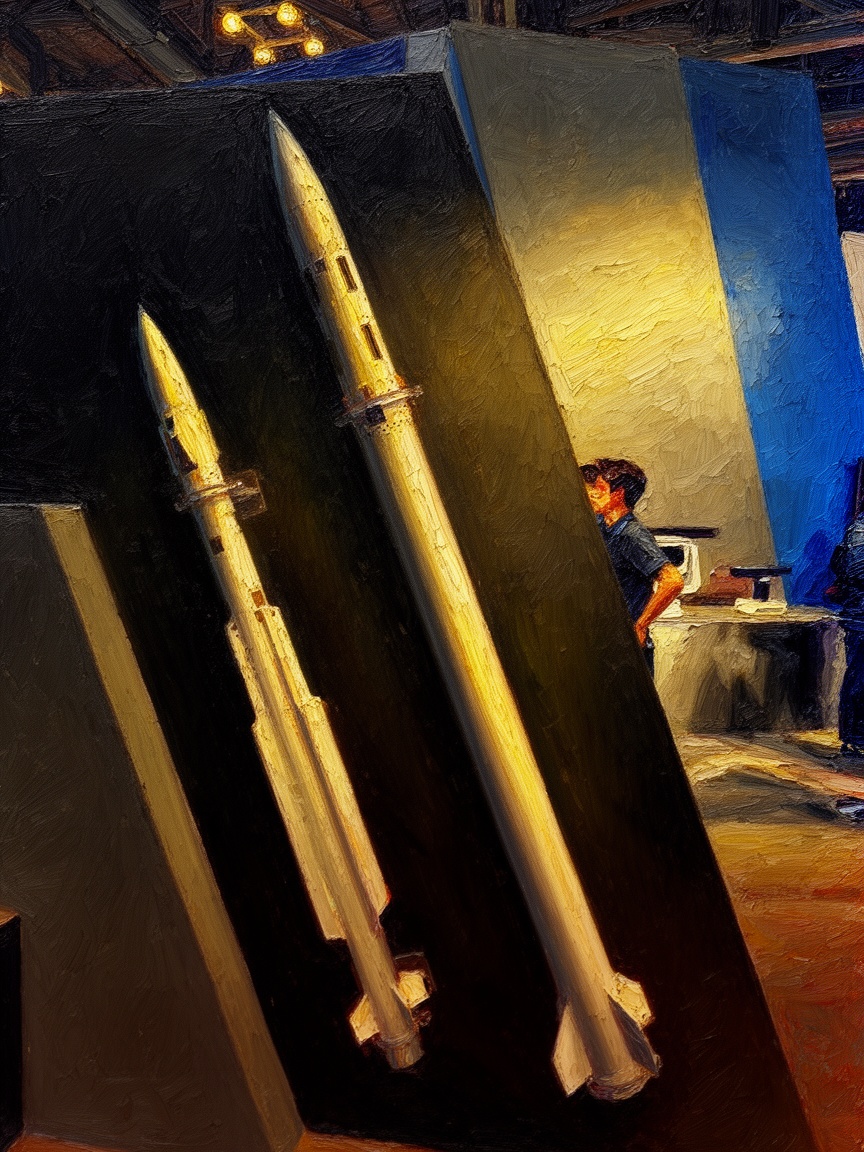
South Korea Begins Prototype Assembly of KSAM-II Missiles
LIG Defense & Aerospace initiates assembly of KSAM-II missiles for ROK Navy. This development aims to enhance indigenous air defense capabilities.
LIG Defense & Aerospace (D&A) of South Korea has commenced the assembly of prototype Ship-to-Air Missile-II (KSAM-II) systems for the Republic of Korea Navy (ROK Navy). This initiative marks a significant advancement in South Korea's naval defense capabilities, providing a crucial replacement for the existing SM-2 missile system designed for future surface combatants.
The KSAM-II program is focused on developing a domestically produced missile system that integrates advanced technologies to boost the ROK Navy's air defense. The effort to produce these missiles aligns with South Korea's strategic objective of enhancing its defense autonomy and operational readiness in response to evolving regional threats. Production is projected to accelerate, with flight-test missiles expected to be delivered by the end of the month.
Strategically, the KSAM-II system will play a pivotal role in expanding the ROK Navy's missile defense architecture, allowing for greater interception capabilities against airborne threats. The advancement of indigenous missile production reflects a broader trend in South Korea's defense policy aimed at decreasing reliance on foreign systems and boosting indigenous military innovation.
The KSAM-II missiles are designed to operate effectively in both coastal and maritime environments, enhancing the Navy's ability to protect its naval assets and ensure maritime security. The integration of high-speed processing and advanced guidance systems in the KSAM-II design indicates a focus on countering modern aerial threats with improved precision and effectiveness.
As the assembly phase continues, the successful development of the KSAM-II will likely yield substantial implications for regional security dynamics. A strengthened ROK Navy, equipped with advanced defensive capabilities, may alter the balance of power in Northeast Asia, prompting neighboring countries to reassess their military strategies in response to this new indigenous capability.