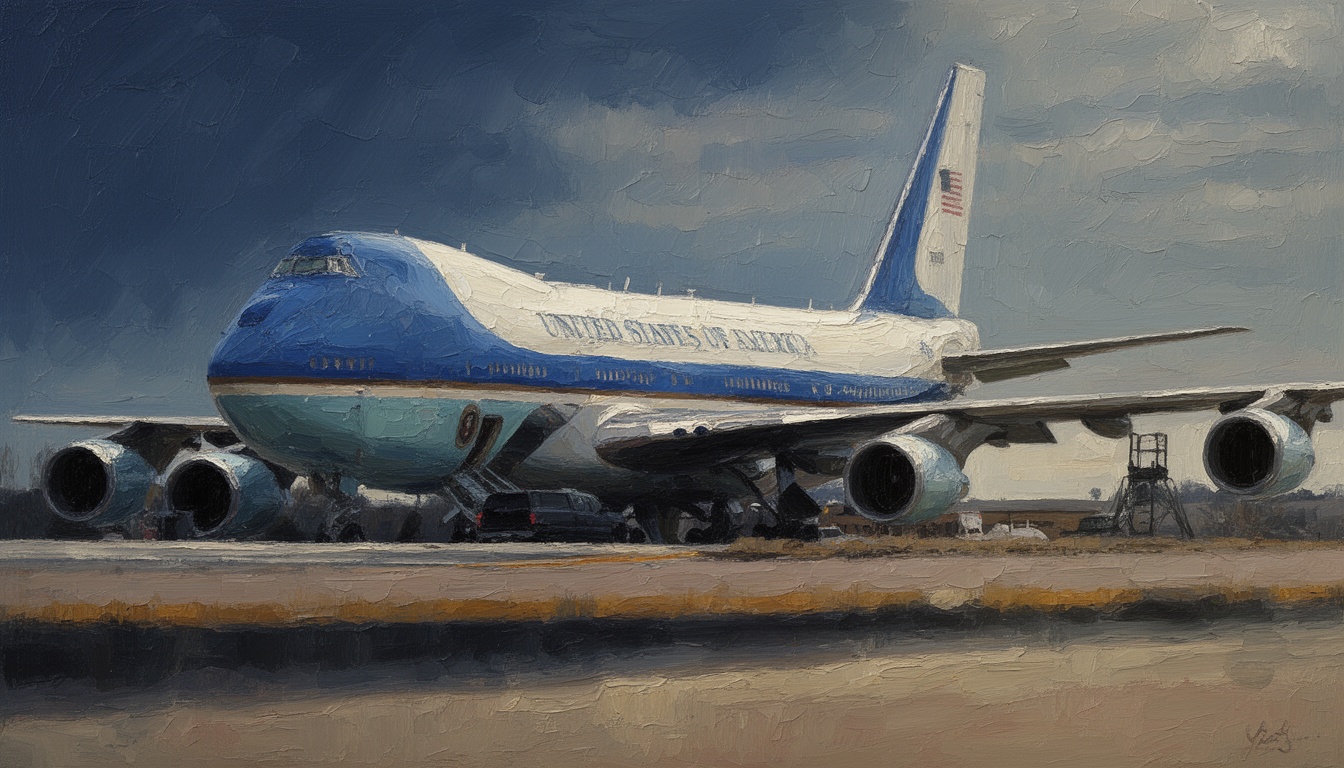
Speculation Grows Over Qatari Jet as Air Force One Retires
The farewell to a historic Air Force One jet hints at potential operational shifts. A Boeing 747 from Qatar may soon serve as a presidential transport.
On Thursday, White House officials officially bid farewell to one of the two Boeing 747 jets used to transport U.S. presidents for over three decades. This significant moment marks the retirement of an aircraft renowned for its role in American history, serving as a symbol of presidential power and travel. The aircraft has been pivotal in numerous historic events, including state visits and national emergencies.
The retirement of this iconic jet has sparked intense speculation regarding its successor. Notably, a Boeing 747 previously gifted to former President Donald Trump by Qatar is rumored to be poised for entry into service as the next presidential transport. This potential transition raises questions about the future direction of U.S. presidential travel and whether a private jet from an allied nation will take on this critical role.
Strategically, the introduction of the Qatari 747 into presidential service could reflect deeper ties between the U.S. and Qatar, particularly in defense and diplomatic engagements. This aircraft is expected to undergo significant modifications to meet the high security and operational standards required for presidential transport, similar to those of previous Air Force One jets.
The specifics of the Qatari jet, including its capabilities and modifications, remain under wraps, but it is reported to have state-of-the-art communication and security systems. This addition could signify a shift in how the U.S. leverages its partnerships abroad in terms of logistical support for national leadership.
As discussions about the future of U.S. presidential air travel unfold, the departure of this historic aircraft and the potential arrival of the Qatari jet could usher in a new era of operational dynamics. Observers will be watching closely to see how these developments affect presidential travel protocols and international relations in the region.