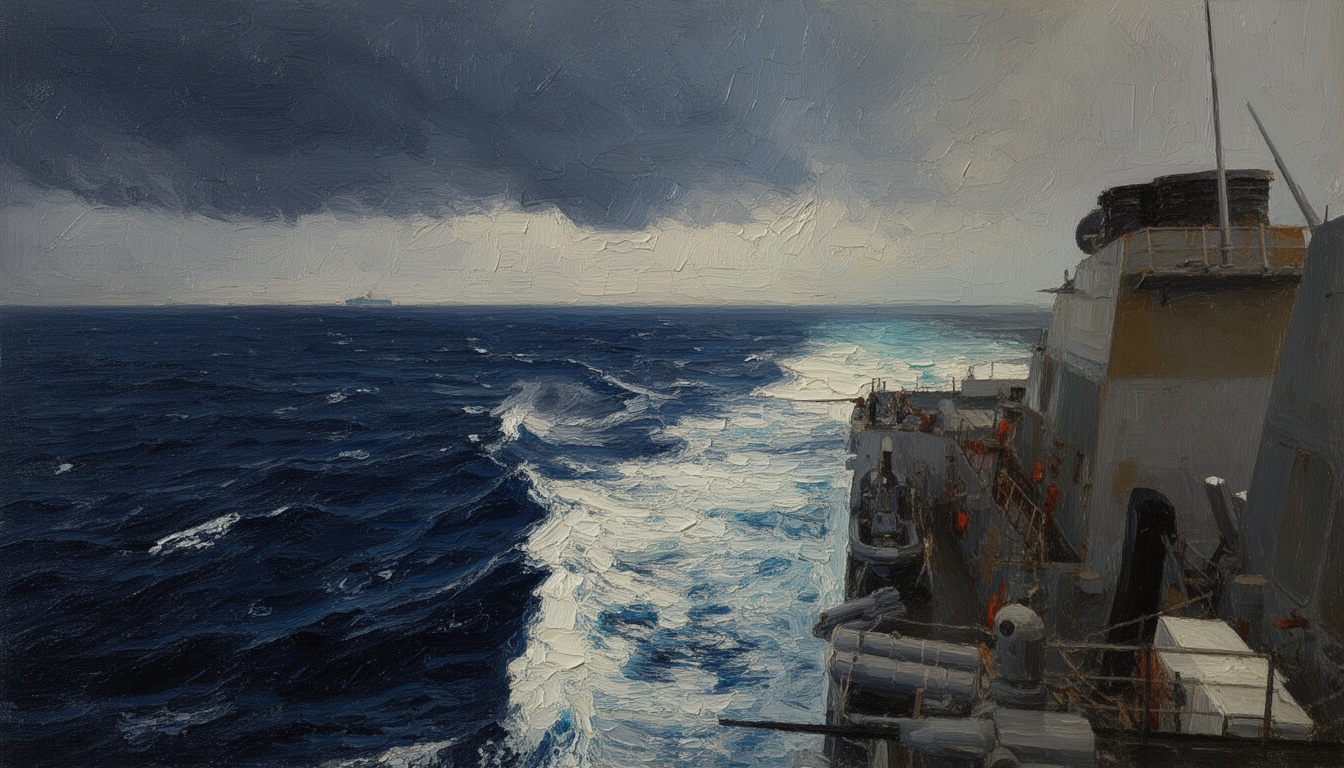
Strait of Hormuz Escort Missions Exceed US Navy Capacity
US Navy faces capacity challenges for escort missions in Strait of Hormuz. Admiral Daryl Caudle highlights the complexities of the operation amidst ongoing regional tensions.
Admiral Daryl Caudle, the Chief of Naval Operations, has declared that escort missions in the Strait of Hormuz would 'exceed' the current capacity of the U.S. Navy. This statement underscores the growing concerns regarding maritime security in a region critical for global oil transportation. President Donald Trump had proposed such naval escort operations earlier this year, aiming to ensure safe passage through these vital waters.
The Strait of Hormuz is a strategic chokepoint, with an estimated 20% of the world's oil passing through it. The heightened tensions in the area have led to increased threats against commercial shipping, prompting discussions on military escort operations. Admiral Caudle characterized this potential mission as 'very challenging', indicating the complexity involved in deploying naval resources effectively.
Strategically, the failure to adequately secure these waters could have severe repercussions for global oil markets and international relations. Any disruption in oil shipments could lead to economic instability, heightening the stakes for military involvement.
Operationally, the U.S. Navy’s current commitments stretch its resources thin, which complicates the feasibility of undertaking such escort missions without risking naval readiness elsewhere. The Navy must balance regional requirements with its broader global commitments, which have already been under strain due to recent operational demands.
Looking ahead, the challenges outlined by Admiral Caudle suggest that any decision regarding increased naval presence will require careful consideration and possibly the allocation of additional resources. Failure to address these challenges may create an environment ripe for conflict in the already volatile region of the Strait of Hormuz.