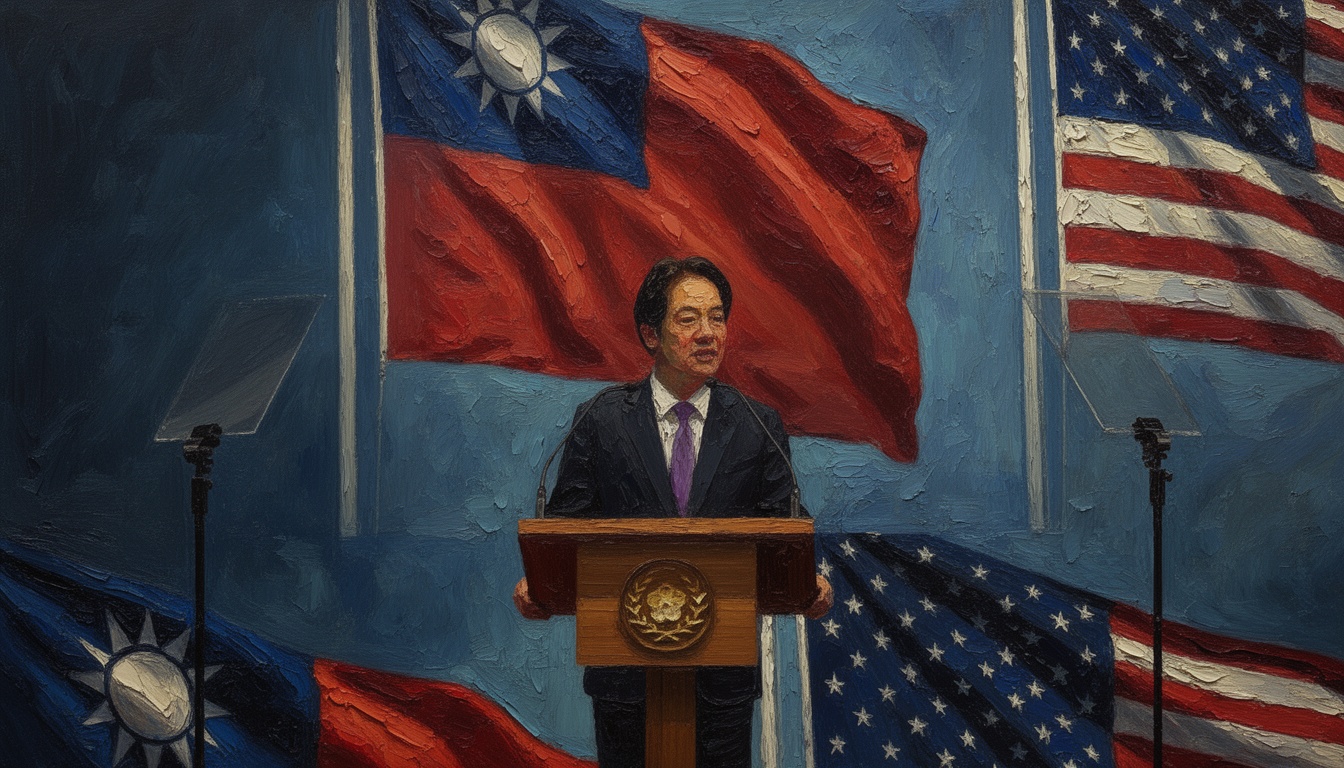
Taiwan Asserts Sovereignty Amid US Security Commitment
Taiwan reinforces its claim as a sovereign nation, citing US arms sales. This stance follows President Trump's caution against formal independence after engaging with China's leadership.
Taiwan's foreign ministry declared on Saturday its status as a "sovereign and independent" nation, reaffirming its belief in the legitimacy of its national identity. This bold assertion comes in light of U.S. arms sales to the island, which Taiwanese officials consider a vital part of Washington's security commitment. The announcement follows a warning from President Donald Trump, who advised Taiwan against pursuing formal independence following his discussions with Chinese President Xi Jinping during a recent state visit to China.
The backdrop to Taiwan's statement includes heightened tensions between Taiwan and China, particularly regarding Beijing's persistent claims of sovereignty over the island. The U.S. has historically supported Taiwan, providing military assistance as a measure to counteract Chinese aggression. The timing of Taiwan's declaration appears to be a strategic maneuver meant to reinforce its position while navigating the complexities of U.S.-China relations.
Taiwan is facing increasing pressure from China, which has ramped up military exercises and aggressive rhetoric towards the island. The assurance of U.S. arms sales serves as a crucial deterrent against potential Chinese military actions. This commitment includes advanced weaponry and defense systems that bolster Taiwan's capabilities, thus playing a critical role in regional security dynamics.
In recent years, Taiwan has worked diligently to strengthen its defense posture, significantly increasing its military budget. Reports suggest that Taiwan's defense spending is set to reach approximately $19 billion for the fiscal year 2024, which signifies a commitment to enhancing its military readiness in the face of increasing threats. This investment underscores the importance of Taiwan's relationship with the U.S., especially as it seeks to modernize its armed forces.
The future implications of this situation remain uncertain. While Taiwan is determined to assert its independence, the risk of conflict with China looms large. Observers anticipate that any further moves towards formal independence could provoke a severe backlash from Beijing, potentially destabilizing the region. The U.S. role in this geopolitical landscape will likely be crucial as tensions continue to rise between the two superpowers.