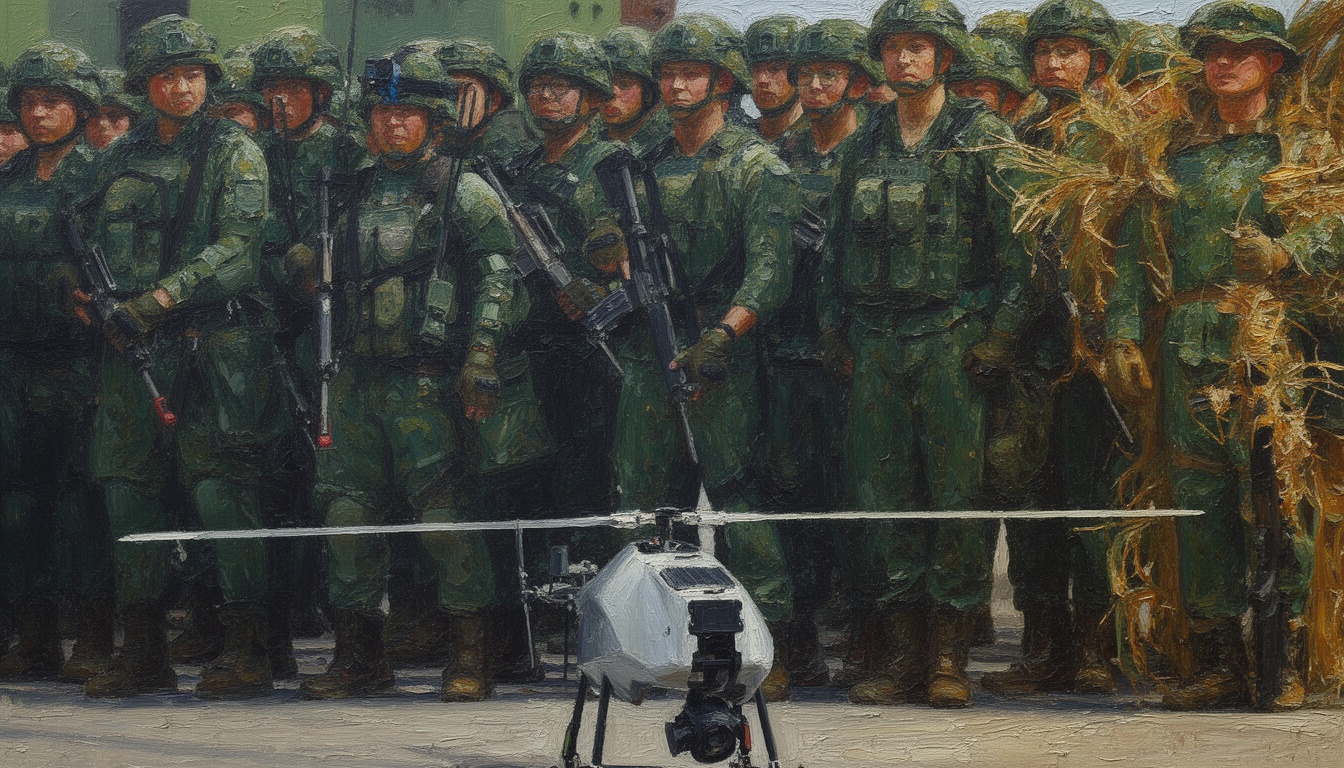
Taiwan Political Deadlock Threatens Military Drone Development
Taiwan's political impasse stalls military drone expansion, impacting local manufacturers. The ruling party and opposition struggle to finalize drone procurement legislation.
Taiwan is facing a political deadlock that jeopardizes its efforts to enhance military drone production and procurement. On Monday, lawmakers from both the ruling Democratic Progressive Party (DPP) and the opposition failed to reach a consensus after six hours of debate regarding competing bills aimed at increasing the country’s military drone capability. This disagreement raises concerns about the future of Taiwan's domestic defense manufacturers.
The DPP and its opposition counterparts generally share the view that expanding Taiwan's drone arsenal is essential for national defense against external threats. However, fundamental differences exist on the oversight of the procurement process. The ruling party advocates for a centralized approach, while opposition members push for more decentralized control, which they argue would foster transparency and accountability.
Strategically, enhancing drone capabilities is critical for Taiwan amid increasing military pressure from the People's Republic of China. The inability to finalize a procurement strategy could hinder Taiwan's overall military readiness and response capabilities. This is particularly pertinent given recent Chinese military exercises in the Taiwan Strait, which have underscored the urgency of bolstering Taiwan’s defensive capabilities.
The proposed legislation outlines various measures, including investments in advanced drone technology and expanding local manufacturing partnerships. Taiwan’s defense budget for 2024 has earmarked NT$20 billion (approximately US$645 million) for drone development, emphasizing the government's commitment to enhancing military preparedness.
If the political deadlock continues, Taiwan could face a delay in modernizing its defense capabilities. This would not only affect its military readiness but also threaten the viability of domestic manufacturers who rely on government contracts for growth. Without a clear path forward, Taiwan's efforts to strengthen defense mechanisms could be severely undermined, ultimately impacting regional security dynamics.