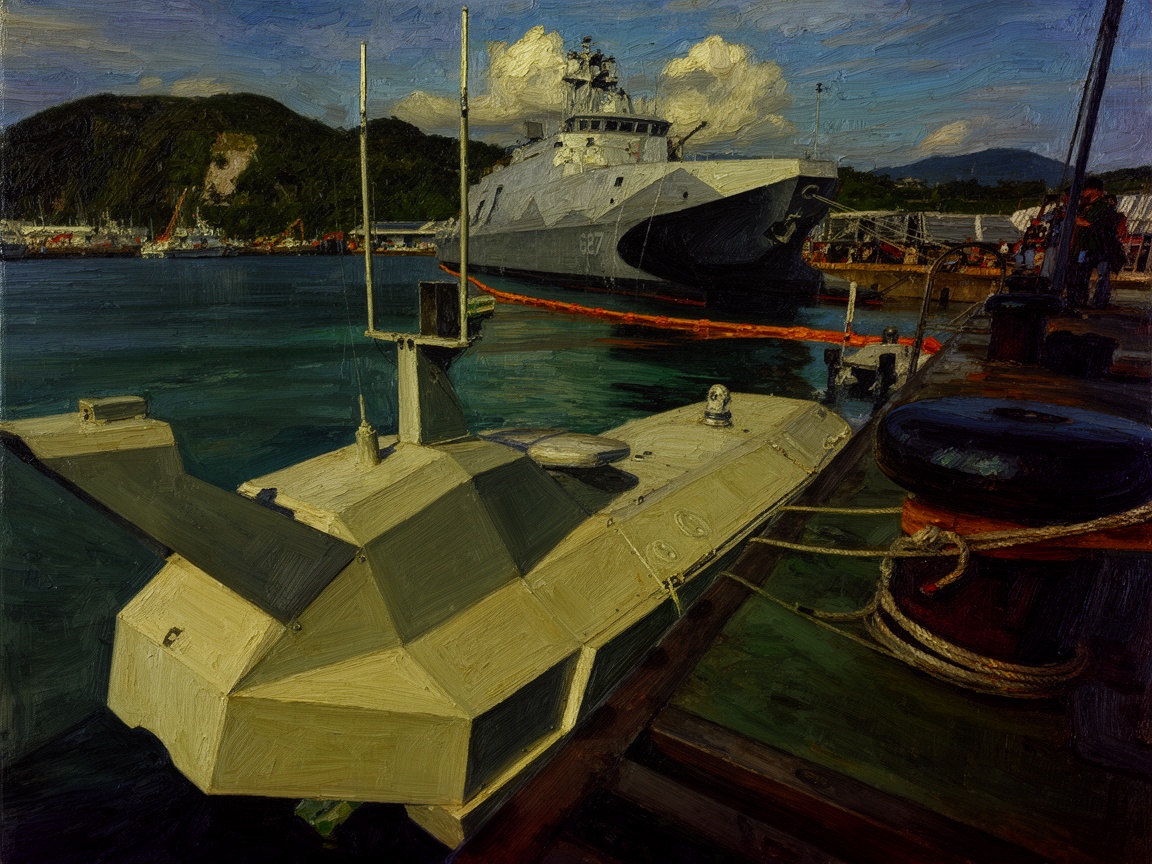
Taiwan Urged to Build a Drone Powerhouse by US Diplomat
The de facto US ambassador to Taiwan highlights the strategic importance of drones for Taiwan's security. Raymond Greene emphasizes that drone technology could significantly bolster defense capabilities in the face of regional threats.
Raymond Greene, the de facto US ambassador to Taiwan, has stated that the island needs to transform into a 'hornet’s nest' of drones to enhance its security. He described drone technology as a 'game-changing opportunity' for Taiwan amid increasing military pressure from the People's Republic of China. Greene's remarks underline the importance of adopting advanced technology in Taiwan's defense strategy.
Historically, Taiwan has faced significant challenges due to its geographical proximity to China, which has been expanding its military capabilities in the region. Greene’s comment comes at a time when Taiwan is seeking ways to strengthen its deterrent capabilities against potential aggressions. The US has been a key partner in Taiwan's defense, providing critical military assistance and technology transfer.
The strategic significance of Greene's statement cannot be overstated. As tensions rise in the Taiwan Strait, building a robust drone fleet could allow Taiwan to utilize asymmetric warfare strategies effectively. Drones can offer Taiwan enhanced surveillance, reconnaissance, and strike capabilities, potentially leveling the playing field against a much larger Chinese military.
Technical details on potential drone systems were not disclosed, but existing platforms like the UAVs from Taiwan's own defense industry, including the Chien Hsiang drones or the newer Teng Yun drones, could form the backbone of this drone initiative. Investing in these technologies would likely require substantial funding, possibly supported by US military aid.
If Taiwan successfully implements this strategy, it may deter Chinese aggression, shift the balance of power in the region, and bolster alliances with other nations concerned about Chinese territorial ambitions. The push for a drone-centric defense could serve as a model for other nations facing similar challenges globally, emphasizing the need for innovative military solutions in the 21st century.