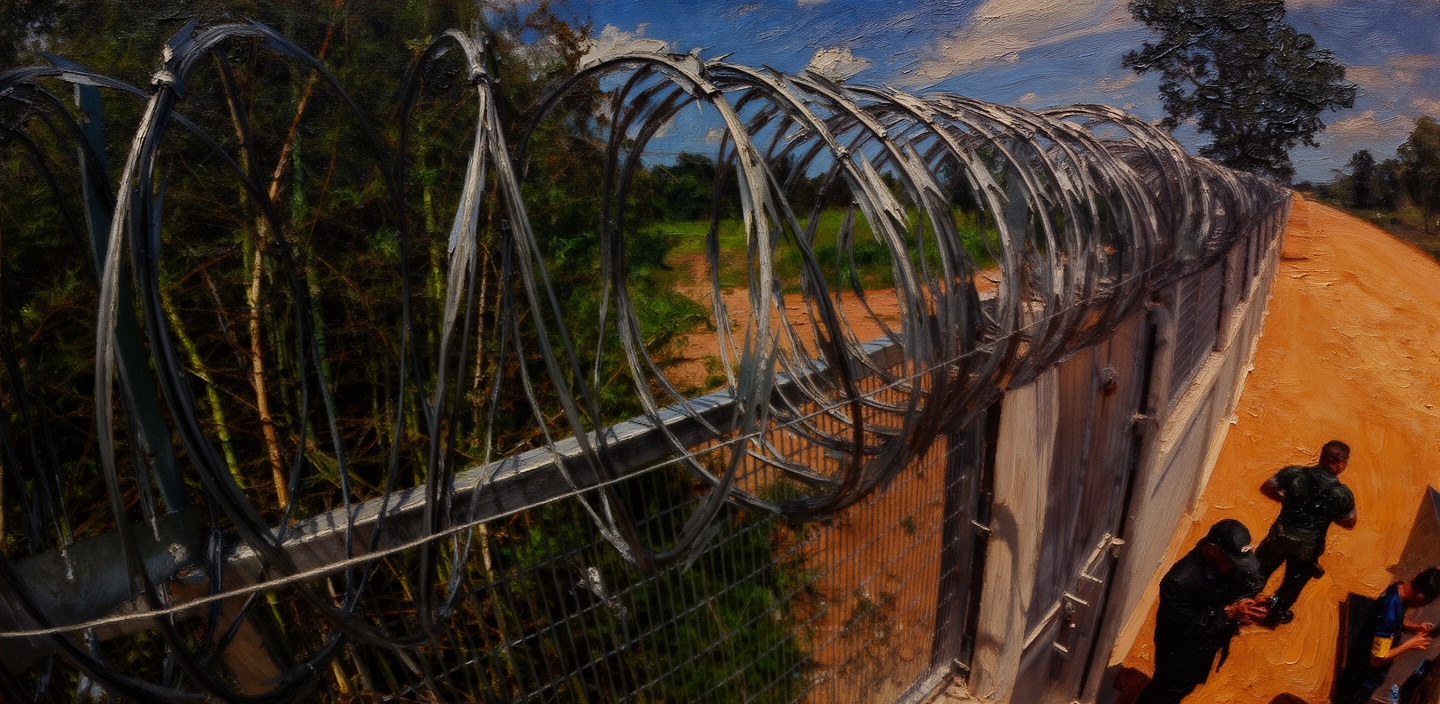
Thailand Constructs Border Wall with Cambodia
The Thai military has initiated the construction of a border wall with Cambodia to enhance security and control immigration. This development reflects ongoing tensions and regional security concerns.
The Royal Thai Armed Forces have begun the extensive development of a border wall along the Thailand-Cambodia frontier. This construction project aims to strengthen security measures against illegal immigration and smuggling activities, as reported by local military sources. The wall is part of a broader strategy to address potential security breaches as well as to monitor cross-border movements more effectively.
Historically, the border region has witnessed sporadic tensions between Thailand and Cambodia, particularly over disputed territories like the Preah Vihear Temple. The construction of this wall signifies a strategic shift in Thailand's defensive posture, particularly in light of recent regional conflicts and territorial disputes.
Strategically, the wall enhances Thailand's ability to control its borders and respond to security threats more effectively. Additionally, it serves as a deterrent against illegal crossings and can prevent potential conflicts from escalating. The move comes at a time when regional stability is of paramount importance, especially given the increasing security dynamics in Southeast Asia.
The construction of the border wall is expected to involve significant military resources, including personnel and heavy equipment. The total estimated investment for this project remains undisclosed, but it emphasizes Thailand's commitment to border security measures and regional stability operations.
Consequences of this development could lead to heightened tensions along the border, especially if Cambodia perceives this action as a direct threat. Moreover, international observers may scrutinize the implications of this militarization on local communities and cross-border relations, potentially impacting diplomatic ties between the two nations going forward.