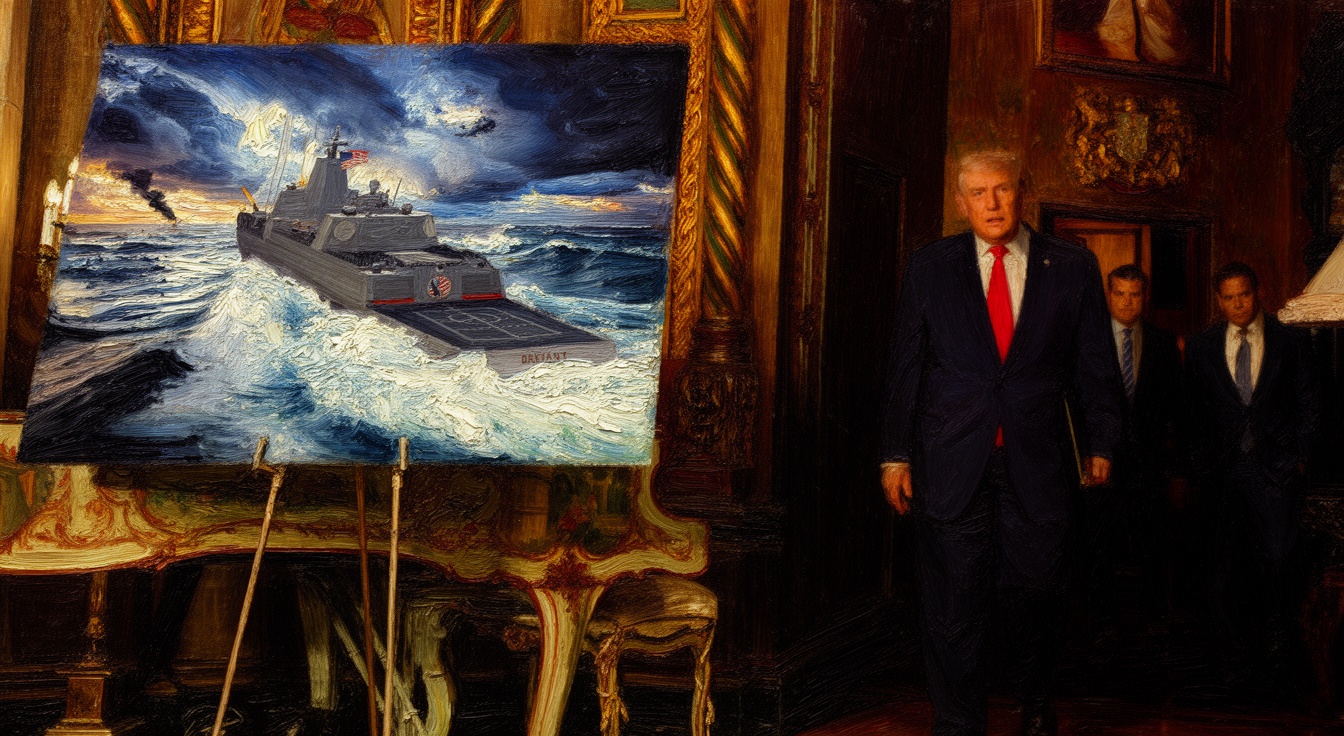
Trump-Class Battleship Funding Amendment Fails in HASC Markup
The amendment to cut funding for the Trump-class battleship did not pass during the House Armed Services Committee markup. This move reflects ongoing debates about naval capabilities.
An amendment aimed at eliminating funding for the Trump-class battleship faltered during the House Armed Services Committee (HASC) defense bill markup session. Representative Adam Smith from Washington expressed confidence in the future funding of the BBG(X) program, stating, "Whatever the number is for the BBG(X) program, I’m going to give you right one of the surest fire Kalshi bets you will ever have: Take the over." This indicates a strong expectation of continued funding, despite the amendment's failure to pass.
In recent years, the Trump-class has become a focal point of contention within U.S. naval strategy, as discussions about naval modernization and force structure continue to evolve. The proposal to eliminate funding reflects wider concerns about budget allocation and the effectiveness of large surface combatants in future conflicts. The fate of such ships is critical to understanding the direction of U.S. maritime policy and defense spending.
Strategically, the Trump-class battleship represents an investment in power projection and deterrence capabilities. As nations expand their maritime capabilities, the U.S. Navy's ability to maintain a technological edge is paramount. The lack of agreement on funding can influence the U.S.'s competitive posture against other maritime powers.
Current discussions hinge on the potential costs and operational effectiveness of the Trump-class. With advancements in missile technology and surface warfare, debates over the relevance of traditional battleships have intensified. The BBG(X) program is viewed as essential for future naval warfare, yet its funding remains contentious among lawmakers.
The unsuccessful amendment reflects the ongoing struggle within Congress regarding naval budgets and strategic priorities. As funding debates continue, the implications for U.S. naval readiness and future maritime engagements remain uncertain, warranting close observation from defense analysts and military strategists worldwide.