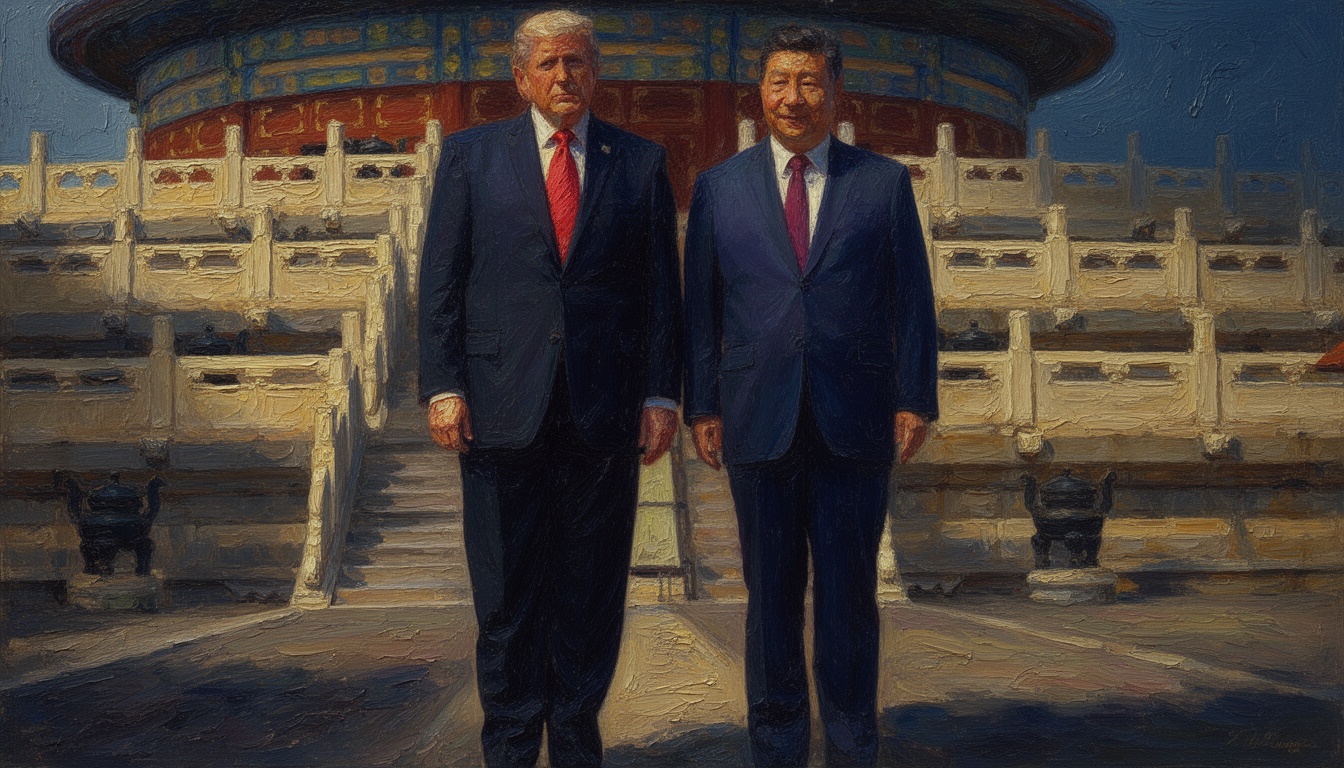
Trump's China Visit Signals Potential Cooperation in Global Affairs
The recent visit of Donald Trump to China raises questions about evolving international dynamics. His engagements suggest a willingness to foster closer ties between major powers.
Donald Trump's recent visit to China underscored a potential shift in international relations as the U.S. and China grapple with their global roles. Over a span of just 43 hours, the 79-year-old president engaged in high-level meetings with Chinese President Xi Jinping, inspected military personnel, attended a formal state banquet, and toured iconic sites, including the Temple of Heaven.
Trump's packed schedule is indicative of a newfound energy in U.S.-China diplomacy, potentially signaling a willingness from both sides to address critical issues collaboratively. His interactions with Xi Jinping, particularly the two meetings that took place, suggest both leaders are keen on improving bilateral relations amidst ongoing tensions in trade, security, and climate policies.
Strategically, these developments may denote a recalibration in how leading powers, notably the U.S. and China, approach their respective national interests. A closer partnership could influence various geopolitical challenges that require cooperation, such as North Korea's nuclear ambitions and trade imbalances.
From an operational perspective, Trump's vigorous itinerary highlights his administration’s intent to reinforce military ties and economic exchange with China. This could entail discussions about arms deals, military collaboration, or economic agreements aimed at stabilizing trade relations and enhancing both countries' defensive postures.
The broader implications of this visit could reshape the Asia-Pacific security landscape. If successful, these interactions might pave the way for more cooperative frameworks addressing global challenges, potentially fostering a more stable international order as both nations adjust to their roles as influential global players.