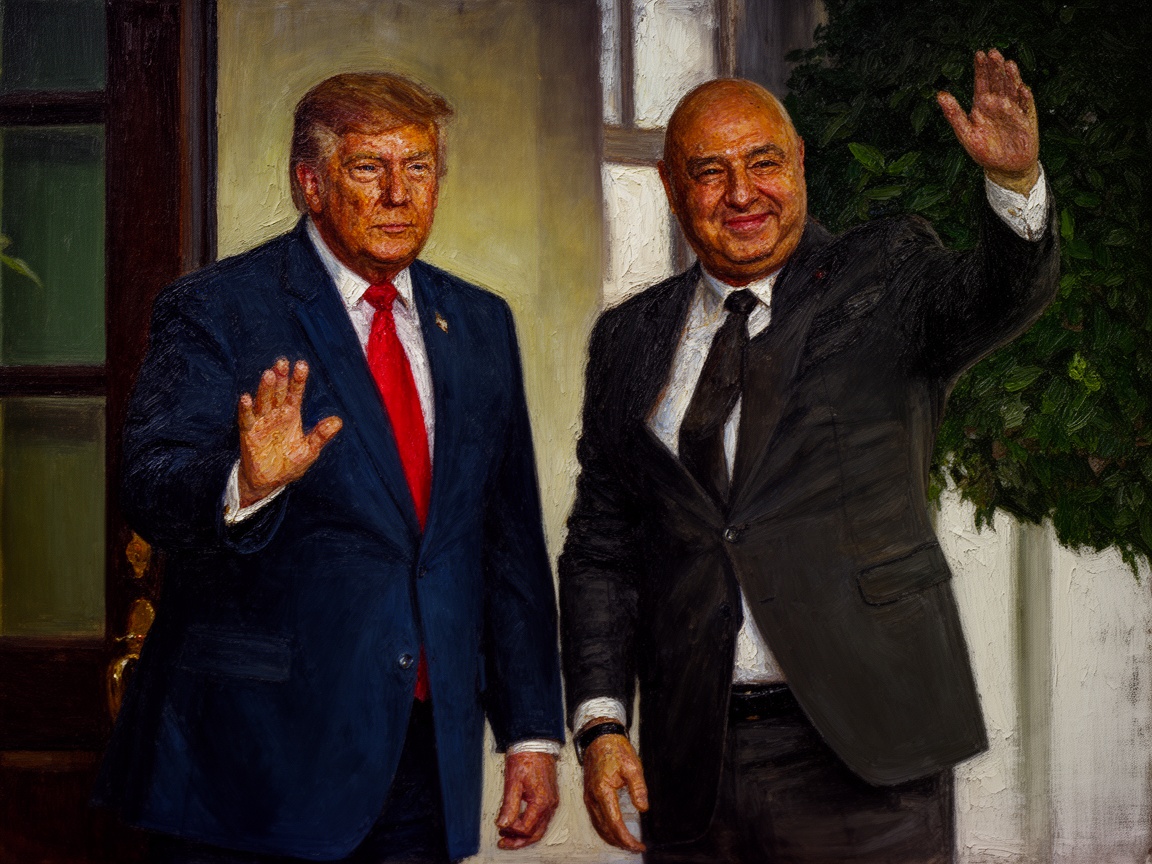
Trump's Syrian Intervention Plan Against Hezbollah Criticized
Analysts warn that U.S. pressure on Damascus might compromise regional stability.
U.S. President Donald Trump's call for a military intervention in Syria to combat Hezbollah has been labeled as short-sighted by intelligence analysts. They highlight that this approach not only fails to address the complex realities of the Lebanese situation but could also backfire, endangering domestic security within Syria.
The backdrop of this tension stems from Hezbollah's increasing influence in the region and its longstanding support from Iran. Analysts posit that any U.S. action urging Damascus to engage Hezbollah directly risks escalating the conflict in Lebanon, thereby destabilizing both countries further. This could provoke a stronger reaction from Iran and its proxy forces, leading to greater instability in the Levant.
The strategic significance of Trump's policy push cannot be understated. Analysts suggest that U.S. intervention without a comprehensive diplomatic framework could inadvertently lead to a power vacuum, allowing extremist groups to gain ground. The dynamics of regional power have shifted, with Hezbollah leveraging its connections both in Lebanon and Syria, which complicates potential U.S. actions.
Current reports estimate Hezbollah's military capabilities, including precision-guided missiles and advanced drone technology, pose a serious challenge for any intervention strategy. Additionally, U.S. military resources already stretched across various theaters may limit the effectiveness of a Syrian front against Hezbollah. The costs and implications of such an intervention, both financially and politically, must be carefully considered.
Looking ahead, the likelihood of an increased U.S. military presence in the region raises concerns among security experts. Without a measured approach, aggressive actions could further fuel extremism and regional tensions rather than curtail them. Analysts call for a reevaluation of U.S. foreign policy in the Middle East, stressing the need for dialogue over military solutions to forge stability in a volatile region.