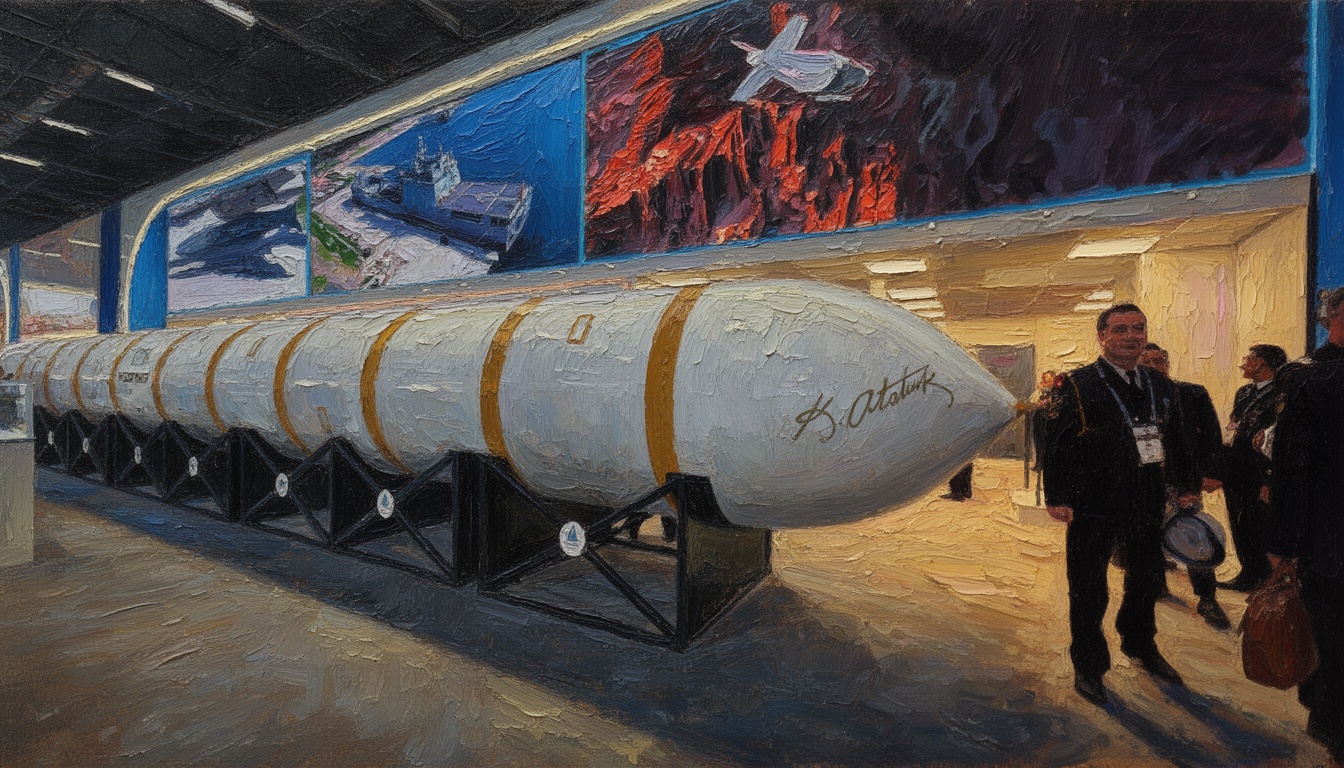
Turkey Develops ICBM with Claimed 6,000km Range
This missile significantly enhances Turkey's military deterrence capabilities and regional influence.
Turkey has reportedly developed an intercontinental ballistic missile (ICBM) claiming a range of 6,000 kilometers. This development represents a significant advancement in Turkey's military capabilities and strategic deterrence. Defense analysts suggest that this ICBM adds a crucial layer of deterrence to Turkey's military arsenal, potentially altering the regional security dynamics.
The ICBM's capabilities demonstrate Turkey's growing focus on enhancing its native defense industry. The missile's range allows for potential targeting of adversarial nations at great distances, thus shifting the balance of power in the region. Such capabilities could deter aggressive actions from neighboring countries and reinforce Turkey's position as a regional power.
Specific details about the missile's technical specifications remain undisclosed, including its warhead capacity and guidance systems. However, the deployment of an ICBM with such a significant range indicates advancements in missile technology that rivals other global powers. Analysts emphasize the need for a detailed assessment of any satellite capabilities that may accompany its launch systems.
The introduction of this missile into Turkey's arsenal is likely to have profound implications on its relationships with both regional and global powers. Russian and Iranian responses to this development will be closely monitored, as they may affect Turkey's strategic partnerships. Furthermore, NATO's reaction to Turkey's missile advancement could lead to further discussions on missile defense within the alliance, highlighting the need for balance in response measures among member states.
In conclusion, the rollout of an ICBM claiming a 6,000 km range marks a significant step in Turkey's military evolution. The implications for regional security and international relations are considerable, with potential shifts in power dynamics and deterrence strategies across the broader region.