Two Chinese Generals Signal Shift in Military Leadership Dynamics
The seating arrangement of generals at a recent gala indicates potential changes in China's military hierarchy. Zhang Shuguang and Wang Gang's prominent positions suggest their rise in influence within the People's Liberation Army.
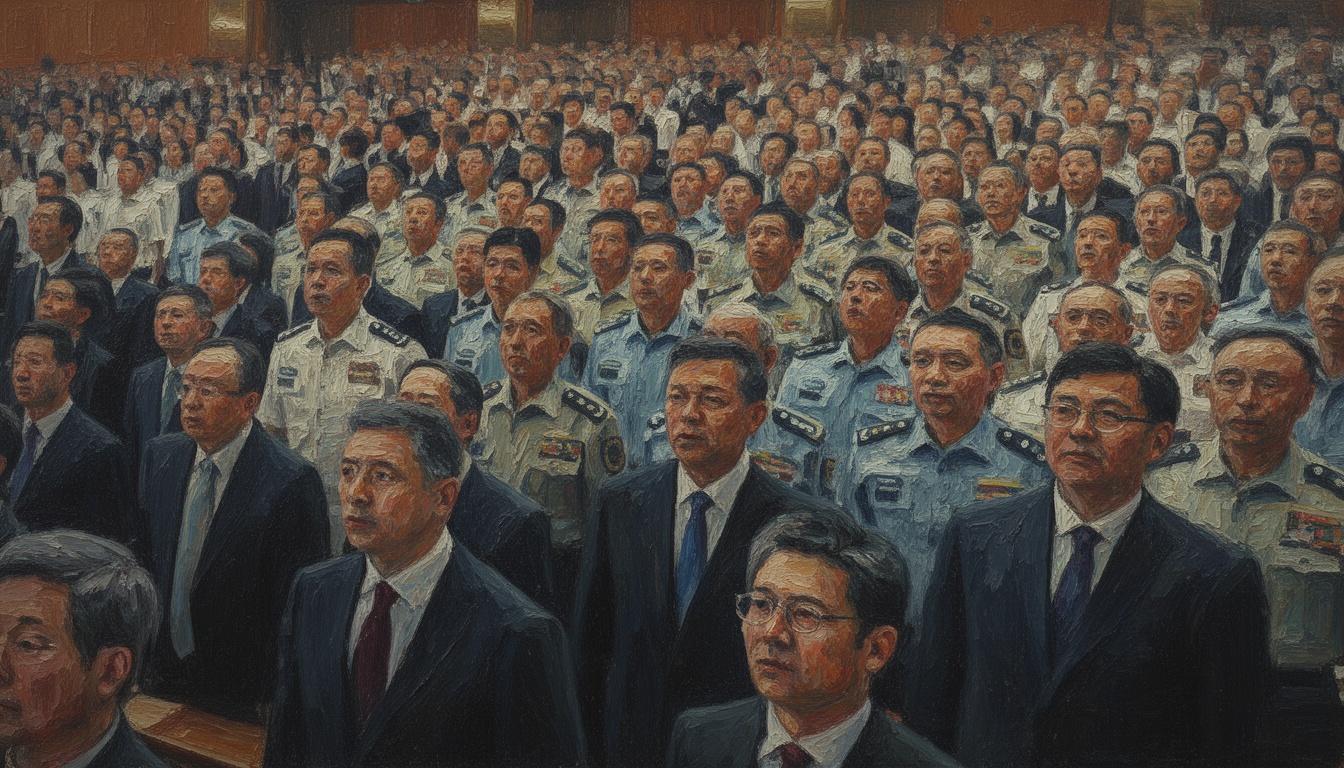
Two lieutenant generals were prominently seated among top People's Liberation Army (PLA) officers during a high-profile ceremony this week, signaling a notable shift in China's military leadership dynamics. Zhang Shuguang and Wang Gang occupied key positions at the front of the military leadership section during the gala commemorating the 105th anniversary of the Communist Party's founding on Monday, marking their first time in such prominent company.
The event, which took place on Monday evening, included several high-ranking officials, illustrating the importance of Zhang and Wang's appearance at this critical moment in China's political and military landscape. Their presence suggests a consolidation of power among a new generation of military leaders as the country navigates increasingly complex regional and global challenges.
This gala not only celebrated the Communist Party's history but also may indicate a deliberate effort to elevate these generals in the public eye. The People's Liberation Army is the world's largest standing army, and leadership changes within its ranks are closely scrutinized for potential shifts in military strategy and doctrine.
Speculation is rife among analysts that the emerging influence of generals like Zhang and Wang may reflect a broader strategic pivot in the Chinese military's approach to both internal and external security threats. As China positions itself more assertively on the world stage, the implications of leadership transitions within the PLA could have significant consequences for regional stability.
Looking ahead, the potential rise of Zhang Shuguang and Wang Gang within the PLA's power structure could reshape military policy and operations. If these generals gain more authority, China may see a more aggressive military posture, influencing the balance of power in the Asia-Pacific region and beyond.