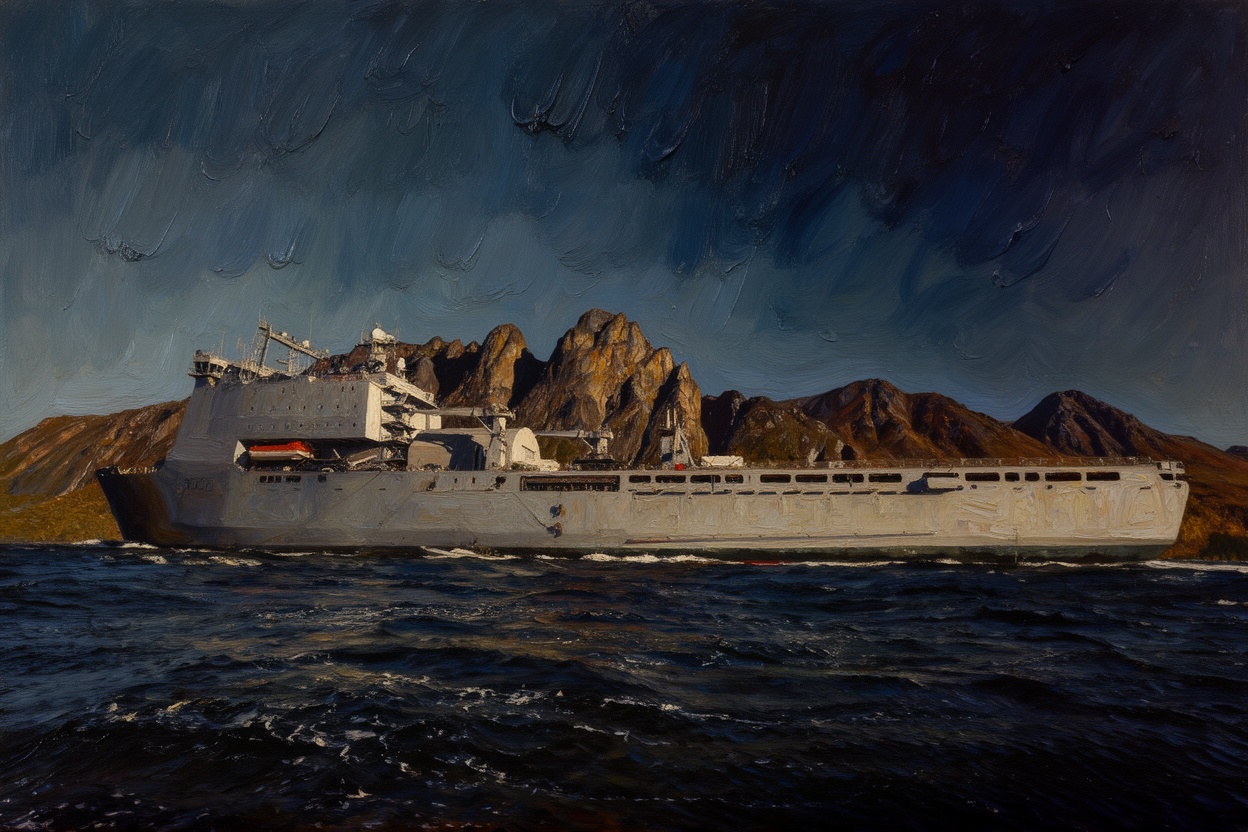
UK Navy's Lyme Bay Becomes Mine Warfare Mothership
The Royal Navy's adaptation of RFA Lyme Bay demonstrates its 'hybrid navy' capability. This strategic shift enhances flexibility to respond to ongoing international crises.
The United Kingdom has transformed the Bay-class auxiliary vessel RFA Lyme Bay into a naval mine warfare 'mothership,' equipped with uncrewed systems for mine-hunting operations. This adaptation was highlighted by the UK's navy chief during a recent conference, suggesting that such innovations are critical in addressing contemporary challenges, exemplified by the crisis in the Middle East.
In recent years, the Royal Navy has been embracing a 'hybrid navy' strategy, which blends traditional naval capabilities with modern technologies, like uncrewed systems. This strategic approach is designed to enhance operational flexibility and responsiveness in dynamic international environments, allowing for rapid deployment of mine countermeasures in response to evolving threats.
The significance of outfitting RFA Lyme Bay as a mothership lies in its potential to revolutionize mine warfare tactics. The uncrewed systems being employed include advanced reconnaissance drones and mine detection vehicles, all of which enhance situational awareness and operational efficiency in contested maritime zones. By utilizing these systems, the Royal Navy can maximize its capabilities while minimizing risk to personnel.
Financial details regarding the upgrades and overall budget for the RFA Lyme Bay's transform into a mine warfare platform have not been publicly disclosed. However, the strategic value of incorporating uncrewed systems aligns with broader defense trends focusing on modernization and increased maritime security, reflecting a growing recognition of the necessity for adaptive naval forces.
The likely consequence of this transformation reinforces the Royal Navy’s deterrent posture in international waters. As the situation in the Middle East develops, the ability to deploy a flexible and responsive naval asset like RFA Lyme Bay could play a crucial role in ensuring regional stability and maintaining freedom of navigation in critical trade routes.