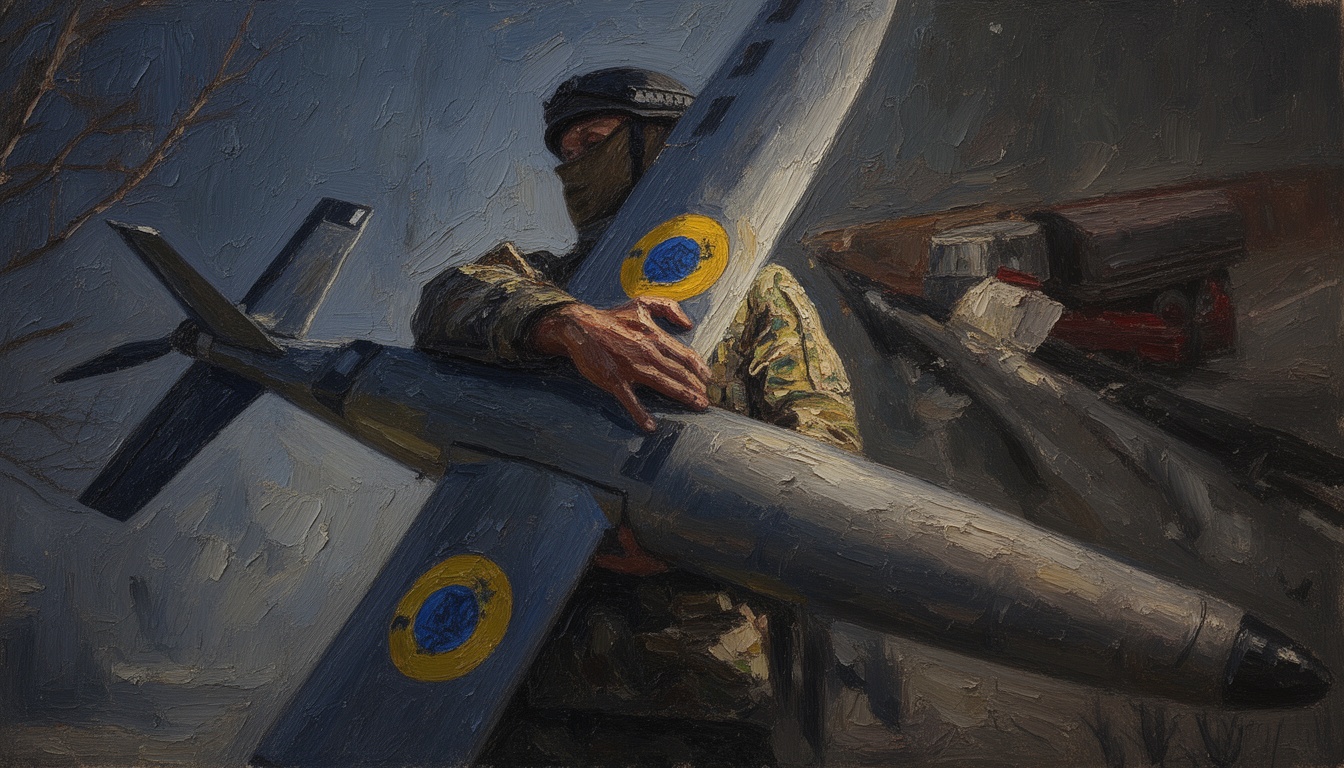
Ukraine Executes AI-Driven Drone Attacks on Russian Logistics
Ukraine's drone campaign leverages AI technology to disrupt Russian supply lines. Insights reveal the strategic depth of these operations amidst ongoing conflict.
Ukrainian forces have initiated a sophisticated drone campaign incorporating artificial intelligence to target Russian logistics networks deep within occupied territory. An officer involved in the campaign has provided valuable insights into the tactics and effectiveness of these strikes, emphasizing their role in disrupting Russian supply lines critical for sustaining military operations.
The use of AI technology in drone warfare marks a significant evolution in Ukraine's military strategy against Russia. These drones, equipped with advanced targeting capabilities, are no longer merely reconnaissance assets but key components in offensive operations that directly impact the operational capabilities of Russian forces. This approach aims to undermine Russia's logistical infrastructure, affecting their ability to resupply frontline units.
The strategic implications of this campaign are profound. By effectively targeting and disabling logistics hubs, Ukraine enhances its military effectiveness while potentially shifting the balance of power in the region. The ability to strike at Russian supply lines complicates Moscow’s operational planning, forcing a reaction that draws resources away from combat operations.
Reports indicate that these AI-enabled drones are capable of executing complex flight paths, enabling them to navigate contested airspace and target logistics nodes that were previously considered safe from Ukrainian strikes. The integration of real-time intelligence allows for precision strikes that minimize collateral damage while maximizing operational disruption.
As Ukrainian forces continue to refine their drone capabilities, the implications for future military engagements are significant. The development and deployment of such advanced technologies could set new precedents for modern warfare, emphasizing the necessity for rapid adaptation among military forces worldwide in response to evolving threats and operational tactics.