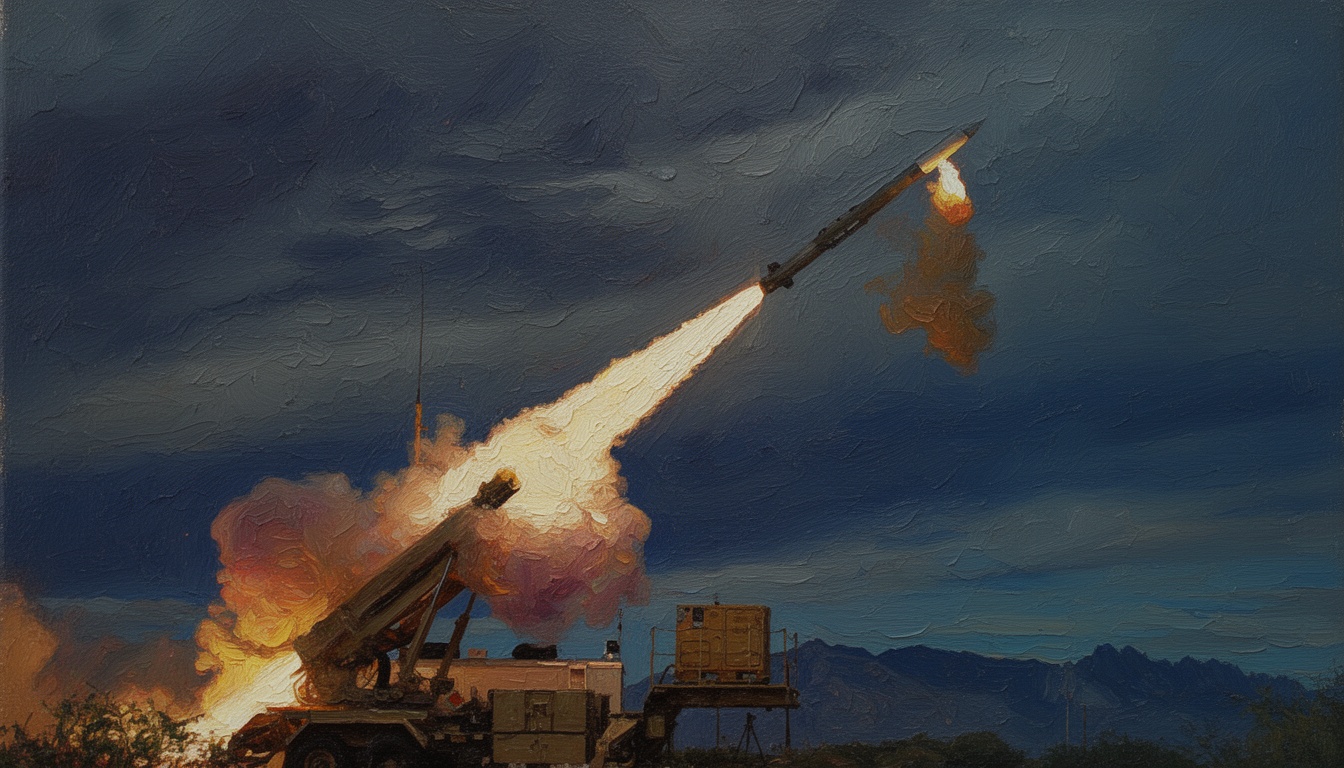
Ukrainian-Built Patriot Missiles Delayed for Country's Defense
Ukraine's ability to defend its airspace with Patriot missiles will be significantly delayed. While a license for local assembly has been promised, the actual production could take many months.
Ukraine's aspirations to enhance its air defense capabilities with domestically assembled Patriot missiles face considerable delays. Former President Donald Trump had indicated the possibility of granting Ukraine a license to manufacture these advanced interceptors. However, the timeline for actual production and deployment appears protracted, with estimates suggesting it could take many months before Ukrainian-built systems can enter service.
The initiative to produce Patriot missiles locally reflects Ukraine's ongoing efforts to bolster its defense amidst the ongoing conflict with Russia. Currently, the country relies heavily on Western-supplied air defense systems to counter aerial threats. The US Patriot missile system is renowned for its effectiveness against various aerial threats, including ballistic missiles and advanced aircraft.
Strategically, the ability to produce its own Patriot interceptors could significantly enhance Ukraine's self-defense capabilities. However, the delays in assembly and production undermine these efforts, potentially leaving critical gaps in air defense during a time of heightened tension in the region.
Technical specifications of the Patriot missile include its ability to engage targets at ranges of up to 160 kilometers, along with high precision and low probability of intercept for enemy fire. However, for Ukraine, the immediate need for such systems might not align with the lengthy underground timelines for local assembly.
In conclusion, the road ahead for Ukraine to operationalize its own Patriot missile systems remains challenging and uncertain. The extended timeline for assembly and the ongoing threats from Russian aerial capabilities may force Ukraine to rely on existing foreign systems for the foreseeable future.