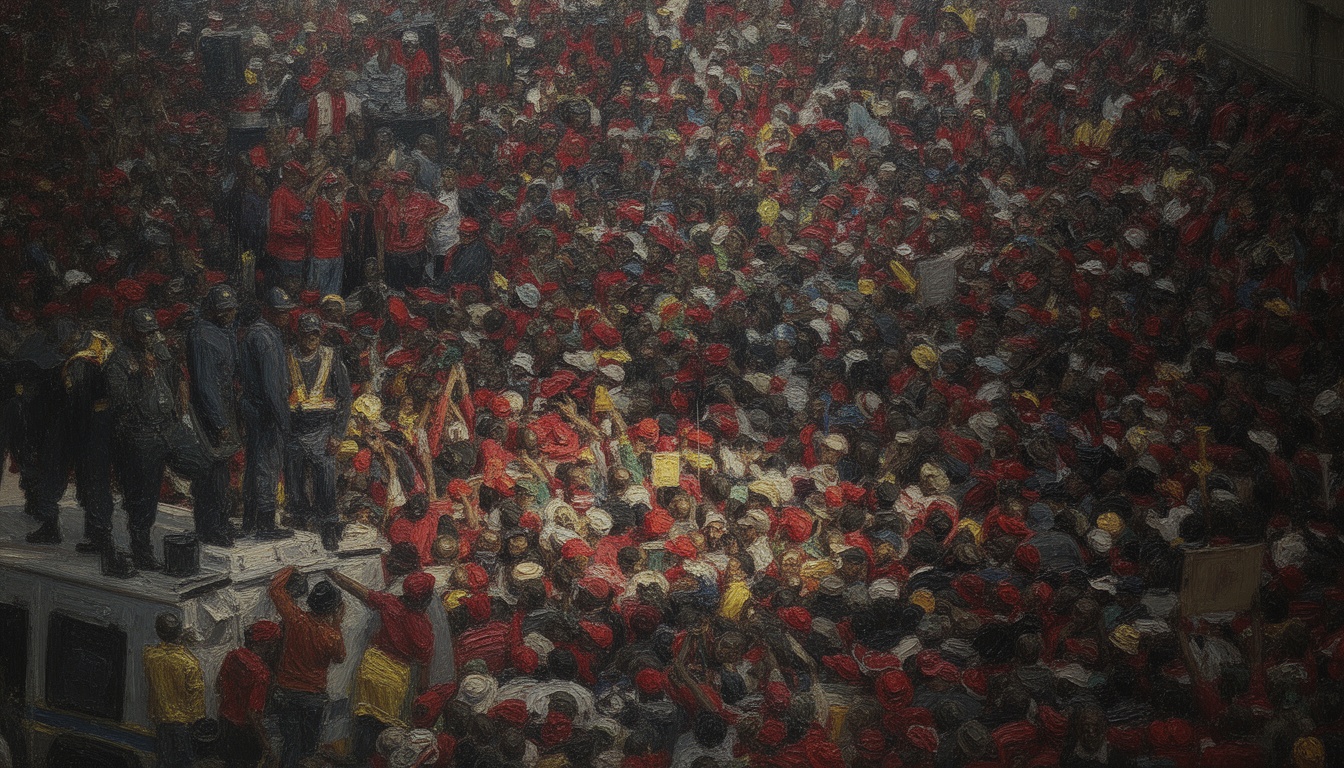
UN Court Affirms Workers' Right to Strike in Treaty Ruling
The UN's nonbinding decision supports the right to strike, impacting global labor relations. Worker groups are expected to celebrate this development.
The International Court of Justice (ICJ) has ruled that the right to strike is protected under a key treaty concerning labor rights. This nonbinding decision is anticipated to resonate widely among workers' advocates and unions globally. The court's interpretation marks a significant recognition of labor rights in an era where worker protections are increasingly scrutinized.
In many countries, labor unions have increasingly faced challenges in advocating for worker's rights, including their ability to strike. This ruling sends a strong message regarding the importance of labor rights at a time of growing nationalism and restrictions on civil liberties in various parts of the world. Worker groups are likely to celebrate this outcome as a step forward in their ongoing struggle for recognition and rights at work.
Strategically, this ruling undermines efforts by certain governments to diminish or limit the power of labor unions. It could lead to shifts in policy as countries are urged to re-evaluate their laws regarding the right to organize and strike. The decision illustrates the role of international law in shaping national labor policies amid rising global economic inequality.
The ruling also highlights the ongoing debates over labor rights and social justice, particularly in light of recent protests and movements advocating for workers' rights. International organizations may leverage this ruling to push for better labor standards worldwide, reinforcing the relevance of the treaty in contemporary labor discourse.
Overall, the ICJ's ruling represents a pivotal moment for worker rights and could influence labor negotiations around the globe. The long-term consequences will depend on how various nations respond to this ruling, especially those with restrictive labor laws. Worker groups may be empowered to engage more actively in advocacy, considering this ruling a validation of their efforts to secure fair working conditions.