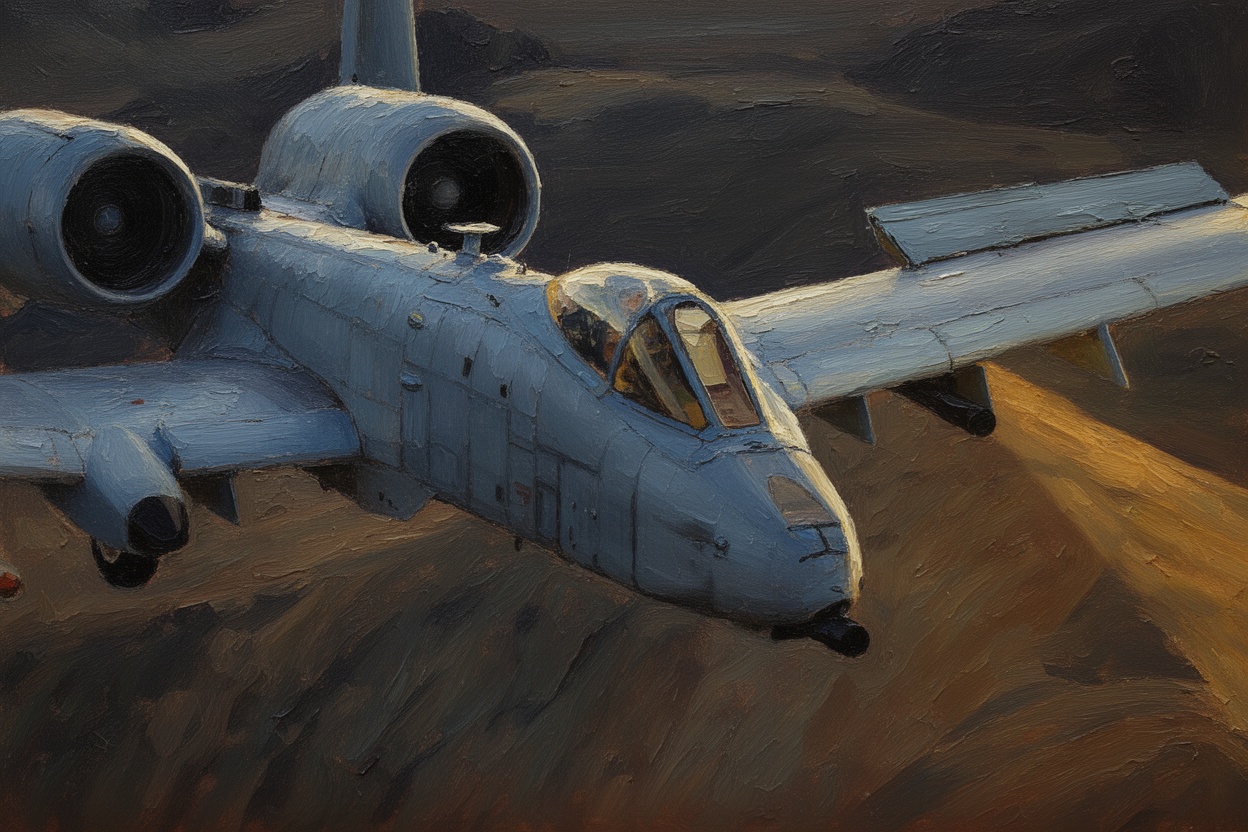
US Air Force Faces A-10 Warthog Divestment Controversy
The U.S. Air Force is ramping up A-10 Thunderbolt II divestment without identifying a suitable replacement. This could impact future ground support capabilities.
The U.S. Air Force is accelerating its plan to divest the A-10 Thunderbolt II aircraft, a key platform known for its close air support missions. The ongoing reduction of A-10s raises significant concerns regarding the effectiveness of future ground support strategies. As the Air Force pushes forward with the divestment, the absence of a designated replacement aircraft adds uncertainty to operational capabilities.
Historically, the A-10 has played a vital role in U.S. military operations since its introduction in the 1970s. It has gained a reputation for durability and effectiveness in combat zones, particularly in supporting ground troops with its 30mm GAU-8/A Avenger cannon. However, despite its proven track record, the Air Force’s focus on modernization has led to questions about the future of this iconic aircraft, with no clear candidate in sight for replacement.
This situation has prompted intense debate within military circles. Concerns arise that the push to retire A-10s could leave a gap in air support capability, especially for ground troops who depend on close air support in conflict scenarios. The legislative response, through proposals like the BRRRRT Act, aims to sustain the A-10 fleet while compelling the Air Force to reevaluate its strategy for close air support.
In the current defense budget, allocations for A-10 retirement are becoming increasingly contentious. Air Force leadership must now exhibit a clear plan, including potential successors to the A-10, to address issues raised by lawmakers and defense community stakeholders. The potential loss of the A-10 fleet may have strategic implications, particularly in the context of evolving military needs.
As discussions surrounding air power and ground support continue, the future of the A-10 remains in a precarious position. Legislative measures such as the BRRRRT Act could play a crucial role in determining whether these aircraft will remain a part of the Air Force’s arsenal. Without suitable replacements, the gap in functional capabilities could threaten operational readiness in ground support missions.