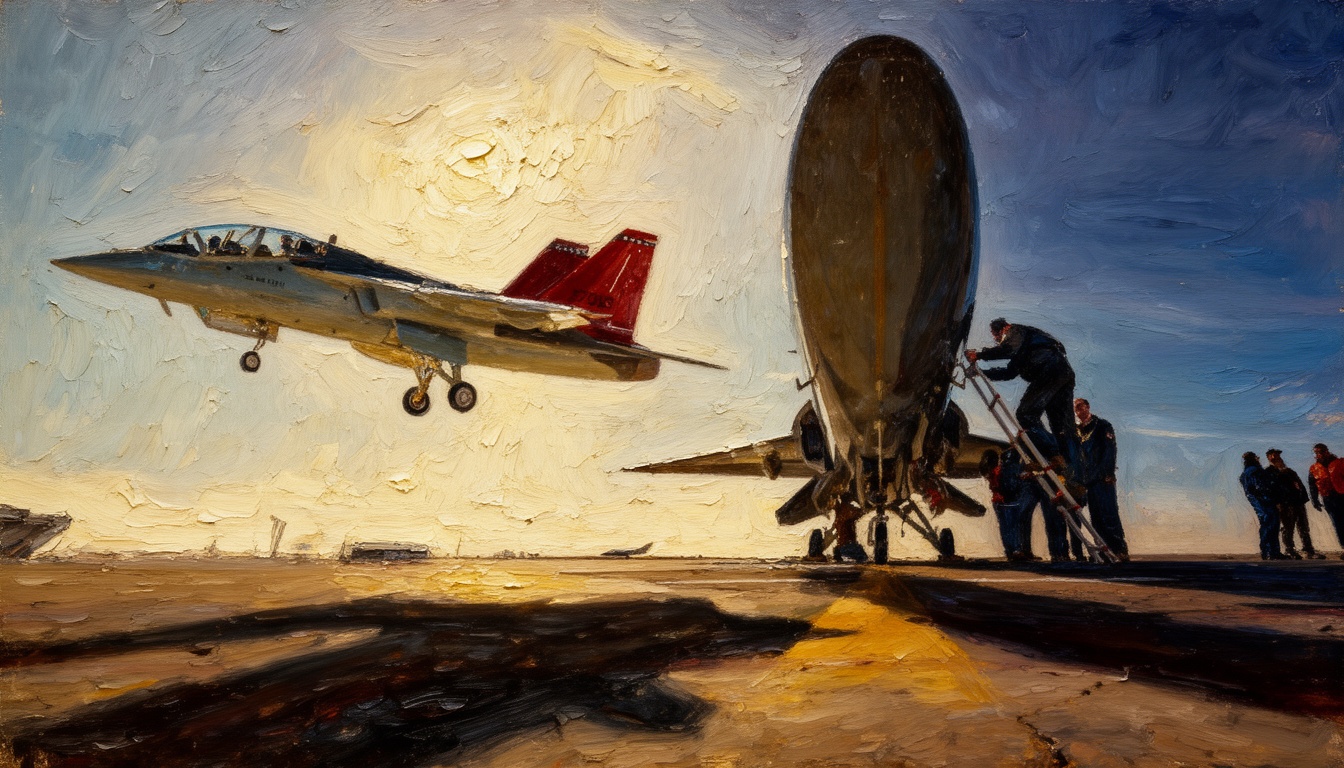
US Air Force T-7 Red Hawk Faces Serious Airworthiness Risks
The T-7 Red Hawk training jet is facing significant airworthiness issues, contradicting previous assessments. Investigations reveal both weather restrictions and serious risks that could impact its operational readiness.
The T-7 Red Hawk, the newest training jet of the United States Air Force, is reportedly grappling with substantial airworthiness challenges. Investigations have uncovered issues that extend beyond initial reports, raising concerns about its readiness for training pilots. Specific weather conditions are now cited as restrictions impacting its operational capability, highlighting the jet's vulnerabilities in varying environments.
Background context indicates that the T-7 Red Hawk was designed to replace the aging T-38 Talon in pilot training programs. With advanced capabilities in terms of technology and performance, it was expected to enhance training efficiency and safety. However, emerging issues threaten to undermine the model's intended benefits, as problems with airworthiness are now deemed serious.
Strategically, these complications with the T-7 Red Hawk could have broader implications for the Air Force's training paradigms. If the newly introduced jet cannot meet airworthiness standards, it could necessitate a delay in transitioning from the T-38, thereby impacting pilot training timelines and readiness against adversaries. Potential operational gaps could arise, affecting overall mission preparedness.
Technical information reveals that the T-7’s design incorporates advanced systems tailored for modern military training SaaS environments. However, specific details of the airworthiness risks and how they could be rectified remain unclear at this point. The Air Force has yet to provide a definitive response regarding the resolution of these critical issues.
In conclusion, the ongoing challenges presented by the T-7 Red Hawk's airworthiness may necessitate urgent attention from the Air Force to ensure that pilot training is not adversely affected. Without immediate corrective measures, the ramifications could be felt throughout various training operations, affecting the future efficacy of the Air Force's pilot training programs.