US Army Experiments with Drones in Combat Missions
The US Army is transitioning to drone operations in high-risk missions, reducing reliance on ground troops. This shift marks a significant evolution in modern warfare strategy.
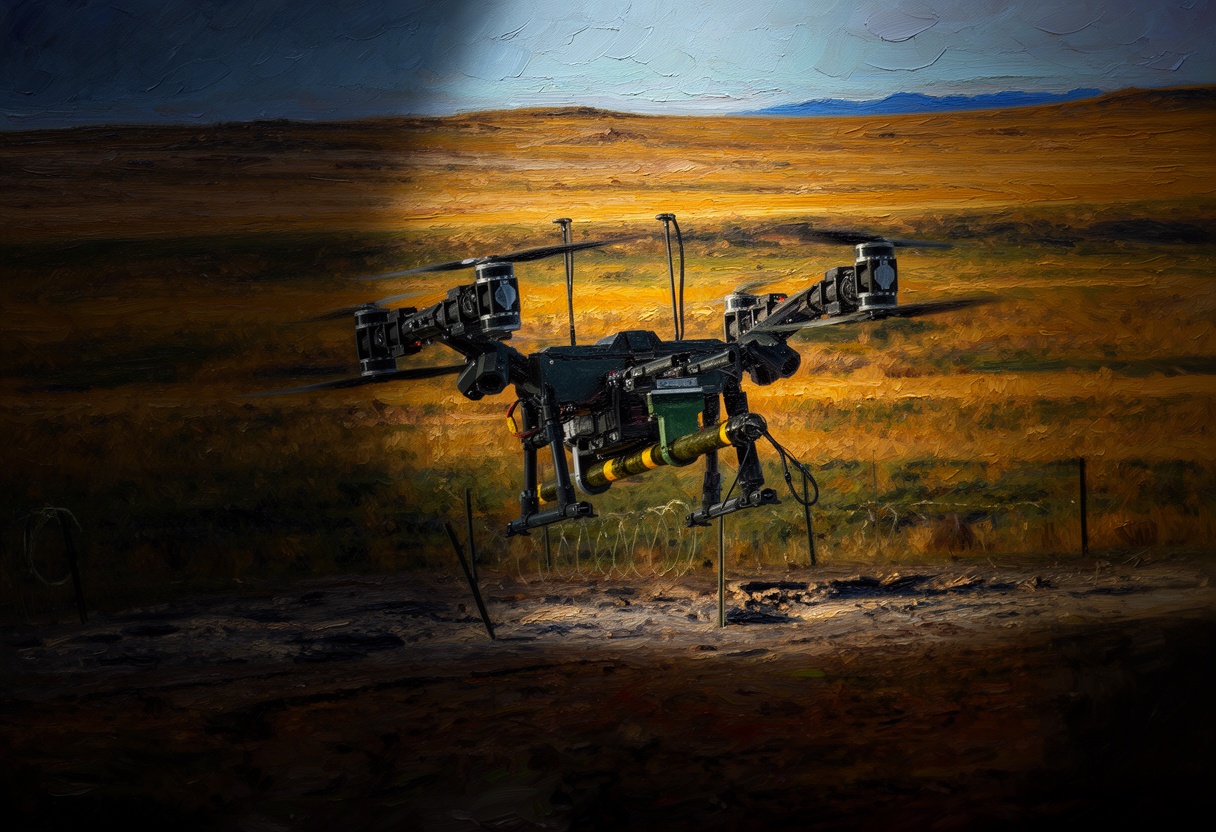
The US Army is exploring the use of drones in combat scenarios, moving away from traditional manned operations. Previously synonymous with ground troops entering dangerous zones, the phrase 'into the breach' now reflects this advanced technological shift.
For years, the Army's missions have been heavily reliant on soldiers to engage directly with threats. However, recently, initiatives have focused on integrating unmanned aerial vehicles (UAVs) to conduct reconnaissance and strike missions without risking lives on the front lines. This transition is critical, especially in environments where enemy fire and countermeasures make troop deployment incredibly hazardous.
Strategically, this development signifies a notable shift in combat operations. Drones allow for improved intelligence, surveillance, and reconnaissance (ISR) capabilities while minimizing the risk to personnel. By expanding the role of drones, the Army aims to maintain operational superiority in increasingly complex battlefields.
Technically, the US Army is investing in several advanced drone systems, including the MQ-9 Reaper and the RQ-7 Shadow. These platforms offer enhanced endurance and payload capacities, enabling them to carry out precision strikes and gather critical real-time intelligence. Budgets for developing drone technology have been significantly increased, reflecting its importance in future military engagements.
The consequences of adopting drone technology in place of human soldiers are profound. While this approach enhances safety for military personnel, it raises ethical questions about warfare's future and the role of human decision-making. As the Army continues to refine its use of UAVs, its ability to adapt to modern threats and maintain combat effectiveness will be closely monitored.