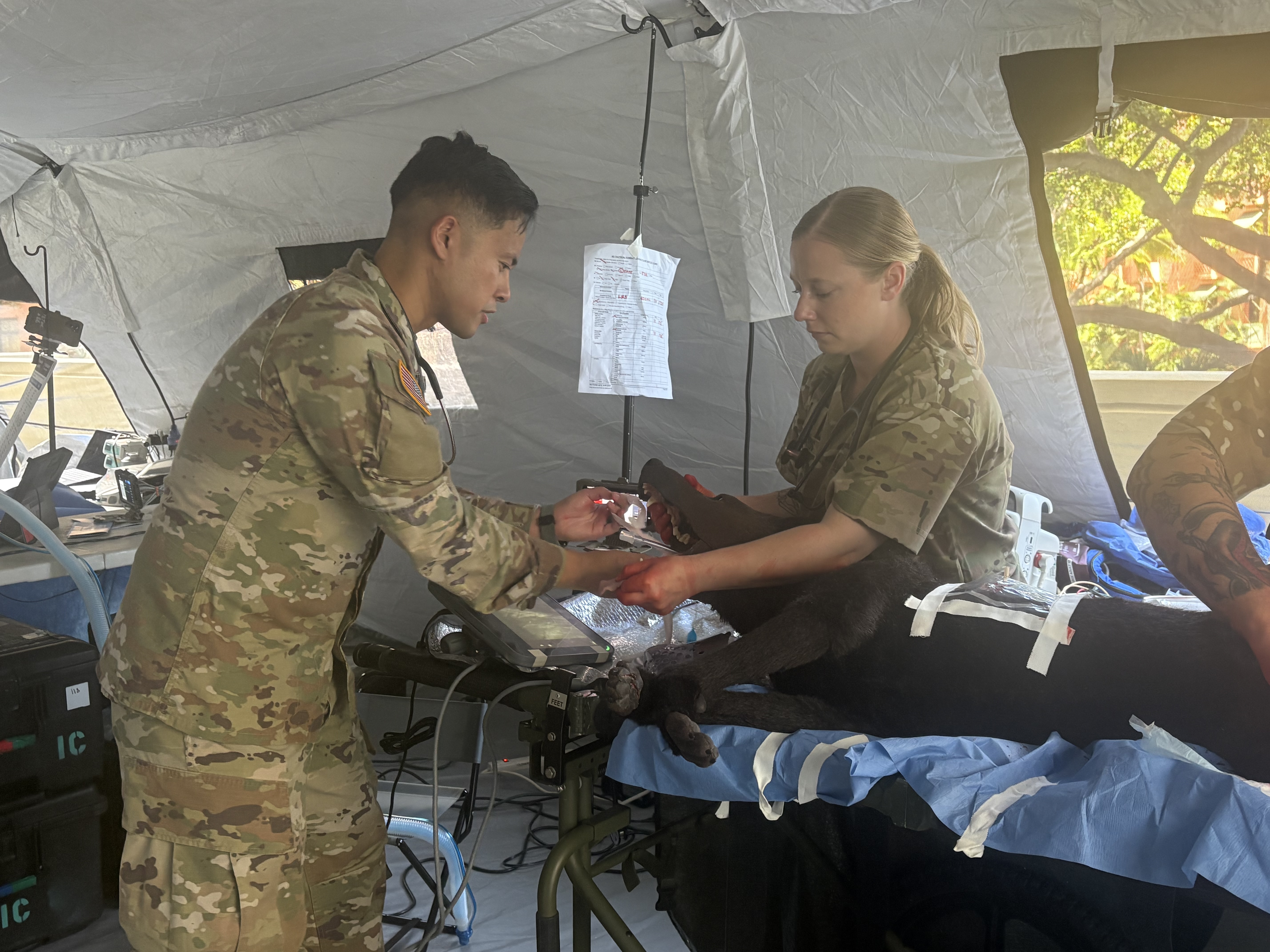
US Army Integrates Veterinarians into Combat Medicine Operations
The integration of veterinarians into military combat medicine signifies a strategic shift in preparing for large-scale operations, particularly in the Indo-Pacific region.
The US Army has announced plans to incorporate veterinarians into its combat medicine teams to enhance capabilities in field operations. This initiative aims to leverage the unique skills of veterinarians in trauma care and emergency medicine, which are critical in battlefield environments. With potential large-scale operations on the horizon, this strategic move is expected to bolster the Army's responsiveness and agility.
Veterinarians possess extensive training in anatomy, surgery, and emergency procedures, making them valuable assets in medical scenarios where traditional medical personnel may be overwhelmed. The Army's decision reflects a recognition of the evolving nature of warfare, particularly in the Indo-Pacific, where the complexities of large-scale engagements could challenge conventional medical support systems.
Strategically, this move enhances the Army's multi-domain operations readiness, as it prepares for diverse contingencies. By integrating veterinarians, the Army not only maximizes resource utilization but also diversifies its medical capabilities, allowing for enhanced decision-making in complex combat situations.
Operational details indicate that the integration will involve joint training exercises and simulations designed to familiarize veterinarians with combat medical procedures. The goal is to create seamless collaboration between military doctors and veterinarians, ensuring swift and effective medical responses under pressure.
The implications of this initiative extend beyond immediate medical care; it signifies a broader adaptation of military practices to future conflict scenarios. As global tensions rise and the nature of warfare evolves, such innovations in personnel deployment are crucial for maintaining operational superiority.