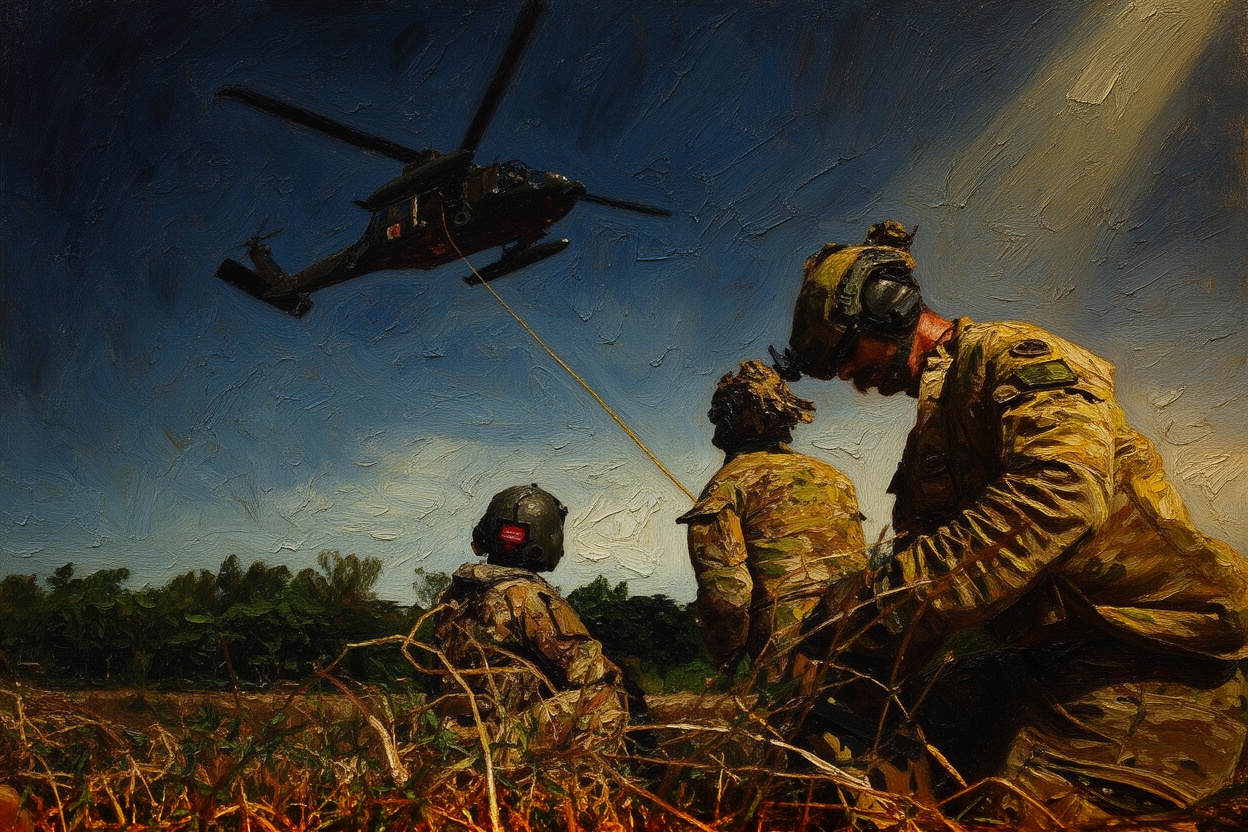
US Army Medics Gear Up for Indo-Pacific Operations
The preparedness of US Army combat medics is critical in the Indo-Pacific region's unique challenges, including distance and communication issues. These factors could severely hinder access to medical care during operations.
The preparedness of the US Army's combat medics is facing a significant test as they gear up for potential operations in the Indo-Pacific region. Key challenges include vast operational distances, contested airspace, disrupted communications, unpredictable weather, and limited evacuation platforms, which could critically impact the timeliness of medical care provided to soldiers in the field.
Historically, the Indo-Pacific has presented unique operational difficulties due to its geography and political tensions. Contended airspace raises the stakes for all military operations, particularly for medical evacuation and support missions. Communication disruptions in this vast area could jeopardize coordination among units and affect life-saving interventions by medics.
Strategically, these factors necessitate comprehensive training and preparedness protocols. Medics must adapt not only to diverse environmental conditions but also to evolving combat scenarios that can arise unexpectedly, demanding quick and effective medical responses. Planning for medical support in such a theater also involves potential partnerships with allied forces to ensure adequate coverage and rapid response capabilities.
Operationally, the medics are focusing on enhancing trauma care competencies and ensuring proficiency in using advanced medical equipment that can function under extreme conditions. They are also being trained in tactical evacuation techniques and alternative transport methods that might be employed if traditional evacuation platforms are compromised due to enemy actions or natural obstacles.
In conclusion, the US Army's combat medics are aligned with a proactive strategy to address the complex challenges of the Indo-Pacific. The effectiveness of their medical care could play a decisive role in operational success, underscoring the importance of rigorous training and readiness in this dynamic and unpredictable region.