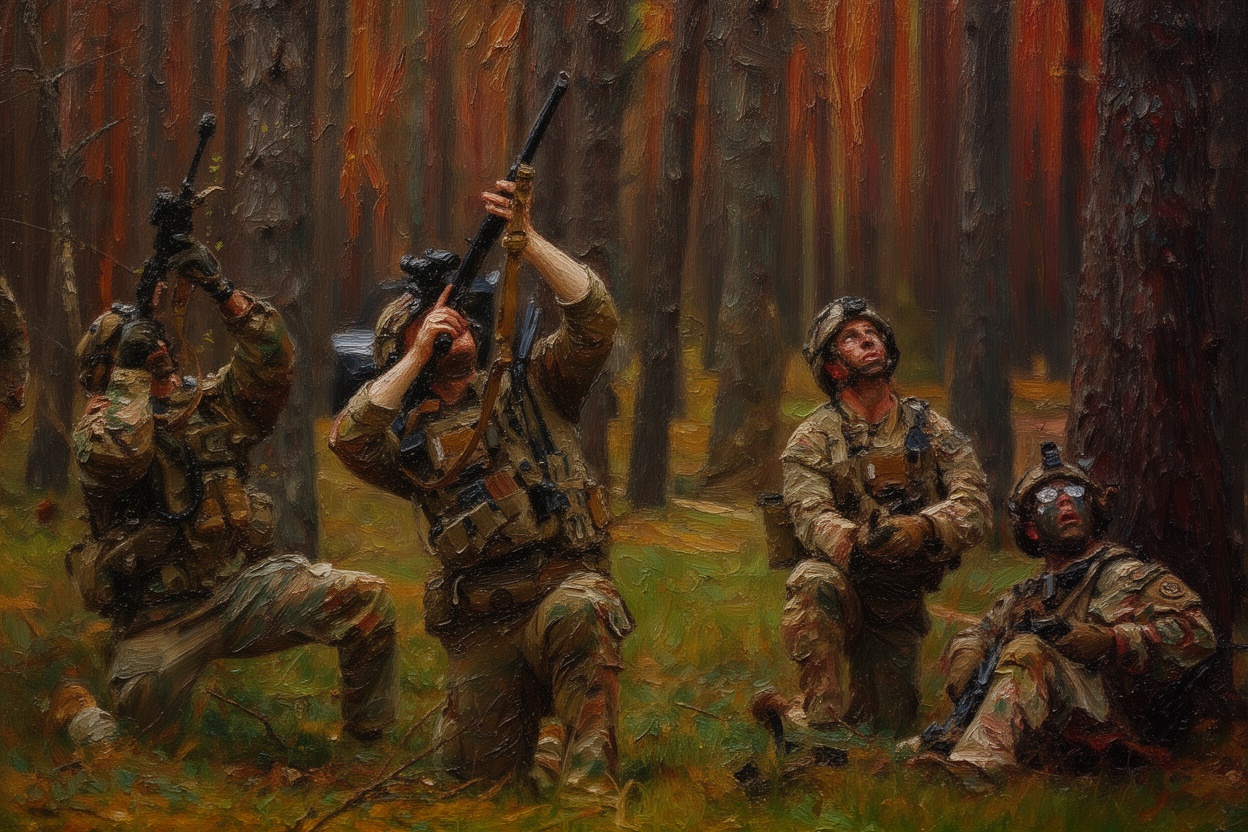
US Army Soldiers Learn Drone Identification by Sound
Developing audio training for drone recognition could enhance operational effectiveness. This initiative reflects a growing focus on counter-drone capabilities.
U.S. Army soldiers are being trained to identify different types of drones by sound, an initiative that has not yet been officially incorporated into their curriculum. Sergeant Major Jonathan Harrington stated that field experience listening to the sky can help soldiers learn to distinguish between various drone types. This practical approach may provide vital insights in operational situations where visual identification may be challenging.
The need for enhanced drone awareness comes as unmanned aerial systems (UAS) play an increasingly significant role in modern warfare. Current capabilities allow enemy drones to gather intelligence, conduct strikes, and even disrupt communications. By training soldiers to recognize drone sounds, the Army aims to enhance situational awareness in contested environments.
The implications of this training extend beyond mere identification; it encompasses a broader strategic significance. Effective recognition of drone signatures enables quicker responses to potential threats, enhancing the Army's overall readiness and lethality. As adversaries adopt more advanced drone technologies, soldiers equipped with the ability to identify them by sound could provide a decisive tactical advantage.
Operationally, this training aims to prepare soldiers for real-life scenarios where mechanical noise becomes crucial for situational understanding. Auditory recognition of drones complements existing visual and radar tracking systems. Training and integration of audio skills into operations could significantly improve force capabilities against evolving drone threats.
The introduction of audio training for drone recognition within the U.S. Army could set a precedent for other military organizations worldwide. As drone technology continues to advance, the push for innovative training methods reflects a global trend toward effective counter-drone strategies. By adapting to new challenges, military forces can maintain an edge in modern combat environments.