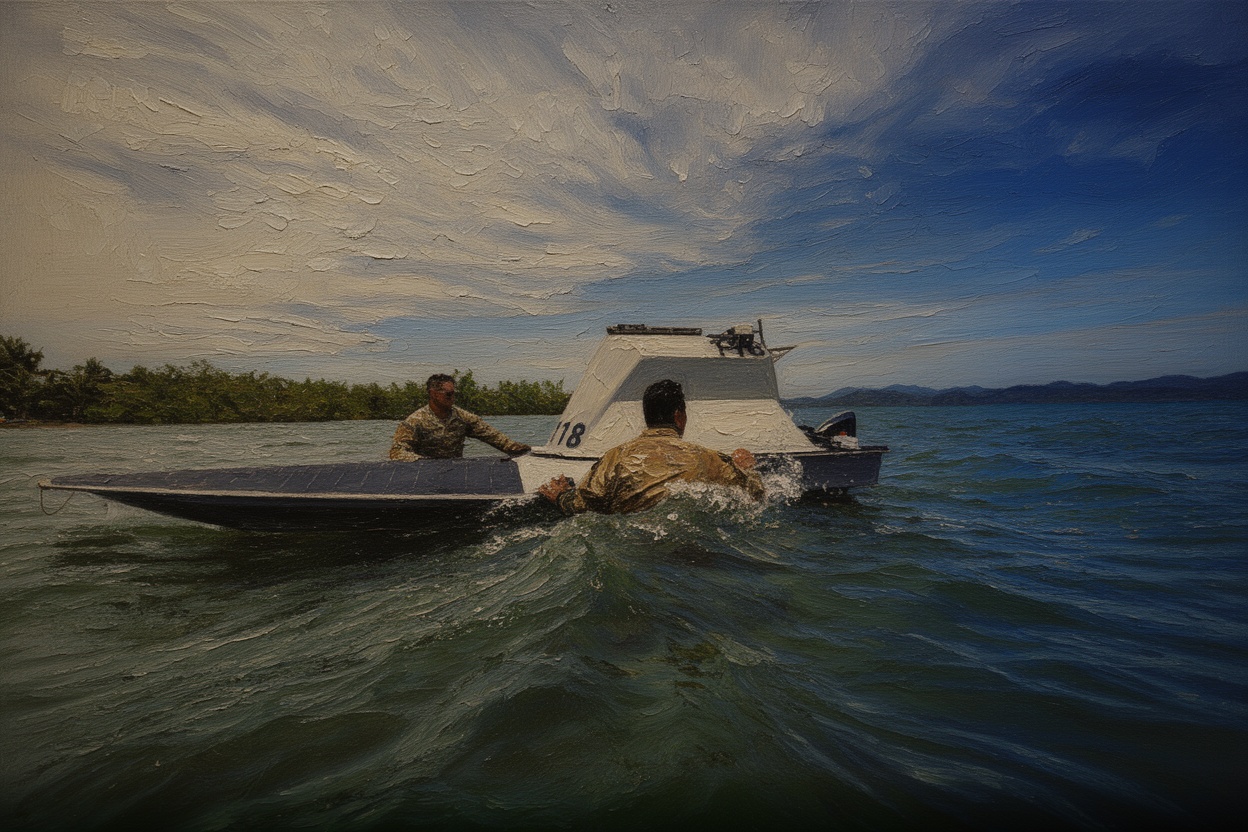
US Army Tests Autonomous Boats in Philippine Exercise
The use of autonomous boats represents a significant shift in maritime operations for military applications. Their integration into exercises reflects ongoing advancements in unmanned technologies.
The US Army recently tested autonomous boats during a military exercise in the Philippines, showcasing their ability to escort manned vessels. This event illustrates the evolving role of unmanned systems in naval operations, emphasizing operational efficiency and enhanced tactical flexibility.
Historically, maritime operations have relied heavily on crewed vessels. However, as unmanned technologies evolve, military forces globally are starting to incorporate these capabilities into their strategic frameworks. The Philippine exercise marks a step towards integrating uncrewed assets into standard maritime procedures.
The strategic significance of this development lies in the capability enhancement it provides. Autonomous boats can operate alongside conventional forces, performing critical tasks such as surveillance and reconnaissance, while minimizing risk to personnel. Their employment could lead to changes in naval engagement strategies across various theaters.
In technical terms, these autonomous boats are equipped with advanced sensor suites, enabling real-time data collection and analysis. The ability to operate independently allows them to support missions previously assigned to larger, crewed vessels. This ongoing integration would likely necessitate adjustments in defense budgets and resource allocation.
As militaries continue to embrace unmanned systems, the implications for future conflict scenarios are profound. The effective use of autonomous platforms could redefine engagement rules and create new paradigms in naval warfare, influencing the balance of power in maritime domains globally.