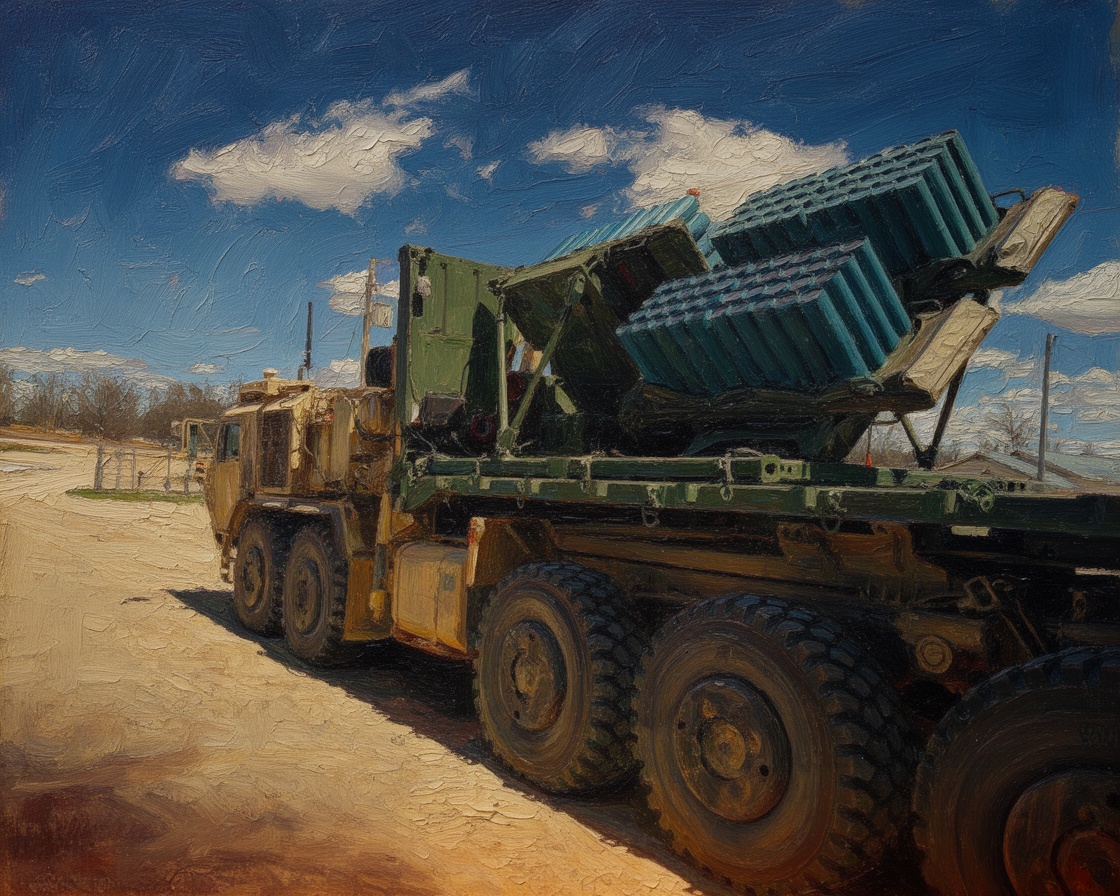
US Army Tests Autonomous Mass Mine-Laying System
The US Army is advancing its explosive capabilities with the Volcano mine dispenser, which can deploy 960 mines over 32 acres. The current tests aim to evaluate the effectiveness of an autonomous variant in operational scenarios.
The US Army has embarked on testing an autonomous version of its Volcano mine dispenser, a system capable of saturating a 32-acre area with up to 960 anti-personnel and anti-tank mines. This development represents a significant step towards enhancing the lethality and efficiency of mine deployment in modern warfare contexts.
The Volcano mine dispenser is designed to provide rapid area denial and can release both scatterable mines and other munitions, allowing commanders to adapt to evolving battlefield needs. Its autonomous variant is being evaluated to assess its operational viability while reducing the risk to personnel during deployment operations.
Strategically, the integration of autonomous systems for mine-laying could alter the dynamics of ground warfare, providing an additional layer of deterrence against opposing forces. This capability might enable quicker responses to threats and shift operational landscapes in contested environments.
The Volcano mine dispenser is equipped with advanced navigation systems that allow for precise placement of mines while minimizing collateral damage. The system is currently undergoing rigorous testing to refine its algorithms and operational performance.
If successful, the autonomous Volcano may redefine mine-laying operations, allowing forces to establish defensive perimeters autonomously and dynamically, which could lead to changes in how ground forces engage in future conflicts.