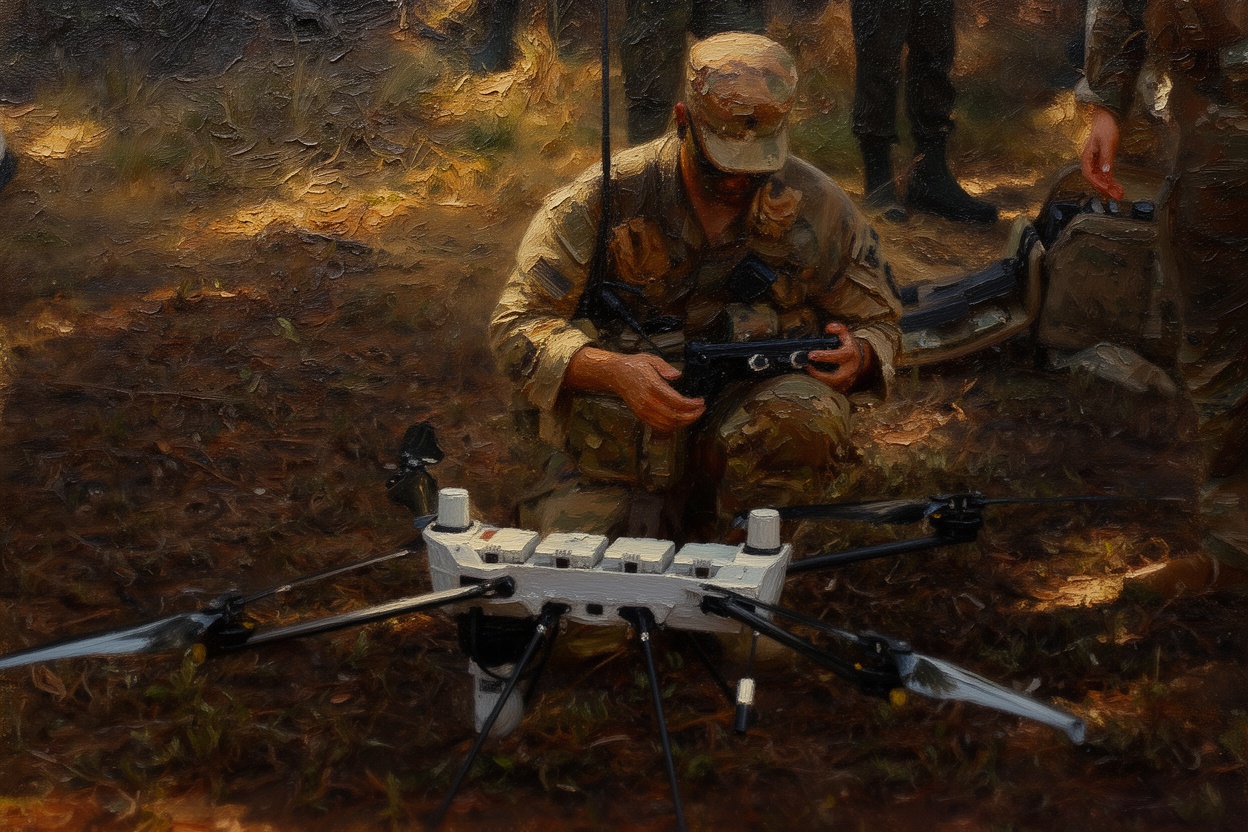
US Army Tests Drones and 3D Printers at Balikatan Drill
The US Army is enhancing operational capabilities through advanced technology at exercises in the Philippines. New systems tested include drones and 3D printers, which could reshape military logistics.
The United States Army has initiated trials of new drone technology and 3D printing systems during the 'Balikatan' military exercise held in the Philippines. This exercise, aimed at strengthening the military cooperation between the US and Philippine forces, has seen the introduction of innovative logistical solutions.
The Balikatan exercise involves a range of activities designed to improve readiness and interoperability between allies. It emphasizes the integration of advanced technologies, including a containerized solar-panel microgrid, which was tested for electricity generation as a quieter alternative to traditional diesel generators. This move demonstrates the US Army's commitment to sustainability and reduced noise pollution on the battlefield.
From a strategic perspective, the integration of drones and 3D printers represents a significant enhancement in military logistics, allowing for on-demand equipment production and delivery to frontline units. This capability could decrease dependency on long supply chains, presenting a tactical advantage in rapidly evolving combat scenarios.
The specific drones tested are part of a broader effort to utilize unmanned systems for reconnaissance and support roles. Details on the exact type of drones have not been disclosed, but the initiative aims to improve operational efficiency and response times in dynamic environments.
Consequently, the trials at Balikatan are likely to lead to further investments in innovative military technology. The integration of these advanced systems could reshape US military logistics and enhance combat effectiveness, contributing to a strategic edge over potential adversaries in the region.