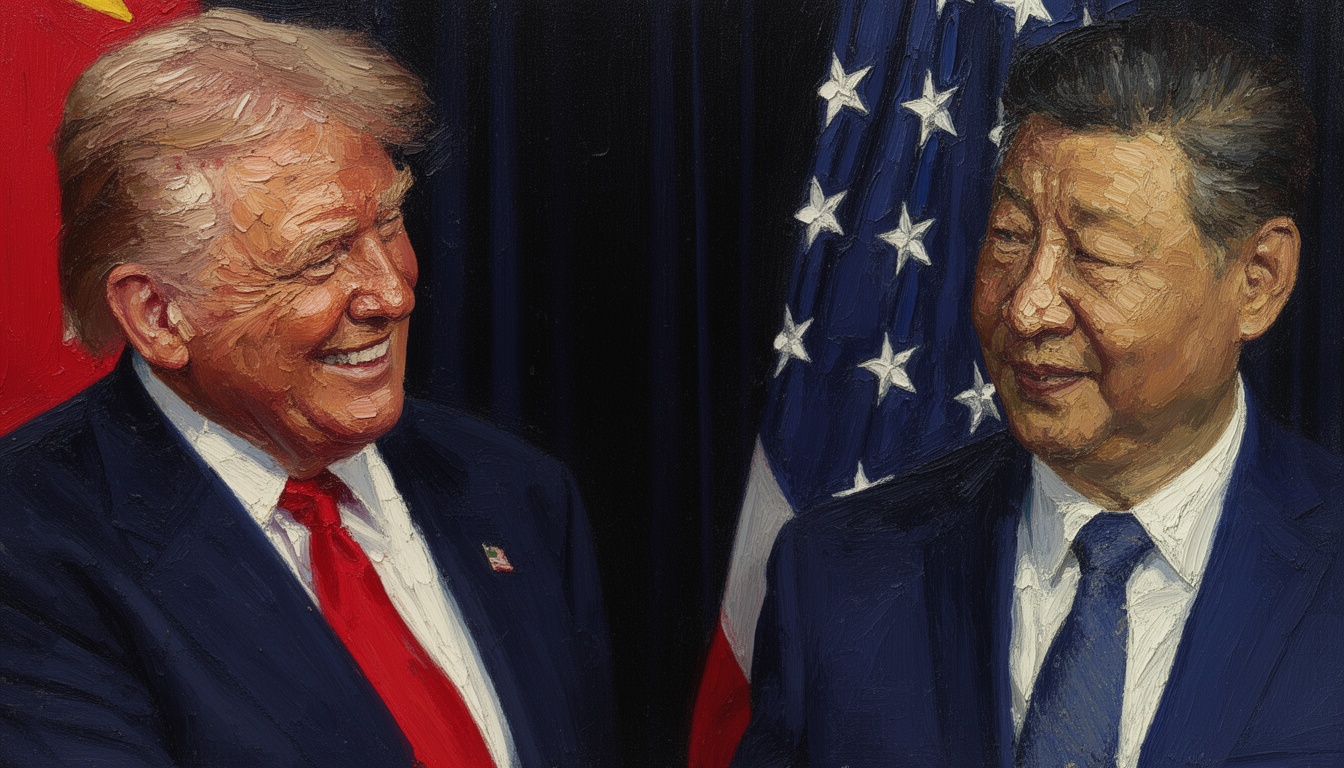
US-China Leaders May Discuss Military AI Use
The potential discussion of military AI use reflects growing tensions and interdependence between the US and China amidst geopolitical crises.
A significant diplomatic meeting is on the horizon as leaders from the United States and China are expected to address military applications of artificial intelligence. This comes during a time of heightened rivalry influenced by the US-Iran conflict, which is creating ripples in global energy markets and increasing tensions in international relations. The leaders are likely to focus on regulating military AI technologies amid the evolving threat landscape.
The US has prioritized military innovation, particularly in the realm of artificial intelligence, as evidenced by the establishment of the Joint Artificial Intelligence Center. China, seeking to ascend as a dominant military power, has invested heavily in integrating AI within its armed forces. This environment sets the stage for discussions geared towards cooperation to ensure that emerging technologies do not inadvertently escalate conflicts or lead to accidental engagements.
Strategically, these dialogues on military AI use are vital for both nations. For the US, controlling the AI race is linked to maintaining a qualitative military edge. Conversely, China views advancements in AI as critical to enhancing its defense capabilities, particularly within the framework of its military modernization goals. Thus, the dialogue holds implications not only for bilateral relations but also for global security dynamics.
Operationally, the use of AI in military contexts includes advancements such as autonomous drones, predictive maintenance systems, and battlefield robotics. These developments necessitate a foundation of trust and communications between the major powers, addressing risks associated with accidental military engagements.
Looking forward, the prospects for discussion about military AI applications during the upcoming meeting could yield foundational agreements to foster transparency and confidence-building measures. However, the effectiveness of this dialogue will depend heavily on both nations' willingness to prioritize diplomacy over rivalry and ensure that technology serves as a means of deterrence rather than conflict escalation.