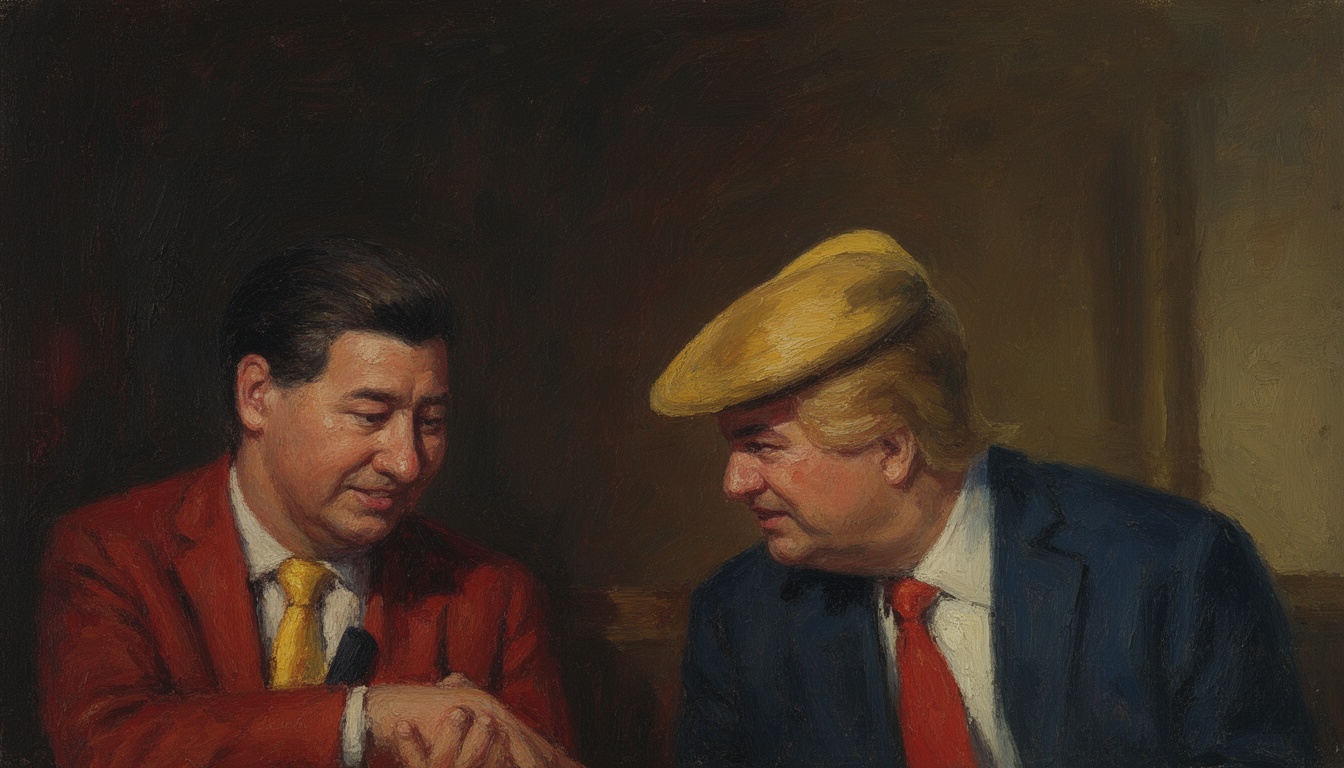
US-China Relations Strained by Trump's Congressional Pushback
US domestic political dynamics are complicating President Trump's approach to China. Resistance from Congress and his administration highlights tensions in US foreign policy.
On a state visit to China last month, US President Donald Trump implemented a series of rhetorical concessions that surprised many in his political base. During a televised interview, he endorsed the idea of Chinese students studying in American universities and expressed support for Chinese investments in US farmland. This contrasted sharply with traditional security concerns regarding espionage, which he downplayed as a 'two-way reality'.
This incident is not unique; Trump's softer stance on China has frequently collided with the more hardline positions taken by officials within his own administration. Prominent figures, including Secretary of State Mike Pompeo, have expressed concerns over China's growing influence and potential threats to national security. These divergent strategies raise questions about the coherency of US policy towards China.
Strategically, this tension has implications for the US's ability to project strength and maintain a unified front in international relations. The implications extend beyond trade and economics to geopolitical dynamics in the Asia-Pacific region, where allies closely watch US-China interactions.
On a technical level, Trump's administration has invested heavily in countering Chinese influence through tariffs and sanctions, which have led to significant disruptions in global trade networks. The current administration's fiscal year 2020 budget includes over $1 billion dedicated to countering China’s technological advancements and military expansion.
Going forward, these internal disagreements are likely to complicate US-China relations further, as policymakers must navigate between Trump's desire for a more conciliatory approach and the Congressional push for a tougher stance. The outcome will significantly shape the future strategic landscape in Asia, particularly concerning Taiwan and the South China Sea.