US-China Tensions Rise Over Air Force One's Arrival
The arrival of Air Force One in Beijing underscores ongoing geopolitical tensions. As the US and China engage in critical talks, the symbolism of the presidential aircraft captured widespread attention.
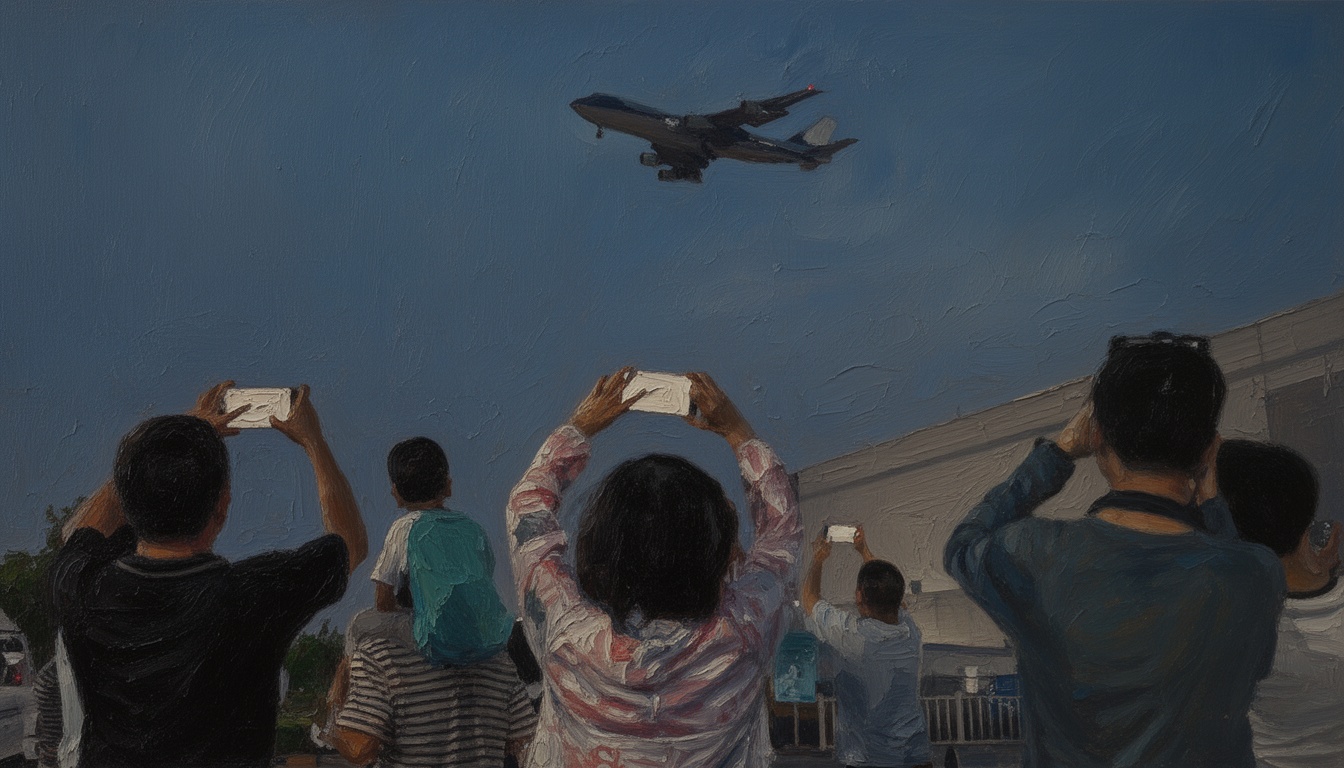
The arrival of Air Force One in Beijing on Wednesday ignited significant public interest, reflecting underlying tensions between the United States and China. Hundreds of photographers and onlookers gathered in proximity to Beijing Capital International Airport to capture images and videos of the aircraft, a prominent symbol of American power.
This event coincides with a critical summit between US President Donald Trump and Chinese leaders, aimed at addressing key issues such as trade disputes, North Korea, and regional security. The iconic blue-and-white plane is not just a transport vehicle; it embodies the projection of US power and influence in Asia, particularly at a time of heightened strategic competition.
Air Force One, typically equipped with advanced communication systems and defensive capabilities, serves as a mobile command center for the President. This specific aircraft, a Boeing VC-25A, has been modified to ensure security and operational effectiveness during international travel.
The spectacle surrounding Air Force One represents more than just a diplomatic visit; it is a manifestation of the broader struggle for influence in an increasingly multipolar world. The event has invigorated discourse within China about national pride and international standing, often interpreting such displays through a lens of competition with the US.
As the summit progresses, the imagery associated with Air Force One is likely to continue to inform public perception in both China and the US, driving narratives around power dynamics and diplomatic intentions in the region.