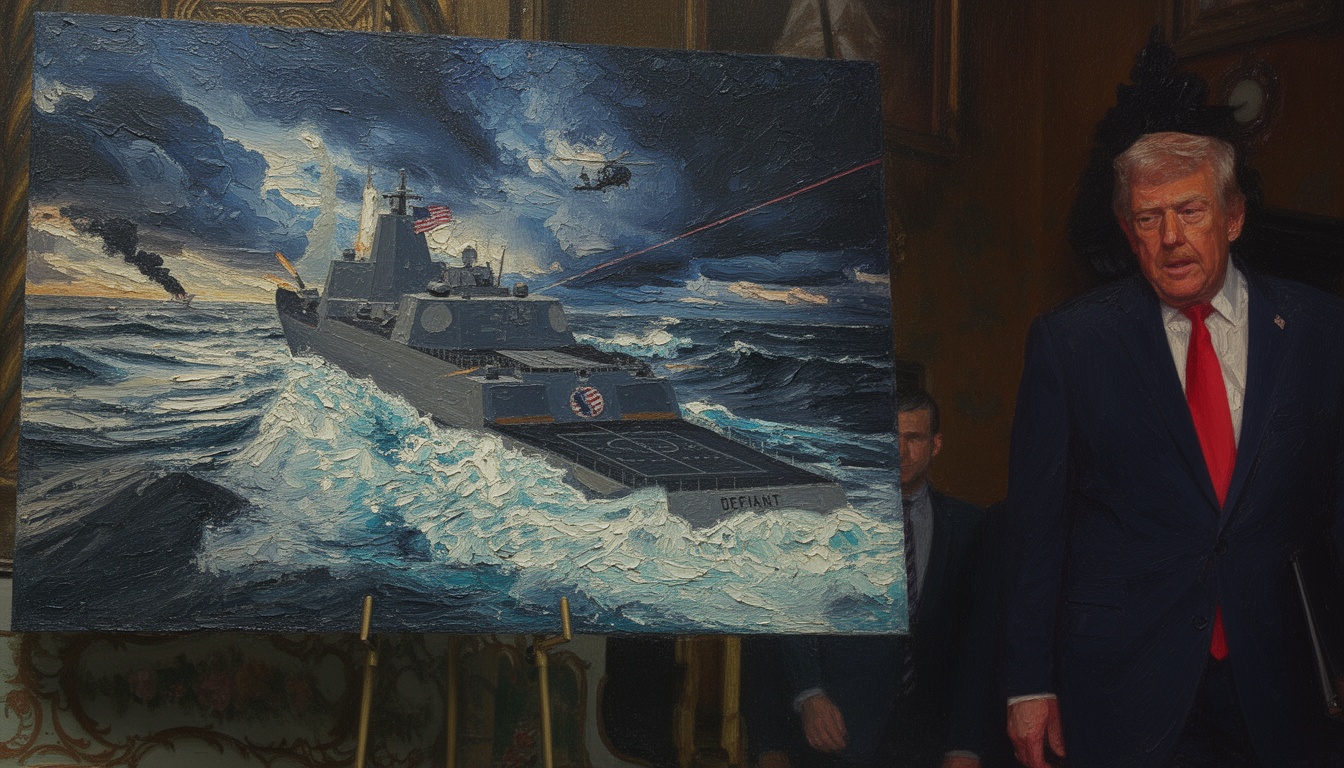
US Congress Questions Feasibility of 'Trump-class' Battleships
Concerns raised over the 'Golden Fleet' initiative amid missile threats.
A US congressional committee has raised significant concerns regarding Donald Trump’s 'Golden Fleet' program, emphasizing the potential strain on the country’s already taxed nuclear-powered shipbuilding capacity. Lawmakers are demanding a thorough review of the initiative’s flagship battleship design, fearing an overextension of resources in the current geopolitical landscape.
The debate comes at a time when the vulnerabilities of traditional battleships in modern naval warfare are increasingly scrutinized. A lawmaker highlighted the growing capabilities of the People’s Liberation Army, particularly referencing the Dongfeng missile series. Among these, the DF-21D ballistic missile has earned the moniker 'carrier killer', indicating a significant threat to large naval vessels.
Strategically, this situation raises alarm bells about the future of naval engagement. The potentials of China’s advanced missile technology could drastically alter maritime power dynamics, particularly concerning carrier groups and large surface combatants. The implications for US naval operations could be profound, necessitating reassessment of fleet composition and tactics.
In terms of technical aspects, the mentioned DF-21D missile possesses a range of approximately 1,500 kilometers, specifically designed for anti-access/area denial operations against aircraft carriers. The potential deployment of additional types of carrier-killer munitions raises questions about survivability and effectiveness of the proposed battleships in contested waters.
As discussions continue, the future of the 'Golden Fleet' initiative hangs in the balance. Should the vulnerabilities of these battleships remain unaddressed, the US could find itself at a tactical disadvantage in a rapidly evolving maritime theater. A re-evaluation of force structure and investment priorities appears increasingly critical.