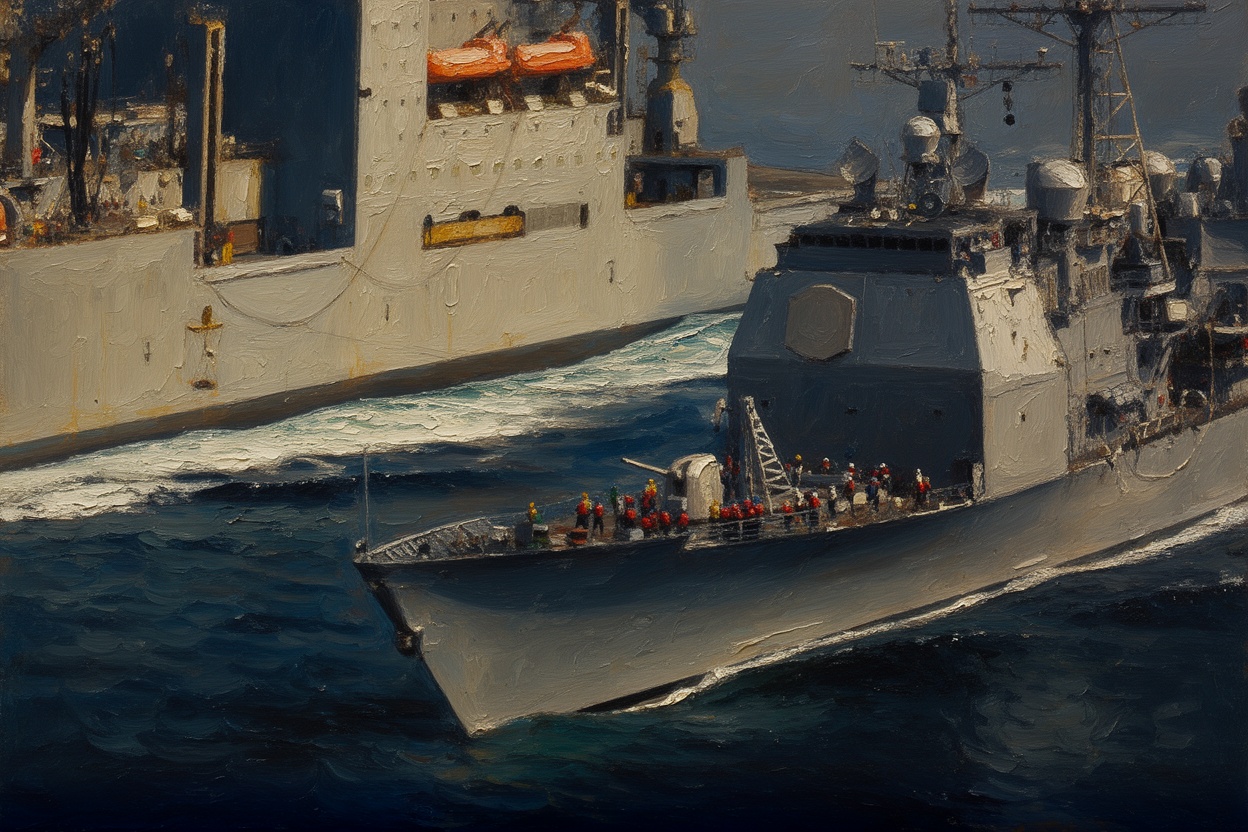
US Congress to Review Navy At-Sea VLS Reloading Plans
The US House of Representatives is scrutinizing Navy plans for Vertical Launch System reloading at sea. This review could impact future naval capabilities and operational readiness.
The US House of Representatives has introduced a new bill aimed at reviewing the Navy's plans for at-sea reloading of Vertical Launch System (VLS) cells aboard US Navy warships. This initiative stems from concerns regarding the efficiency and effectiveness of naval operations in potential conflict scenarios. As geopolitical tensions rise, ensuring the rapid replenishment of naval weapon systems is critical for maintaining operational tempo.
The House Armed Services Committee is currently marking up the National Defense Authorization Act (NDAA) for Fiscal Year 2027. Among its provisions, the bill mandates a comprehensive briefing on the Navy's strategies and capabilities related to VLS reloading at sea. This measure highlights the increasing importance of agility and responsiveness in modern naval warfare in the face of evolving threats.
The strategic significance of this review cannot be overstated. It aims to enhance the Navy's ability to sustain combat operations without returning to port for resupply, thereby increasing the effectiveness of maritime forces. This capability is particularly relevant in the context of potential conflicts with peer adversaries who also boast advanced naval capabilities.
Technically, the Vertical Launch System (VLS) allows for the launch of various munitions, including missiles and torpedoes, from a single cell. The Navy's efforts to refine reloading techniques and procedures will determine the overall availability of these vital weapons in combat situations. As the program develops, the bill's outcome will likely influence the procurement and modernization strategies of the Navy.
In summary, Congress's focus on at-sea VLS reloading reflects a broader commitment to enhancing naval power and operational readiness. The implications of this review could resonate throughout the service, impacting everything from training protocols to budget allocations in the years to come.