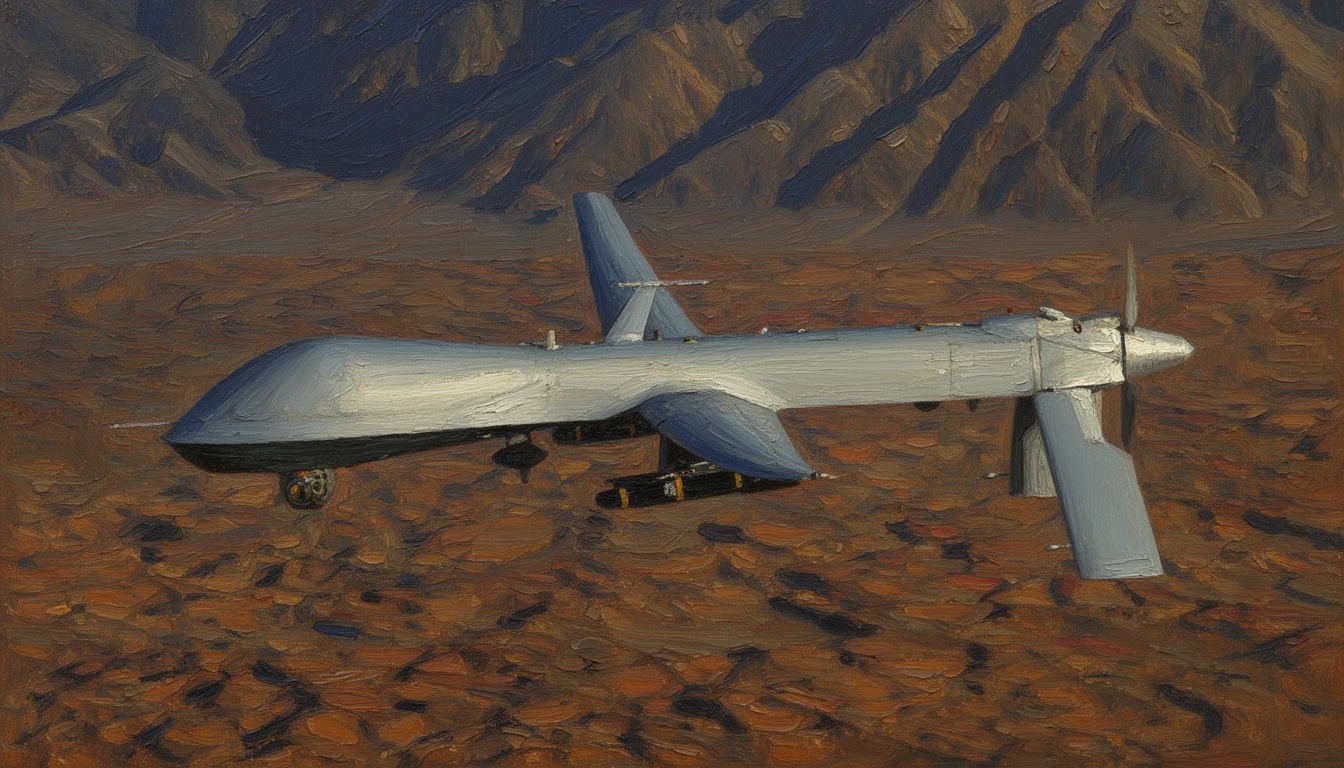
U.S. Considers Reintroducing MQ-1 Predator Drones
The possible reactivation of MQ-1 Predator drones raises strategic implications for U.S.-Iran tensions. The recent loss of a drone to Iranian forces signals an evolving operational landscape.
The United States is reportedly exploring the reintroduction of the MQ-1 Predator drones into active service. This possibility stems from the recent loss of an MQ-1 drone, which was captured by Iranian forces, raising significant questions about the U.S.'s drone capabilities in contested airspaces.
Background context highlights that the MQ-1 Predator was initially retired to make way for more advanced systems like the MQ-9 Reaper. However, with increasing Iranian aggressiveness and a changing geopolitical environment, the need for operational flexibility may have prompted a reconsideration of older systems.
Strategically, reintroducing the MQ-1 could serve as a cost-effective solution while navigating budget constraints associated with modern drone operations. The Predator’s established capabilities in surveillance and reconnaissance could provide the U.S. with increased situational awareness in areas of strategic interest, particularly concerning Iran.
Technically, the MQ-1 Predator carries a suite of sensors, including electro-optical and infrared cameras, allowing for effective monitoring of ground activities. While less advanced than newer models, its operational simplicity and historical effectiveness in conflict zones make it a viable candidate for redeployment.
The likely consequences of this development could alter U.S. military posture in the region and impact U.S.-Iran relations. The reactivation of the MQ-1 may also send a message of deterrence, demonstrating the U.S.'s commitment to maintaining air superiority and surveillance capabilities amid rising tensions in the Persian Gulf.