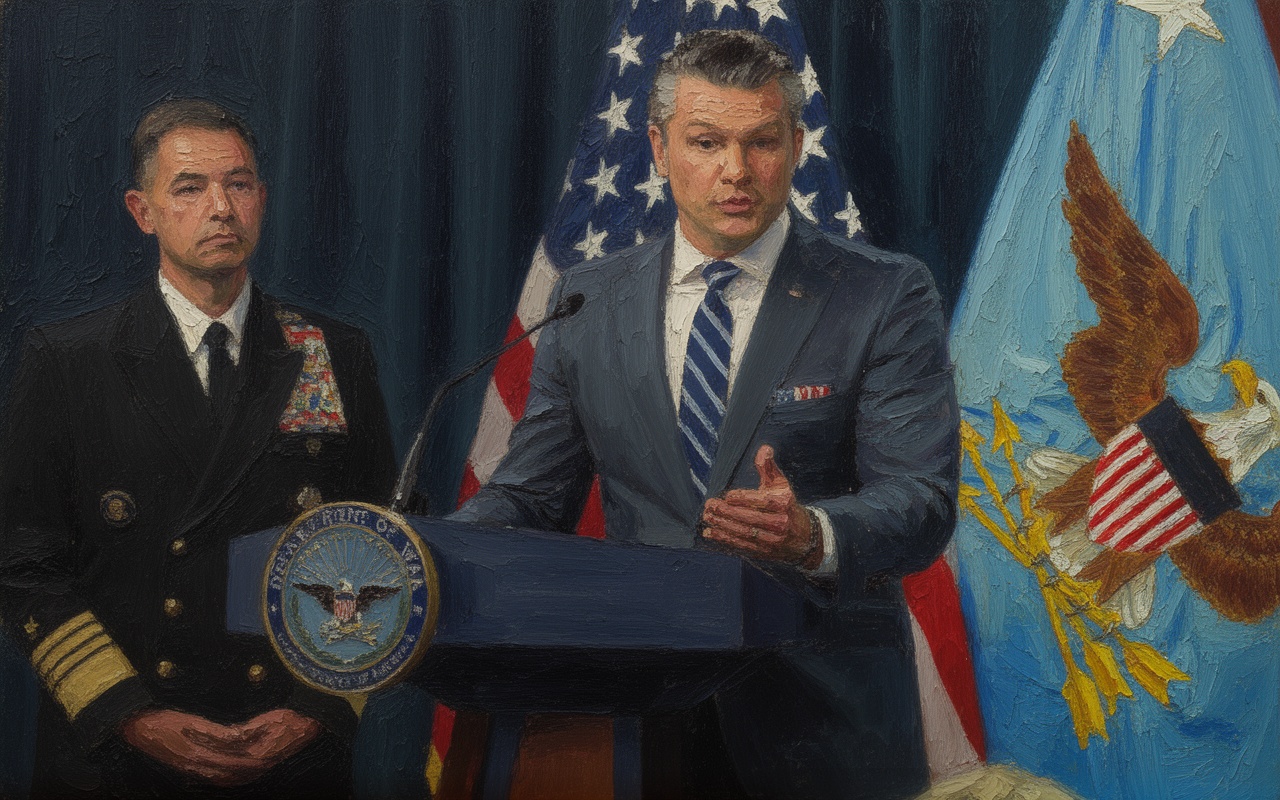
US Defense Secretary's Actions Create Navy Leadership Crisis
The unilateral actions of the defense secretary against Navy leadership raise significant concerns over military governance. This unprecedented move undermines the promotion process and raises questions about future military oversight.
The recent actions taken by the U.S. Secretary of Defense, Lloyd Austin, against Navy leadership are being described as unprecedented and troubling. These measures, executed without any clear justification or prior explanation, present a direct challenge to the established norms within Navy promotions and overall military governance.
Background context reveals that Navy leaders have faced scrutiny regarding their handling of significant military issues, which may have prompted Austin's intervention. This situation highlights internal tensions within the military and reveals the complexities involved in maintaining command authority, especially concerning promotions and leadership efficacy.
The strategic significance of such actions cannot be overstated, as they set a worrying precedent for defense governance. When a senior official acts independently to override established processes, it risks destabilizing the trust and operational coherence necessary for effective military function. This misstep could lead to long-term implications for Navy morale and the broader military landscape.
Operational details indicate that this crisis comes amid ongoing challenges facing the U.S. Navy, including readiness issues and budgetary constraints. With a budget of $209 billion allocated for 2024, addressing promotion integrity and leadership accountability becomes paramount to ensuring the Navy can fulfill its strategic missions effectively.
Moving forward, this crisis in Navy leadership sparked by the Secretary of Defense's actions may necessitate a careful reevaluation of military oversight protocols. If not addressed, this could lead to erosion of confidence among officers, potentially impacting the willingness of qualified candidates to pursue leadership roles in the future.