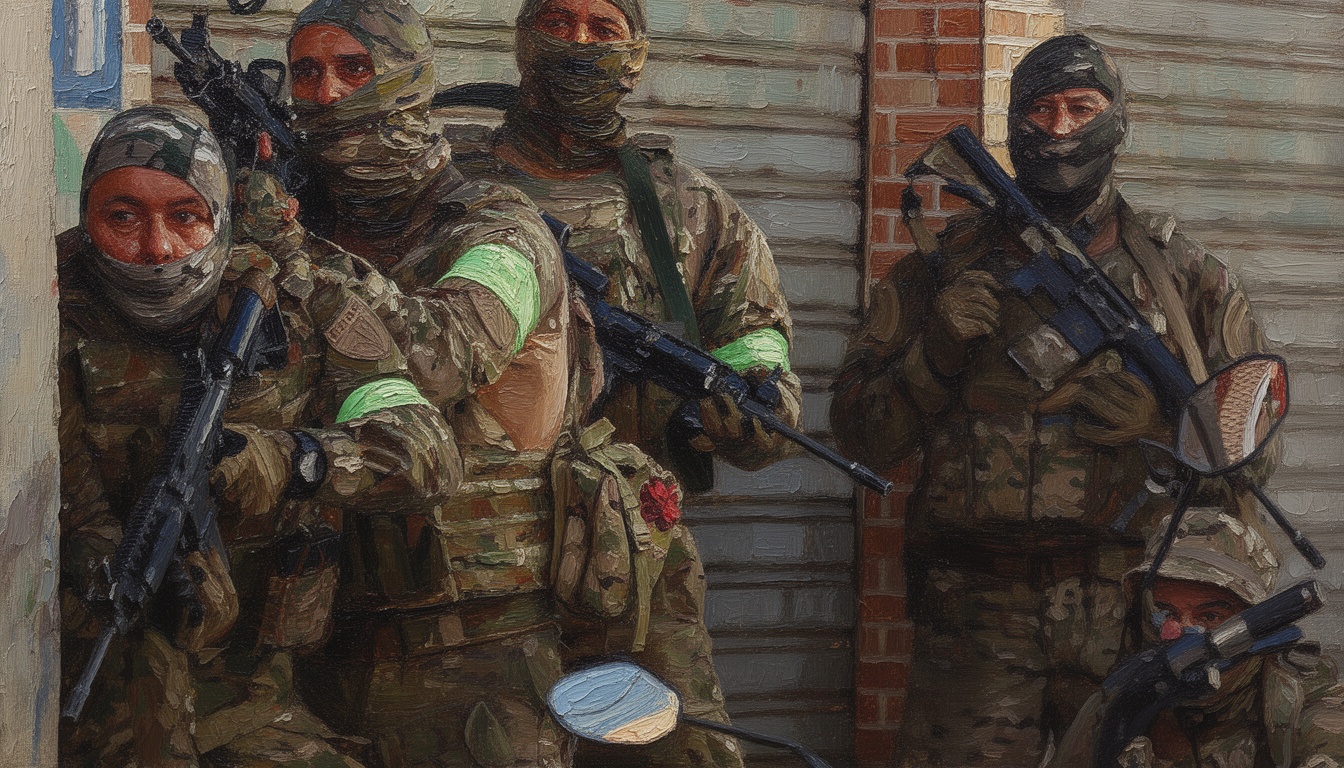
US Designates Brazilian Crime Groups as Terrorist Organizations
The US has classified the Red Command and First Capital Command as terrorist organizations, escalating regional security concerns.
On Thursday, the United States officially designated two notorious Brazilian crime groups, the Red Command (Comando Vermelho, CV) and the First Capital Command (Primeiro Comando da Capital, PCC), as terrorist organizations. This significant classification comes despite the Brazilian government's opposition, signaling heightened tensions in U.S.-Brazil relations.
The Red Command, known for its violent clashes and extensive drug trafficking operations, and the PCC, infamous for its organized crime and prison riots, have been main players in Brazil's criminal landscape. U.S. Secretary of State Marco Rubio stated, 'CV and PCC are two of the most violent criminal organizations in Brazil.' He emphasized that their influence extends beyond Brazil, involving illicit networks across neighboring countries and into the U.S.
This designation raises critical security implications for the United States and South America. By labeling these organizations as terrorists, the U.S. government can unlock additional resources and legal mechanisms to counter their activities, which have increasingly destabilized the region. The potential enforcement of sanctions against these groups could also impact partnerships in law enforcement and intelligence sharing.
Both the CV and PCC have substantial operational capacities, boasting thousands of members. They conduct extensive drug operations, trafficking narcotics not only within Brazil but also to international markets. Such activities compromise regional stability and pose ongoing threats to U.S. national security due to the increase in transnational crime.
Going forward, this move may strain U.S.-Brazil relations further, as the Brazilian government has expressed its disagreement. The potential backlash from Brazil, which views this classification as undermining its sovereignty, could impede future cooperative efforts to combat organized crime. The situation underscores the growing urgency for a cohesive approach to countering transnational criminal networks in South America.