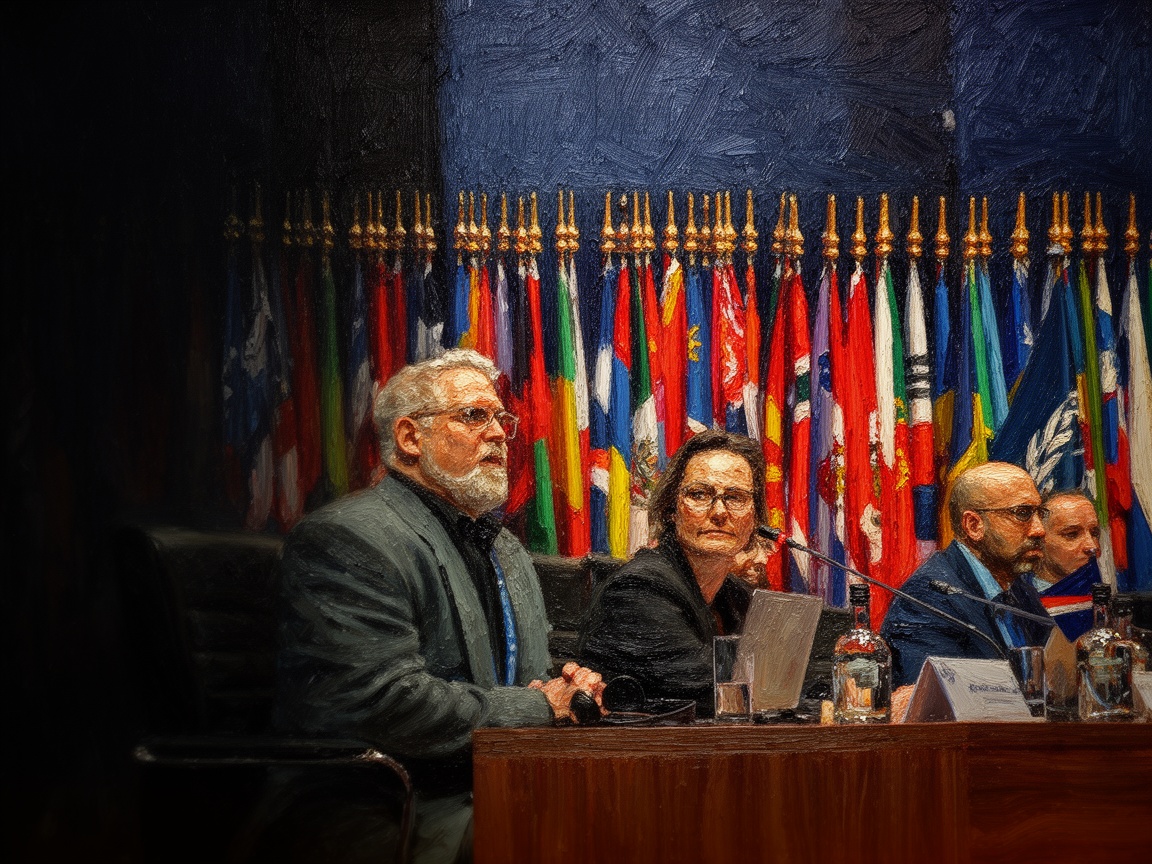
US Increases Pressure on International Criminal Court
This move highlights tensions between the US and international legal institutions, affecting global accountability mechanisms.
The United States government has intensified its pressure on the International Criminal Court (ICC) by announcing it will reject any attempts by the court to assert jurisdiction over American citizens. This announcement follows a legal complaint made by ICC judges regarding imposed sanctions affecting their operations.
This escalation is a continuation of the Trump administration's long-standing opposition to the ICC, which it views as infringing upon national sovereignty and American legal prerogatives. The ICC, based in The Hague, is designed to prosecute individuals for war crimes, genocide, and crimes against humanity, yet has faced significant resistance from the US government.
Strategically, this situation underscores the fragility of accountability at the international level, particularly when significant military powers are involved. The US's rejection of the ICC's authority can embolden other nations to similarly disregard international legal norms, potentially undermining efforts to prosecute war crimes globally.
Operationally, American sanctions against ICC officials were enacted to deter the organization from pursuing investigations into potential US war crimes in Afghanistan. The sanctions have raised concerns about the ICC's operational integrity and its ability to conduct impartial investigations moving forward.
Looking ahead, this renewed hostility towards the ICC may stall international justice efforts and could lead to increased tensions between the US and other nations committed to upholding international law. The implications for global governance and the pursuit of justice in conflict zones remain to be seen, but they could be profoundly disruptive.