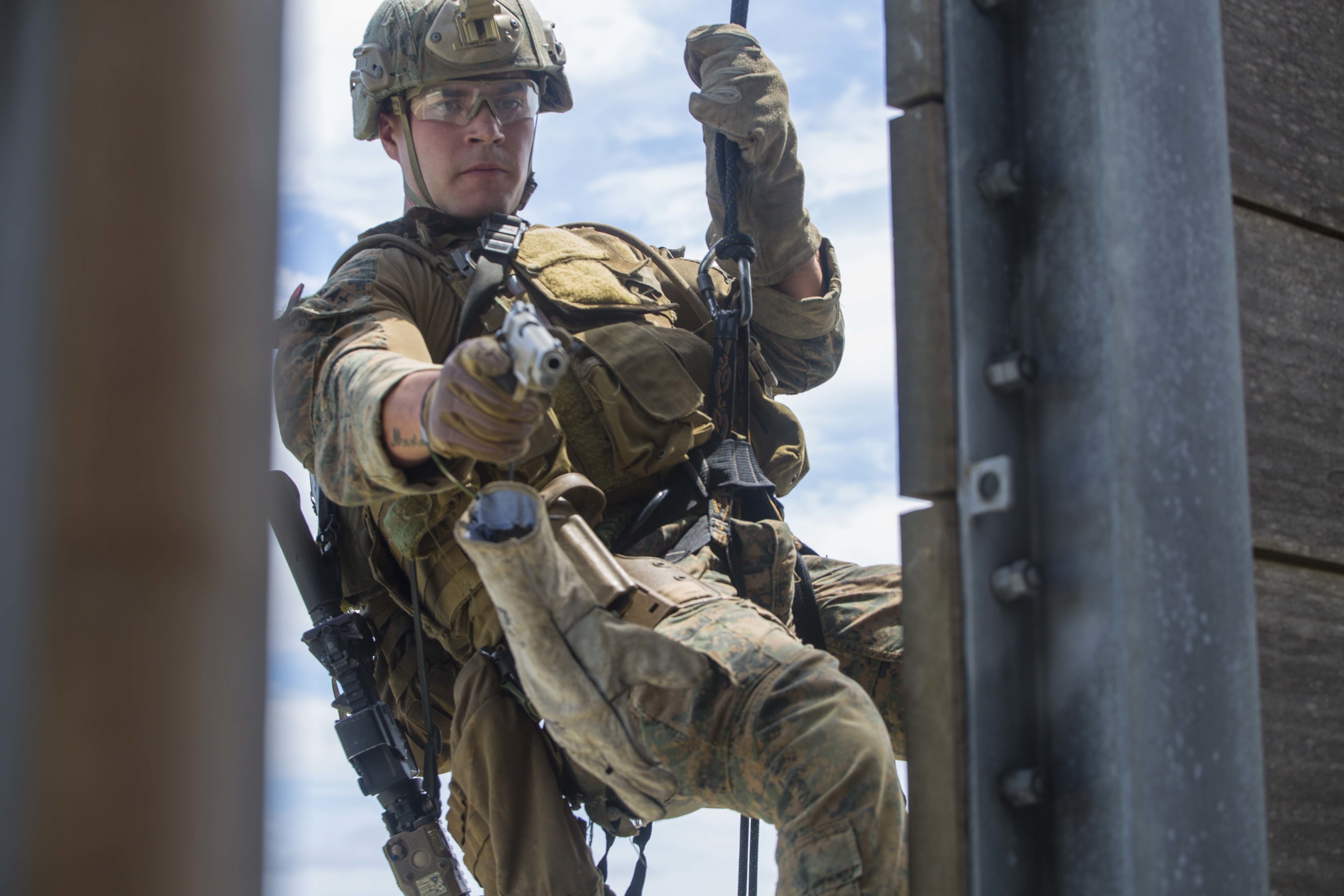
US Marine Corps Revamps Reconnaissance Training Pipeline
The Marine Corps is restructuring its reconnaissance training to enhance Marine preparedness upon entering their first units. This move addresses concerns over the readiness of newly qualified reconnaissance Marines.
In a significant overhaul, the United States Marine Corps announced changes to its reconnaissance training pipeline aimed at improving the readiness of newly minted reconnaissance Marines. Service leaders have expressed concerns that these Marines are arriving at their first units underprepared for the challenges they will face. The initiative intends to bridge the gap between training and operational readiness, ensuring that Marines are fully equipped for their roles from day one.
Historically, reconnaissance Marines are tasked with vital intelligence and information-gathering missions critical to the success of operations. The need for rigorous preparation is paramount in a rapidly evolving combat environment, where situational awareness and rapid response capabilities are essential. The reset in training protocols seeks to address this reality by incorporating more realistic field exercises and scenario-based training.
The strategic significance of this overhaul cannot be overstated. With increasing global threats and complex security challenges, having highly trained reconnaissance Marines is essential for operational success. Enhanced training programs will enable Marine units to adapt more swiftly to shifting battlefield dynamics and provide commanders with timely intelligence to inform decision-making.
Operational details of the revised pipeline have yet to be fully disclosed, but it is anticipated that the training will focus on advanced reconnaissance techniques, survival skills, and teamwork in high-stakes scenarios. Leaders emphasize that not only technical skills will be addressed but also the mental resilience required in high-pressure situations.
Looking forward, this revamp may lead to improved performance in deployments, ultimately enhancing the effectiveness of the Marine Corps as a whole. Preparedness at the unit level directly contributes to mission success across the board, reinforcing the Marine Corps' commitment to maintaining a competitive edge in a complex global landscape.