US Marine Corps Tests VR Simulator for ACV Training
A virtual reality training system will prepare Marine ACV crews for unpredictable combat scenarios. This innovation aims to enhance tactical decision-making against adaptive adversaries.
The United States Marine Corps has initiated trials for a new virtual reality (VR) simulator designed specifically for training crews of the amphibious combat vehicle (ACV). This advanced system will simulate intense combat scenarios against unpredictable adversaries, significantly enhancing training effectiveness. The introduction of this technology addresses the complexities of modern warfare, where adaptability and quick decision-making are crucial on the battlefield.
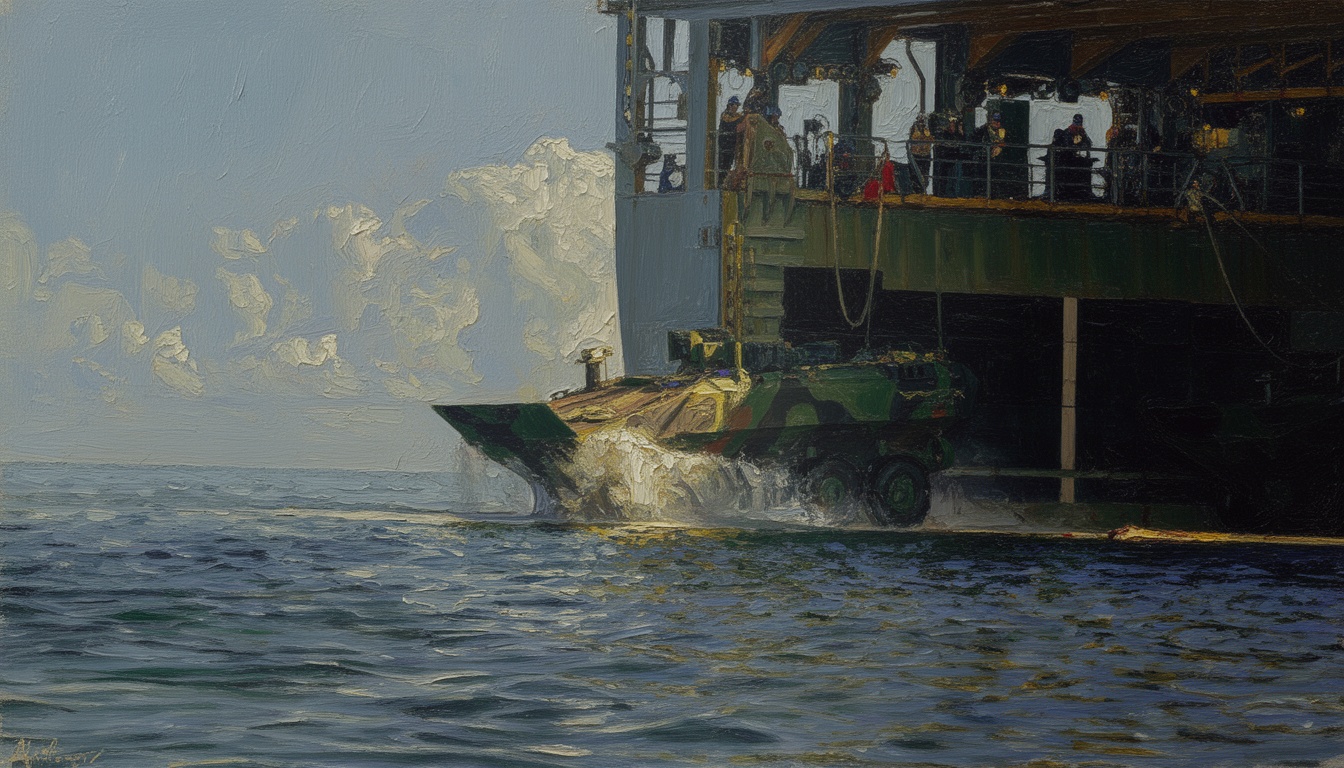
The ACV, which has replaced the aging Assault Amphibious Vehicle (AAV), is intended to support various amphibious operations. Its design supports versatility in various combat roles, from troop transport to direct engagement with enemy forces. The VR training will include scenarios requiring crews to make split-second tactical decisions in response to dynamic threats, essentially mimicking real-world combat conditions.
By employing VR technology, the Marine Corps hopes to elevate the readiness levels of ACV crews significantly. Traditional training methods often struggle to replicate the chaos and unpredictability of actual combat. The new simulator allows for a controlled environment where soldiers can practice and refine their skills without the associated risks of live-fire drills, refining responses to various combat situations.
Operationally, the ACV can traverse both land and water, boasting a speed of up to 60 mph on land and superior buoyancy in water. It is equipped with advanced communication systems, reconnaissance capabilities, and can be armed with various weapon systems to ensure operational flexibility.
Looking forward, the integration of VR training is poised to revolutionize the way military personnel prepare for contemporary conflicts. As adversaries become more adaptive and unpredictable, such innovative training solutions are essential for maintaining strategic advantages on the battlefield.