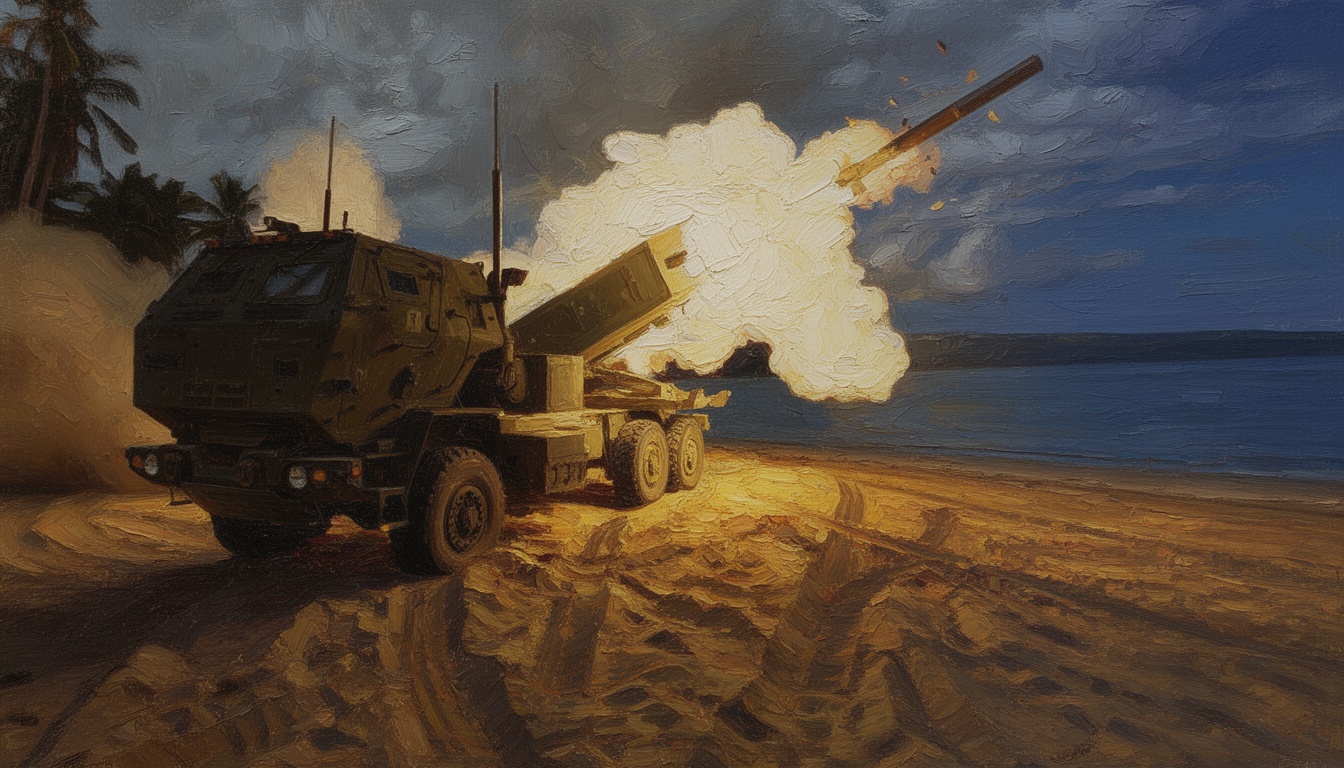
US Marines Neutralize Simulated Beach Invaders with Drone Support
US Marines successfully repel simulated beach invaders in the Philippines, utilizing explosive UAVs for final strikes. This exercise underscores the evolving role of drone technology in modern warfare.
In a recent military exercise in the Philippines, US Marines demonstrated their capability to repel an attack by simulated beach invaders. The operation highlighted the integration of ground troops and aerial support, showcasing how modern military forces can effectively counter threats in coastal environments. The exercise concluded with the use of an explosive-laden drone that delivered a decisive blow to the 'enemy' forces as they retreated in disarray.
Historically, the Philippines has been a strategic partner for the United States, serving as a critical location for military exercises that enhance readiness and interoperability. The continuous joint training missions reflect the deepening military cooperation in response to regional security challenges. This particular exercise emphasized not only joint operational capabilities but also the increasing reliance on unmanned systems in combat scenarios.
The strategic significance of this exercise cannot be overstated. As regional tensions rise, particularly in the South China Sea, the ability to conduct rapid and effective defensive operations becomes paramount. This drill serves as a reminder of the potential threats faced by the Philippines and underscores the US commitment to assisting its ally in safeguarding national sovereignty. Moreover, it signals to potential adversaries the readiness of US forces to respond to aggression in the region.
Operationally, the use of first-person-view drones represents a significant technological advancement in modern warfare. These UAVs allow for real-time surveillance and precision strikes, enhancing the effectiveness of military operations. The incorporation of drones into combat scenarios not only supports ground troops but also minimizes risk to personnel while maximizing enemy engagement capabilities.
Looking ahead, the implications of such exercises extend beyond just tactical training. As threats evolve, the ongoing collaboration between the US and Philippine forces in utilizing cutting-edge technologies will be crucial for maintaining regional stability. Future military drills are expected to further hone these integrated defense strategies, ensuring both nations are prepared for any eventuality in the face of emerging security challenges.