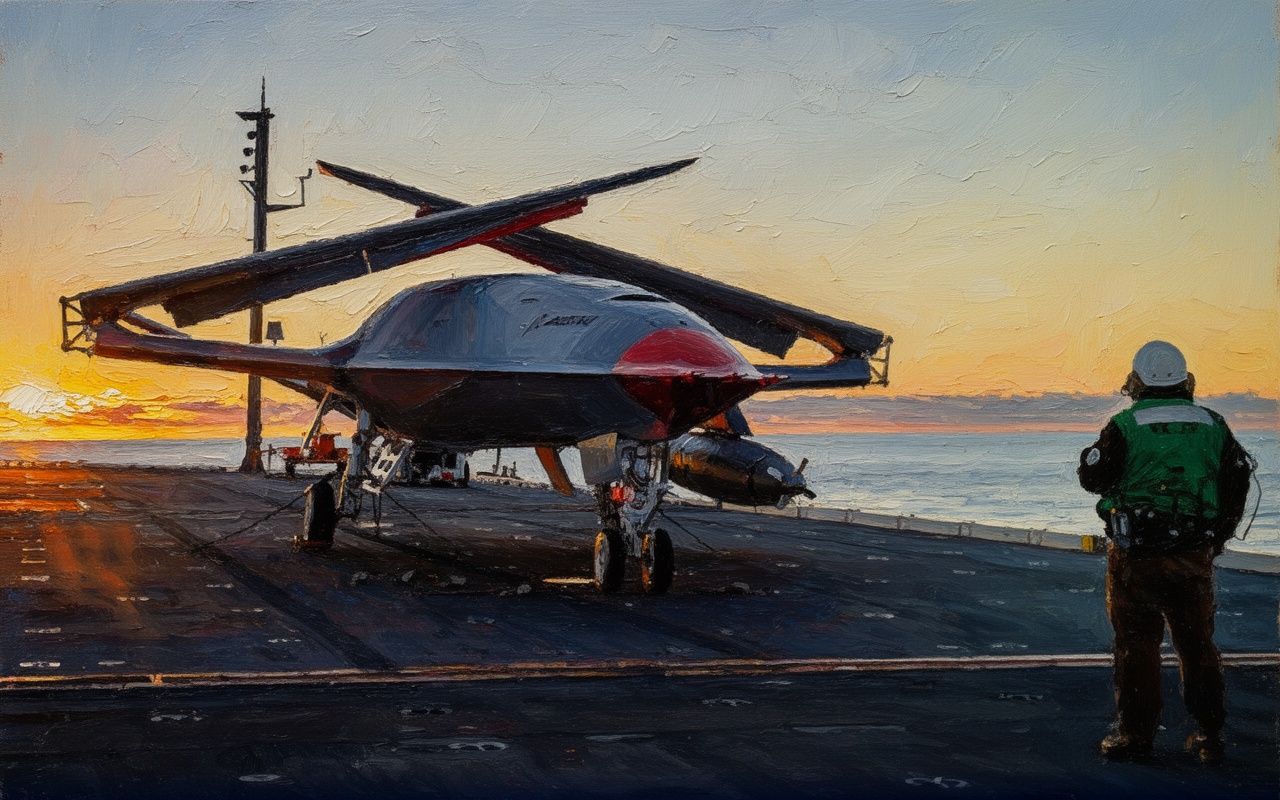
US Navy Approves Production of First Unmanned Tanker
The US Navy's MQ-25A Stingray unmanned tanker has been cleared for serial production, marking a significant advancement in naval aviation technology.
The MQ-25A Stingray unmanned air-to-air tanker has received clearance for serial production after successfully passing Milestone C. This milestone indicates a decisive shift from the research and development phase to Low Rate Initial Production. Secretary of the Navy, Hung Cao, made this announcement on Tuesday, highlighting the US Navy's commitment to advancing unmanned systems in their fleet.
The MQ-25A is designed to refuel aircraft in flight and extend the operational range of carrier-based fighter jets. The transition to production is a crucial step in integrating this advanced tanker into fleet operations. The decision underscores the recognition of unmanned systems as vital assets in modern naval warfare and logistics.
This development enhances the strategic capability of the US Navy by allowing carrier strike groups to extend their operational reach without requiring additional manned tankers. The integration of the MQ-25A into operations is expected to improve the flexibility and responsiveness of naval forces in various combat scenarios and humanitarian missions.
Technical specifications indicate that the MQ-25A will utilize a modified Boeing 737 design, equipped with advanced sensors and systems to facilitate aerial refueling. The initial production phase is anticipated to yield several units, with plans for further manufacturing runs depending on operational evaluations and budget allocations.
The introduction of the MQ-25A into service will likely reshape naval air operations, enabling a shift towards a greater reliance on unmanned assets. This advancement may prompt other nations to accelerate their own unmanned systems programs to maintain competitive edges in naval capabilities.