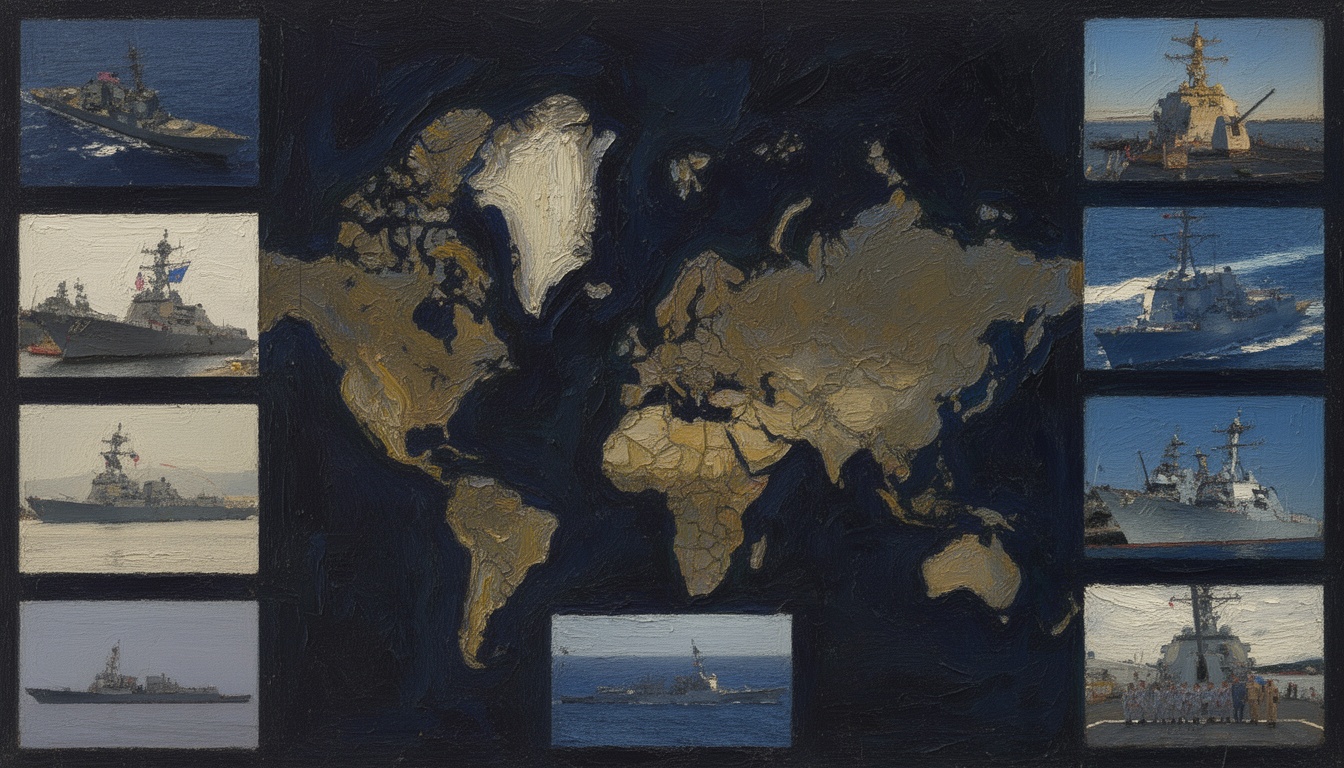
US Navy Equips Nine Destroyers with Laser Weapons
The U.S. Navy has integrated directed energy systems on nine warships, signaling a shift towards advanced weaponry. Future expansions in testing and deployment are planned for these systems across the fleet.
The U.S. Navy has equipped nine of its destroyers with advanced laser weapon systems, marking a significant advancement in naval warfare technology. These directed energy systems are designed to provide enhanced capabilities for engaging aerial and surface threats, reflecting the Navy's commitment to modernizing its fleet with cutting-edge technology.
The integration of laser weapons comes as part of an ongoing effort by the U.S. Navy to enhance the operational effectiveness of its ships. This initiative is driven by the need to counter emerging threats, particularly from drone warfare and anti-ship missiles, which have gained prominence in recent conflict scenarios. By leveraging directed energy, the Navy aims to reduce reliance on traditional munitions while increasing the precision and lethality of its naval operations.
The destroyers equipped with these systems include Arleigh Burke-class vessels, known for their advanced Aegis combat systems and multi-mission capabilities. These ships are increasingly being modified to incorporate high-energy laser systems that can target various threats with remarkable accuracy and at a fraction of the cost of conventional missiles.
The U.S. Navy's future plans involve expanding the testing and deployment of these laser systems across the fleet, potentially introducing them on other classes of vessels as well. This strategic shift not only enhances defense capabilities but also serves to deter adversaries by demonstrating an increase in technological prowess.
In the near future, continued advancements in laser technology can be anticipated, allowing the U.S. Navy to maintain its competitive edge in naval warfare. As more destroyers are equipped with these systems, the implications for naval engagements will be profound, potentially reshaping the dynamics of maritime conflict.