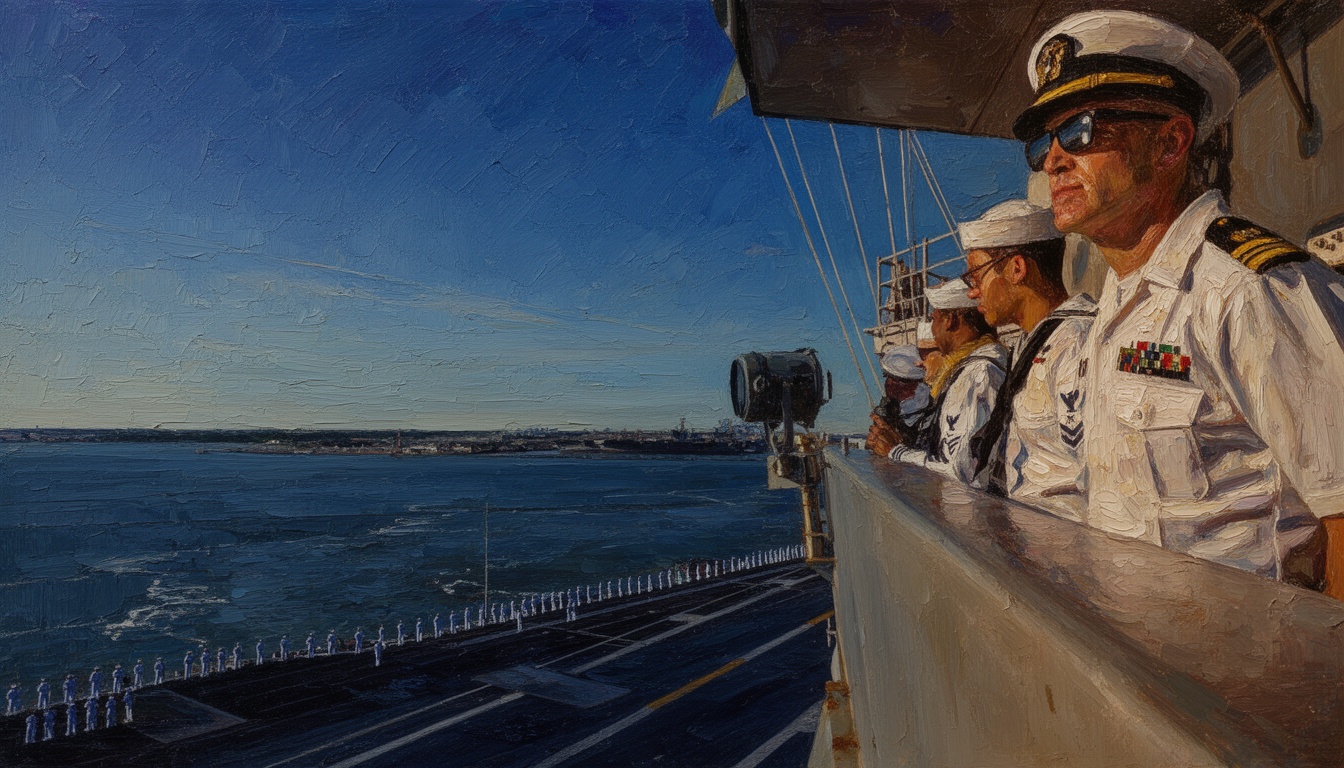
US Navy Faces Fires and Electrical Failures on Warships
Recent report reveals serious operational vulnerabilities in US Navy's most advanced warships. These ongoing technical failures threaten naval capabilities.
A recently published article has detailed a troubling series of non-combat incidents affecting the United States Navy's advanced warships. According to a Chinese military magazine, Naval & Merchant Ships, these issues include significant electrical failures, propulsion problems, and fires aboard key vessels such as the USS Gerald R. Ford aircraft carrier and the USS Zumwalt destroyer. The report claims that these operational shortcomings have raised concerns about the fleet’s overall effectiveness and readiness.
This troubling assessment highlights not only the immediate dangers posed by such technical issues but also suggests deeper, systemic vulnerabilities within the US Navy's modernization efforts. The report asserts that the frequency of these incidents indicates an erosion of naval capabilities, critical in a time when naval power is key to maintaining global security balance. High-profile vessels like the USS Dwight D. Eisenhower are also mentioned, underscoring that this is not an isolated issue but part of a broader pattern.
Strategically, these technical failures are alarming given the high-stakes nature of maritime conflicts today, where advanced ships are expected to operate reliably under pressure. The implications for the US Navy’s deterrence posture are significant, as any perceived decline in capability could embolden adversaries and destabilize regional power dynamics, particularly in the Indo-Pacific region.
Technical investigations into the USS Gerald R. Ford, the first ship in a new class of aircraft carriers, as well as the USS Zumwalt, emphasize the urgent need for solutions. The USS Gerald R. Ford, designed to incorporate cutting-edge technology and features, has reportedly faced multiple complications. Similarly, propulsion issues involving the Zumwalt destroyer raise questions about the ship's operational readiness and future deployment capabilities.
In conclusion, unless remedial measures are taken swiftly to address these extensive technical shortcomings, the US Navy risks compromising its strategic advantages. An increased focus on maintenance, upgrades, and workforce training may be imperative to ensure these advanced warships can fulfill their roles effectively in future operations.