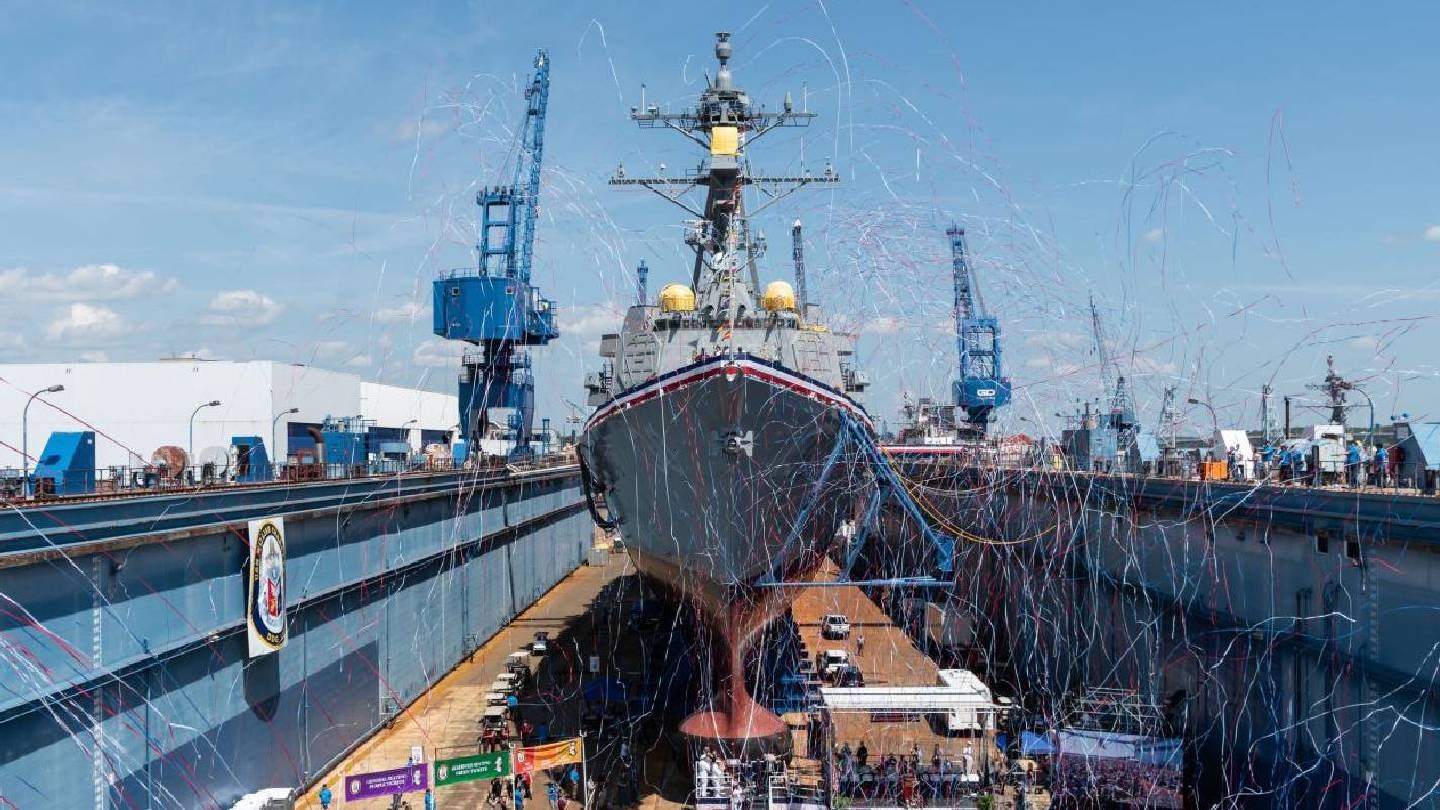
US Navy Launches Future USS William Charette in Maine
The US Navy has commissioned the USS William Charette, enhancing its Arleigh Burke-class destroyer fleet. This marks a significant step in naval modernization efforts.
The US Navy recently commissioned the future USS William Charette, an Arleigh Burke-class destroyer, at General Dynamics Bath Iron Works in Maine. This vessel is the fifth to be launched under the Flight III upgrade program. The ceremony underscores the Navy's commitment to enhancing its maritime capabilities.
The Arleigh Burke-class is renowned for its advanced technologies and combat systems. The USS William Charette will feature the next-generation AN/SPY-6 radar system, which significantly enhances air and missile defense capabilities. Key improvements from the Flight III design include increased power generation and improved power distribution systems, enabling the integration of various advanced weapon systems.
Strategically, the addition of the USS William Charette strengthens the US Navy's presence and deterrent capabilities in global waters. This commissioning comes amid heightened tensions in various maritime regions, emphasizing the need for a modernized fleet capable of responding to evolving threats.
With the introduction of the USS William Charette, the US Navy aims to maintain its technological edge over global adversaries. The continued investment in the Arleigh Burke-class fleet reflects a broader strategy of naval modernization aimed at adapting to contemporary warfare environments. The ship is set to contribute to various missions, including air defense, anti-surface operations, and ballistic missile defense.
Looking ahead, the operational capabilities of the USS William Charette and its sisters are expected to play a crucial role in future fleet engagements. As the Navy integrates these vessels into service, they will bolster maritime security and enhance the overall combat readiness of the naval forces. The commissioning of the USS William Charette is a clear signal of commitment to sustaining naval superiority well into the coming decades.