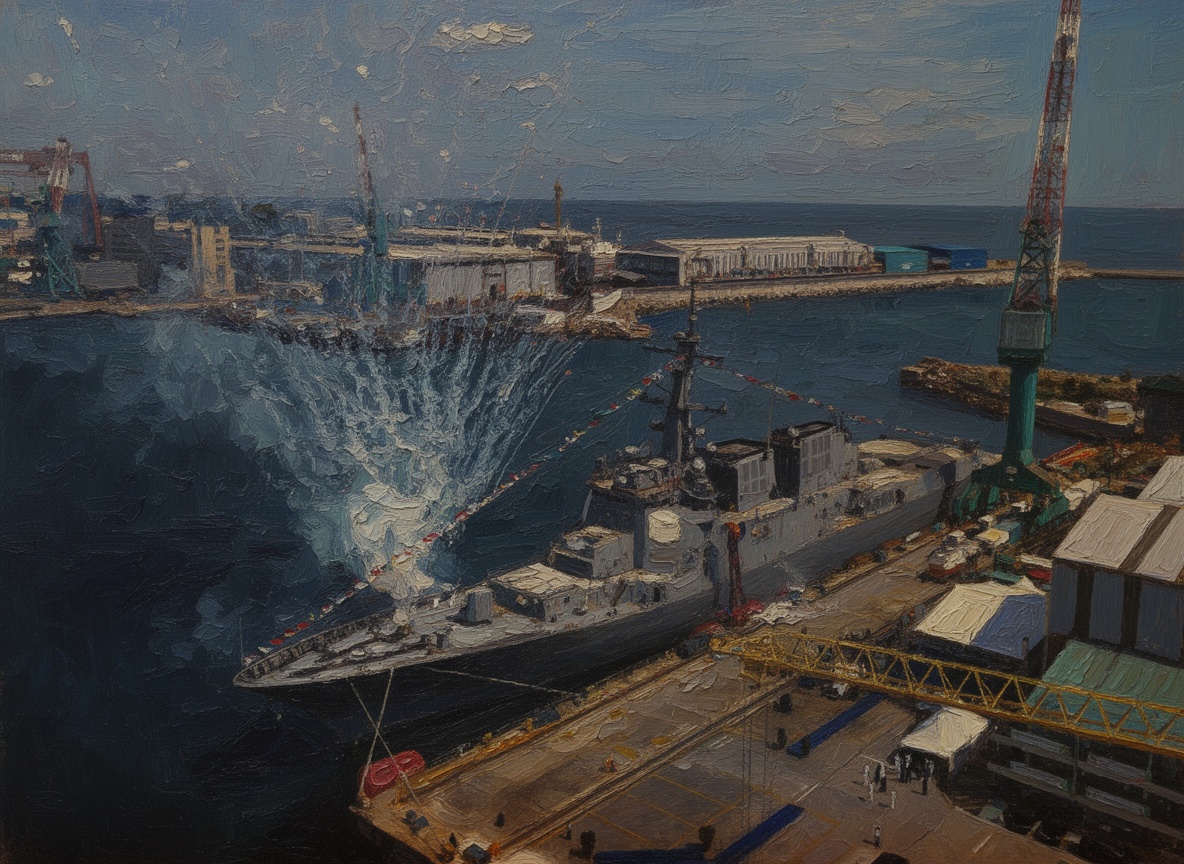
US Navy Seeks South Korean Shipyards for Tanker and Destroyer Production
The US Navy's Requests for Information signal a potential shift in shipbuilding policy. South Korean yards may soon engage in constructing US naval vessels, marking a significant policy change.
In a pivotal shift, the US Navy has issued Requests for Information (RFIs) to major South Korean shipbuilders, signaling a potential end to an 80-year ban on foreign warship construction. This development indicates a strategic realignment in US naval procurement practices, allowing South Korean yards to engage in building American destroyers and fleet tankers.
The policy change comes amidst evolving regional security dynamics, particularly in light of increasing tensions in the Indo-Pacific. South Korea's shipbuilding industry, known for its advanced capabilities, may offer significant advantages in building high-tech naval vessels that meet US standards. Collaborating with South Korean shipyards could enhance the speed and efficiency of future programs.
Strategically, this initiative reflects the US Navy's intent to strengthen partnerships with key allies and diversify its shipbuilding capabilities beyond domestic sources. Increasing reliance on South Korean yards may provide the US Navy with the flexibility needed to respond to fast-evolving maritime threats in the region.
The requested information pertains to the construction of advanced vessels, including Arleigh Burke-class destroyers and auxiliary fleet oilers. South Korean shipyards, such as Hyundai Heavy Industries and Daewoo Shipbuilding & Marine Engineering, have the infrastructure and expertise to deliver these platforms on a significant scale, potentially enhancing operational readiness.
If the US Navy proceeds with this plan, it will represent a transformative step in defense industrial cooperation and could lead to formal contracts. This move underscores the importance of international collaboration in maintaining maritime security and deterrence in a shifting geopolitical landscape.