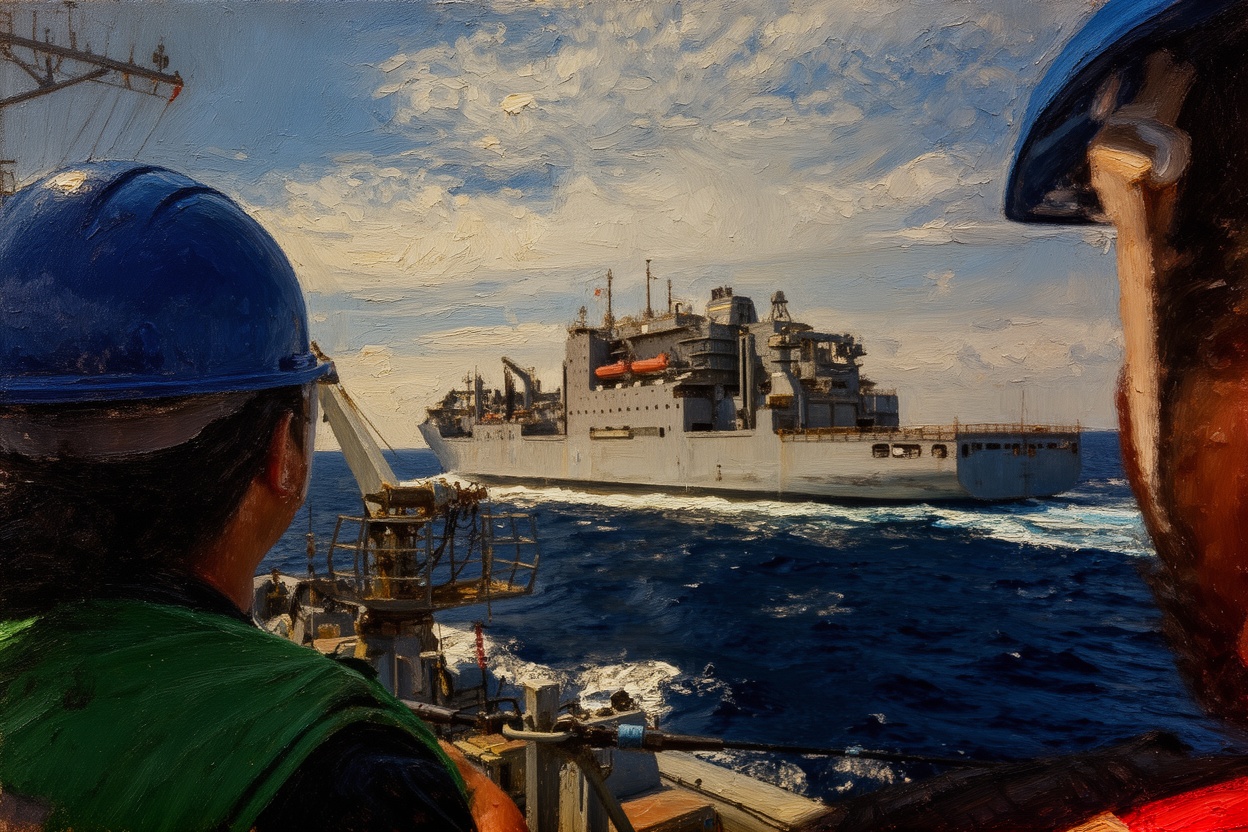
US Navy Targets 10 Commercial Tankers to Boost Logistics Fleet
The U.S. Navy aims to enhance its logistics capabilities in the Pacific by acquiring commercial tankers. This move is intended to address urgent logistics shortages within military operations.
The U.S. Navy is actively pursuing the acquisition of 10 commercial tankers to address critical logistics deficiencies. This action comes from the newly formed Portfolio Acquisition Executive (PAE) Maritime office, which was established to enhance procurement processes within the service. The targeted tankers are crucial for bolstering the Navy's logistics fleet and ensuring seamless operations in the Pacific region.
Historically, the Military Sealift Command (MSC) has served as the backbone of U.S. Navy operations, facilitating the transport of goods and materials necessary for sustained military efforts. The current logistics shortages have raised concerns about the Navy's operational capabilities, especially in light of growing geopolitical tensions and increased demand for military readiness. The push to procure commercial tankers is a direct response to these strategic challenges and aims to strengthen supply chain resilience.
Strategically, the acquisition of commercial tankers aligns with broader U.S. initiatives to bolster its presence and operational capacity in the Pacific. As regional threats continue to evolve, securing a robust logistics support system is vital for maintaining a competitive edge. Enhancing logistics through commercial partnerships may also lead to improved operational efficiency and responsiveness to emerging challenges.
The U.S. Navy's initiative to source these tankers will not only address immediate logistics deficiencies but may also contribute to ongoing discussions regarding military-civil fusion. By leveraging commercial capabilities, the Navy can integrate more agile support mechanisms while potentially reducing costs associated with traditional military logistics processes.
Looking ahead, the acquisition of commercial tankers is expected to play a significant role in the U.S. Navy's strategic planning. As procurement processes move forward, the focus will remain on ensuring that the logistics fleet meets the demands of a rapidly changing global security landscape, thereby enhancing operational readiness and deterrence capabilities throughout the Pacific region.