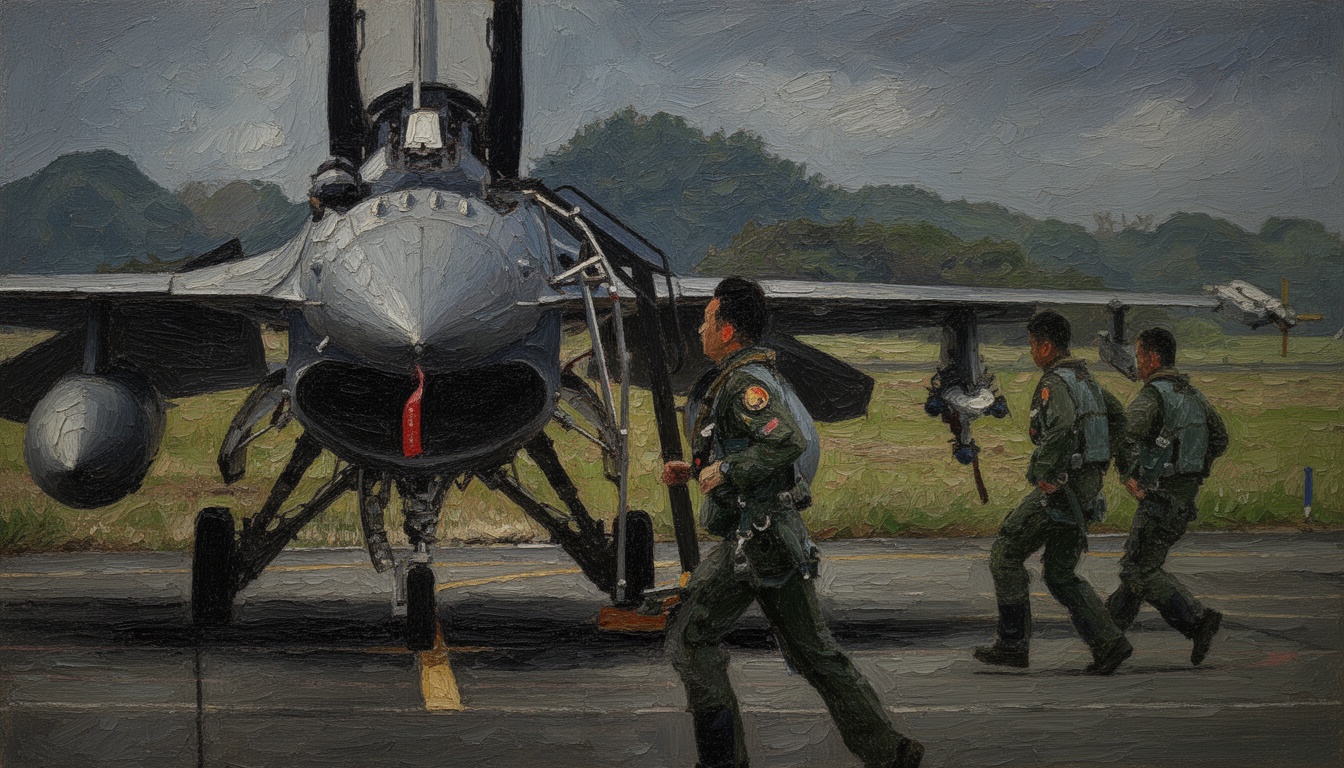
US Pushes Taiwan for Commercial Arms Sales Amid Threats
Taiwan seeks to strengthen military capabilities amid rising Chinese pressure. US defense leaders caution against relying solely on commercial sales.
US defense industry leaders are advocating for enhanced commercial cooperation with Taiwan to address the island's US$20 billion weapons backlog. This initiative aims to accelerate Taiwan's military capabilities, particularly as tensions with Beijing escalate. Retired US General Charles Flynn emphasized at the Taiwan-US Defence Industry Forum in Taipei that while commercial sales can play a role, they should not replace the traditional arms sales, which are essential to Taiwan's defense strategy.
Taiwan's military seeks to bolster deterrence in the face of increasing military pressure from China. In recent years, Beijing has ramped up military flights near the island and expressed its intent to unify Taiwan with the mainland, raising concerns over regional security. The US has supported Taiwan with arms sales; however, delays have led to a notable backlog, prompting discussions for expedited commercial solutions.
The strategic significance of this initiative cannot be overstated. Strengthening Taiwan's defense capabilities through faster arms acquisition could alter the military balance in the Taiwan Strait. A more capable Taiwanese military would enhance deterrence against potential Chinese aggression, a key concern for both US and Taiwanese officials.
Particular focus has been placed on advanced weapon systems that could be provided through commercial channels. These may include air defense systems and naval platforms that align with Taiwan's needs. The total estimated backlog of US$20 billion reflects the various systems that Taiwan has yet to receive, highlighting an urgent call for effective solutions.
Moving forward, the outcome of these discussions may lead to a reevaluation of the arms procurement processes between the US and Taiwan. Should commercial sales become more prevalent, they could potentially reshape the landscape of military cooperation in the Indo-Pacific, but they will need to complement rather than replace traditional sales methods.