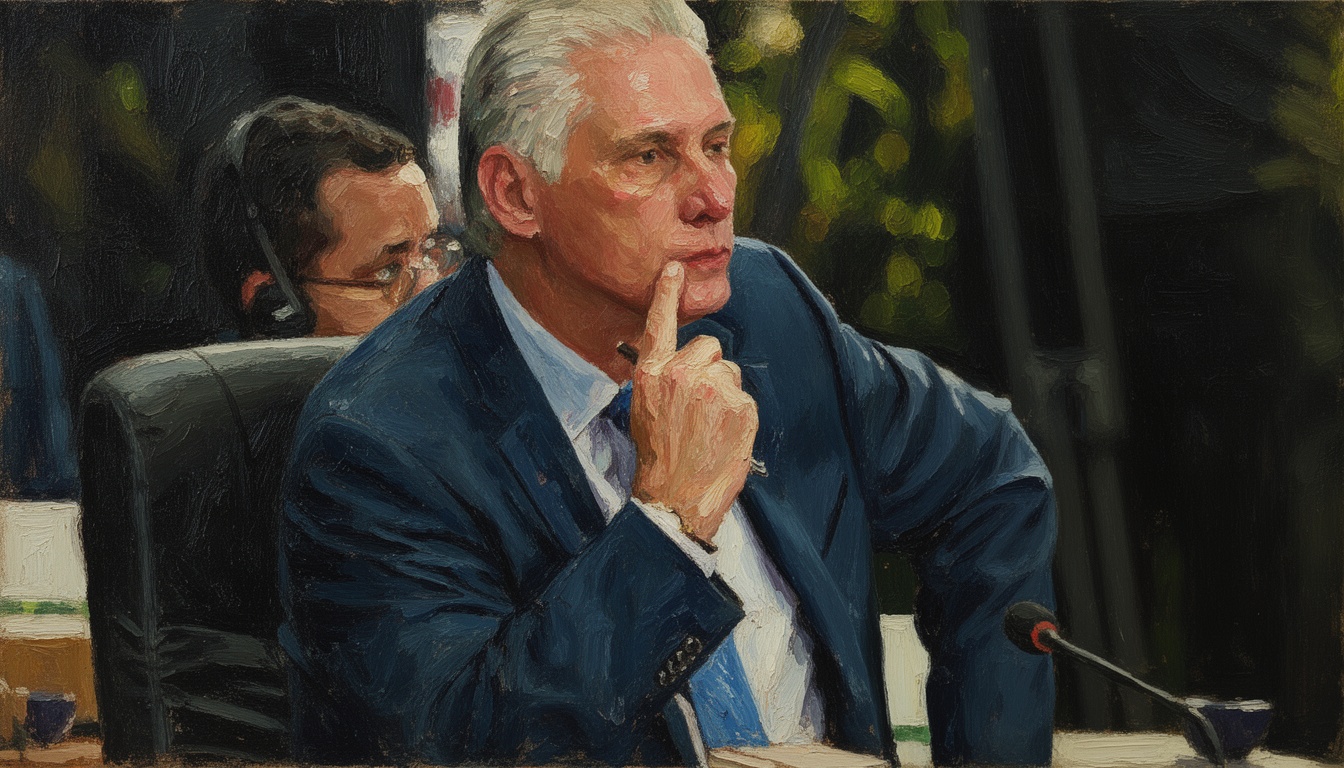
US Sanctions Cuban President and Castro Relatives Amid Pressure Campaign
The US intensifies its sanctions against Cuba, targeting prominent leaders to exert influence. This development signals a shift in US policy towards the island under the Trump administration.
In a significant move, the United States has sanctioned Cuban President Miguel Díaz-Canel and several relatives of former leader Fidel Castro. This action, part of a broader strategy to increase pressure on the Cuban government, aims to address human rights concerns and limit the influence of communism in the region.
This latest round of sanctions follows a series of measures implemented by the Trump administration over the past months, which include tightening trade restrictions and enhancing military presence in the Caribbean. The US has openly condemned the Cuban government's handling of civil unrest and has aimed to support the aspirations of the Cuban people for greater freedom.
Strategically, these sanctions signal a commitment from the United States to counteract perceived threats from hostile regimes in Latin America. By targeting key individuals within the Cuban government, the US hopes to destabilize the current regime and possibly encourage a transition to democracy.
The sanctions are expected to further restrict financial transactions for the Caribbean nation, affecting tourism and remittances vital to the Cuban economy. Additionally, increased military exercises by the US in the region could heighten tensions between the two countries.
In conclusion, these developments represent a hardening of US policy toward Cuba, with potential long-term consequences for Cuban governance and US influence in the region. The administration's approach could set the stage for future diplomatic engagements or further isolation for Cuba depending on the regime’s response.