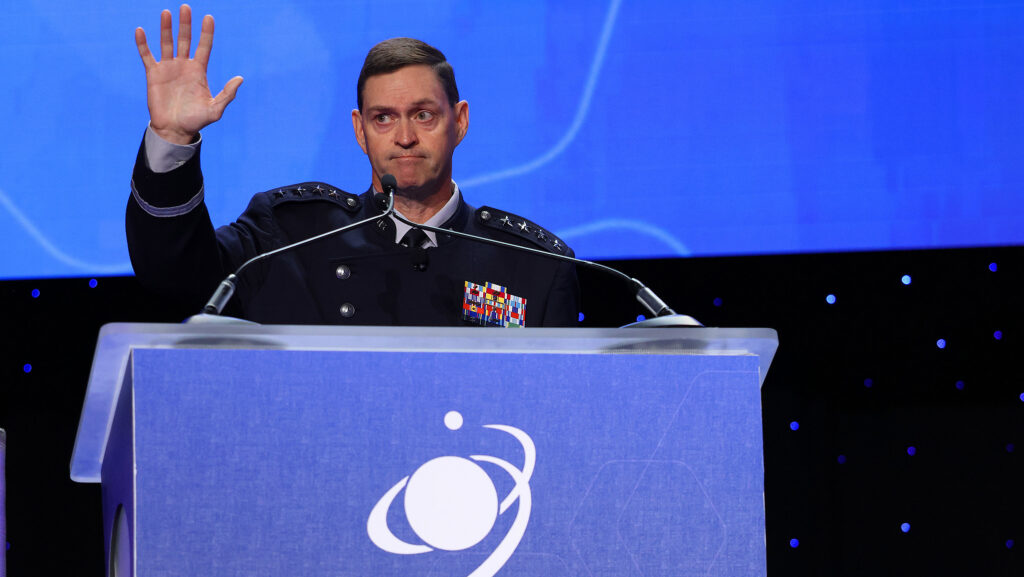
US Space Chief Urges Military's Crucial Role in Democracy
General Chance Saltzman emphasizes the military's essential function in democracy, asserting a shift from mere support role to fundamental necessity.
General Chance Saltzman, the Chief of Space Operations for the United States Space Force, has articulated a significant change in the perception of the military's role in safeguarding democracy. Speaking to reporters on the eve of his retirement, he remarked, 'We really used to be considered icing on the cake. Now, I think we are more the eggs in the cake batter.' This comment underscores a shift in the military's image from a supportive entity to a central component of democratic stability.
Historically, the military was often seen as an auxiliary force, secondary to civilian authority and control. However, Saltzman's statement indicates a growing recognition of the military's direct relationship with democratic functions, particularly in global security contexts. The evolution of warfare, technological advancements, and geopolitical tensions have reshaped how military capabilities are viewed in relation to national governance.
The strategic implications of Saltzman's remarks highlight an ongoing evolution in defense policy and military doctrine. With rising global threats, including cyber warfare and regional conflicts, the military's role as a deterrent has become more pronounced. This shift also indicates a move towards integrating military readiness into broader national strategies that uphold democratic values against authoritarian challenges.
In recent years, the United States Space Force has made significant investments in enhancing its capabilities, focusing on satellite technology and space security. Saltzman did not provide specific figures regarding budget increases or troop levels, but emphasized the necessity of continued modernization efforts to meet emerging threats.
Looking ahead, Saltzman’s emphasis on the military as essential to democracy may influence future policy decisions. As leaders weigh the importance of military readiness against other national priorities, this perspective may reshape defense spending and strategic initiatives in the years to come.